

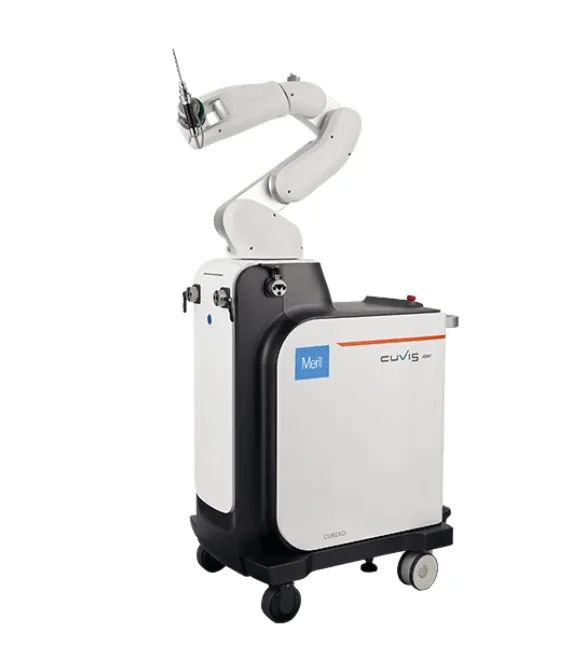
CUVIS system: navigation technologies in orthopedics
The CUVIS robotic system belongs to modern navigation technologies used in orthopedic surgery to enhance the accuracy of planning and control during joint procedures. The primary purpose of such systems is to help the surgeon better navigate the patient's anatomy and make decisions based on objective data obtained during diagnostic evaluation.
CUVIS utilizes digital navigation and visualization of anatomical landmarks, allowing the surgical plan to be correlated with the real clinical situation during the procedure. These technologies are applied in orthopedics as a support tool for the surgeon, particularly in cases where it is important to consider individual anatomical features and joint geometry.
It is important to understand that robotic and navigation systems do not perform surgery independently and do not replace the surgeon's expertise. Their role is to increase the surgeon's level of awareness and control over key procedural parameters, contributing to more informed and balanced decision-making during treatment.
The choice of a specific technology depends on the clinical objective, the capabilities of the medical facility, and the experience of the surgical team. In orthopedic practice, each system is regarded as a tool used under specific conditions and when appropriate indications are present.
How the CUVIS navigation system works
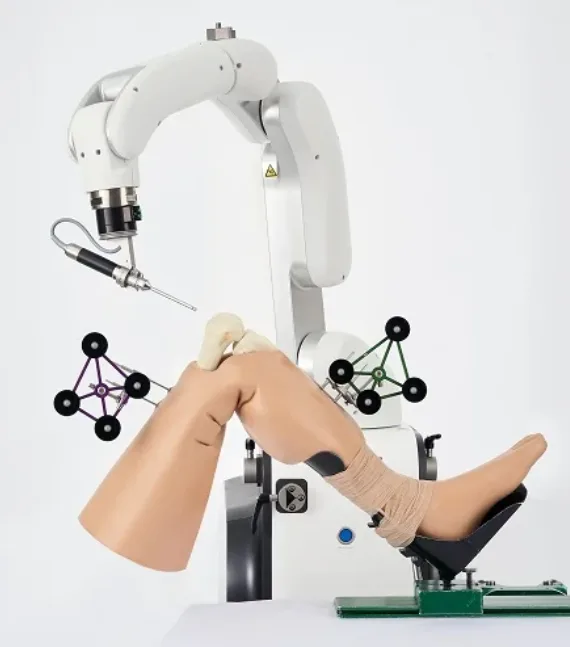
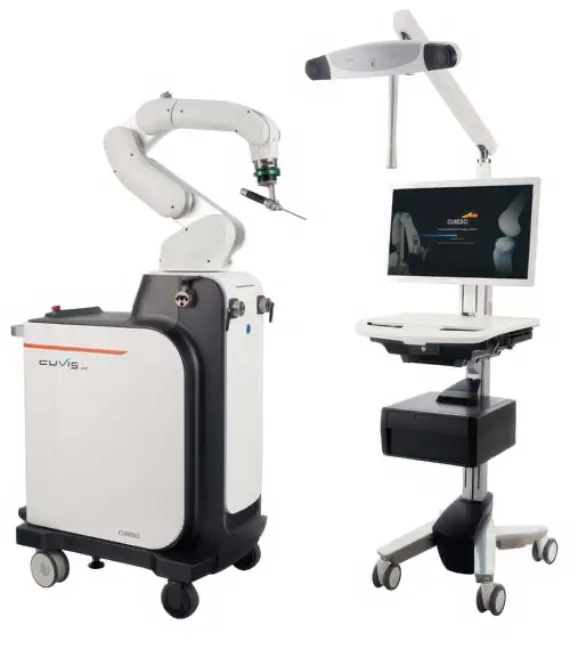
The CUVIS system is based on the principles of digital navigation and visual control of anatomical landmarks during orthopedic procedures. Before surgery begins, diagnostic imaging data are used to create a navigation map that helps the surgeon understand the spatial orientation of the joint and surrounding bone structures.
During the operation, the navigation system tracks the position of instruments and anatomical landmarks in real time, comparing them with the planned parameters. This provides the surgeon with additional information about the progress of the procedure and supports decision-making based on the current clinical situation.
CUVIS does not perform surgical actions independently and does not replace the surgeon's expertise. The system serves as an auxiliary tool that enhances visual control and improves the accuracy of adhering to the selected treatment strategy.
The use of navigation technologies is considered part of a comprehensive approach in orthopedic surgery. Their application depends on clinical objectives, the patient's anatomical characteristics, and the experience of the surgical team.
The use of the CUVIS system in clinical practice
The CUVIS navigation system is regarded as an auxiliary tool in orthopedic surgery, used to refine spatial orientation and monitor key parameters during an operation. The use of such technologies is aimed at supporting the surgeon when working in anatomically complex areas and in non-standard clinical situations.
In clinical practice, navigation systems may be applied in various joint procedures where precise correlation between the surgical plan and the actual position of bone structures is important. This can be particularly relevant in cases of anatomical variations, deformities, or when enhanced control of instrument positioning is required during the surgical stage.
The use of CUVIS is not a mandatory component of treatment and is always considered on an individual basis. The decision regarding the appropriateness of navigation technology is made by the surgeon based on the clinical presentation, diagnostic findings, and the objectives of the specific procedure. This approach allows the technology to be used thoughtfully as part of comprehensive surgical planning.
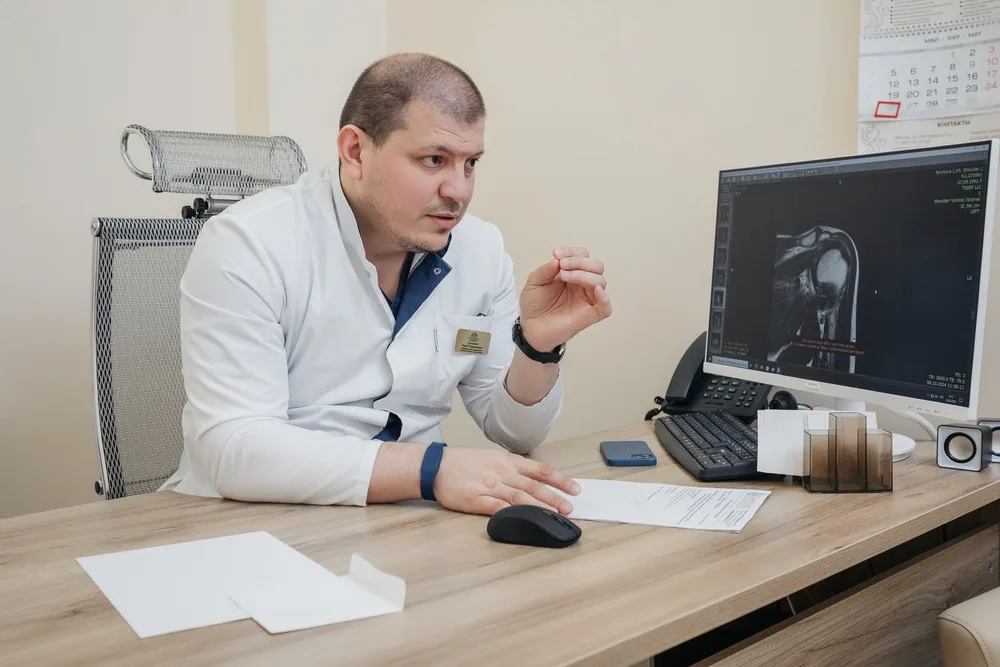
The surgery is performed personally by Zaur Sulumov
The doctor is personally involved in every stage of treatment — from the initial consultation and surgical planning to recovery monitoring and outcome evaluation.
Start Treatment

FAQ
CUVIS is a digital navigation system used for visual control of anatomical landmarks and instrument positioning during orthopedic procedures. It helps the surgeon better navigate the procedure and correlate the surgical plan with the patient’s actual anatomy.
CUVIS belongs to navigation technologies and is not an autonomous robot. The system does not perform surgical actions independently and is used solely as an auxiliary tool to support the surgeon during the procedure.
Navigation systems can be used in situations that require additional control of anatomical landmarks, precise assessment of the spatial position of bone structures, or work with complex anatomy. Specific indications are determined individually.
No. CUVIS does not replace clinical expertise and does not make decisions for the surgeon. All key stages of the operation are performed by the surgeon, while the navigation system serves as a source of additional information and visual guidance.
Navigation technologies can be applied in various orthopedic procedures, including joint surgeries. The possibility and appropriateness of using CUVIS are determined by the clinical objective and the chosen treatment strategy.
Using the navigation system may require an additional setup and planning stage. However, the main goal of applying the technology is not to speed up the surgery but to enhance accuracy and control during specific stages of the procedure.
The decision to use the navigation system is made by the surgeon. It is based on the clinical presentation, diagnostic findings, and the appropriateness of using the technology in the specific situation.