

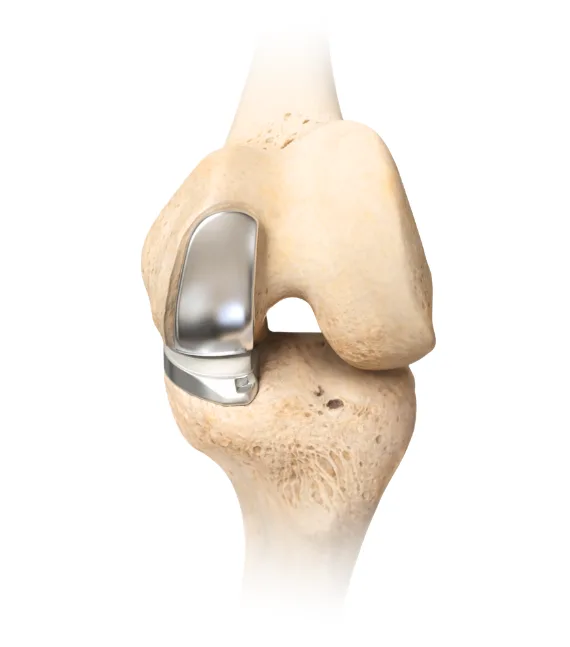
Preservation of healthy knee compartments during partial replacement
If degenerative changes affect only one compartment, replacement of the entire joint is not mandatory. In such cases, unicompartmental knee arthroplasty is performed — a method aimed at addressing localized wear while preserving the stability of the remaining compartments.
The procedure is limited to the damaged area, allowing the native ligaments and unaffected joint surfaces to continue functioning. Compared to total knee arthroplasty, this partial replacement preserves natural knee kinematics and physiological load distribution during walking.
Before surgery, limb alignment, cartilage condition in other compartments, and ligament balance are carefully evaluated. With proper patient selection, this method helps maintain knee stability and achieve a functional outcome without the need for a more extensive procedure.
The patient’s level of physical activity and the nature of pain are also assessed, as the combination of clinical findings and imaging determines the appropriateness of choosing partial replacement.
How partial replacement affects sensation and movement control
One of the key features of unicompartmental knee arthroplasty is the preservation of most of the natural knee structures. As a result, movements after surgery often feel more “natural,” and knee control during walking and directional changes tends to recover more quickly. The preserved ligaments continue to contribute to joint stability, positively influencing coordination and confidence under load.
Partial replacement allows the knee to function closer to its native biomechanics. With proper patient selection and intact ligament stability, this is reflected in smoother movements, less sensation of a foreign body, and better joint position awareness. These characteristics are especially important for active patients with higher functional demands.
We carefully assess how the knee responds to dynamic loading and how movement patterns develop after surgery. Our goal is to maintain precision and predictability of motion so that the patient can confidently use the knee in daily activities without a sense of instability or discomfort.
When unicompartmental knee arthroplasty is justified
Unicompartmental knee arthroplasty is not suitable for every patient and requires strict selection. The method provides good results when the degenerative process affects only one knee compartment, while the remaining compartments, articular surfaces, and ligamentous structures remain stable and functional. In cases of advanced osteoarthritis or significant instability, partial replacement will not provide a reliable and long-term outcome.
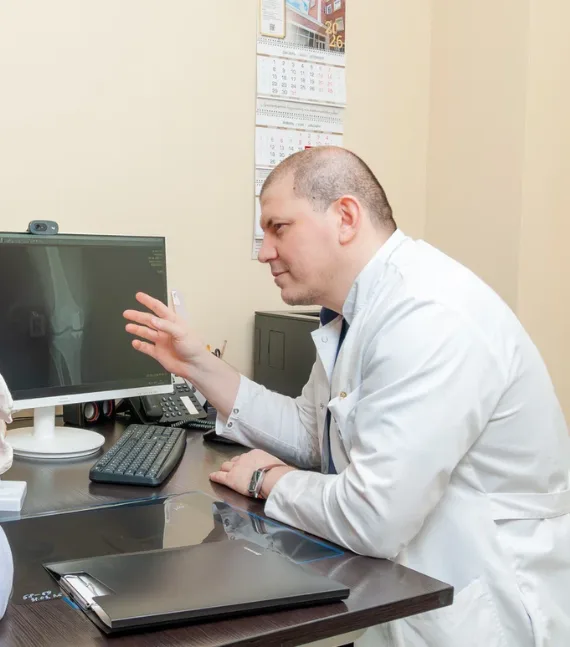
Before making a decision, we assess the condition of the anterior and posterior cruciate ligaments, collateral stabilizers, the degree of limb axis deformity, and the pattern of load distribution within the knee joint. Age, level of physical activity, and expected future demands are also taken into account. The combination of these factors helps determine whether unicompartmental arthroplasty is the optimal strategy or whether total replacement should be considered.
Our goal is to select the treatment method based on the clinical picture rather than the formal name of the procedure. This personalized approach reduces the likelihood of revision surgery and helps achieve a stable functional result without unrealistic expectations.
Stages of treatment

Online consultation
An online consultation allows you to discuss your condition, complaints, and symptoms in advance. You can submit imaging studies and medical documents, ask questions, and receive a preliminary treatment plan before visiting the clinic.
Examination and 3D surgical planning
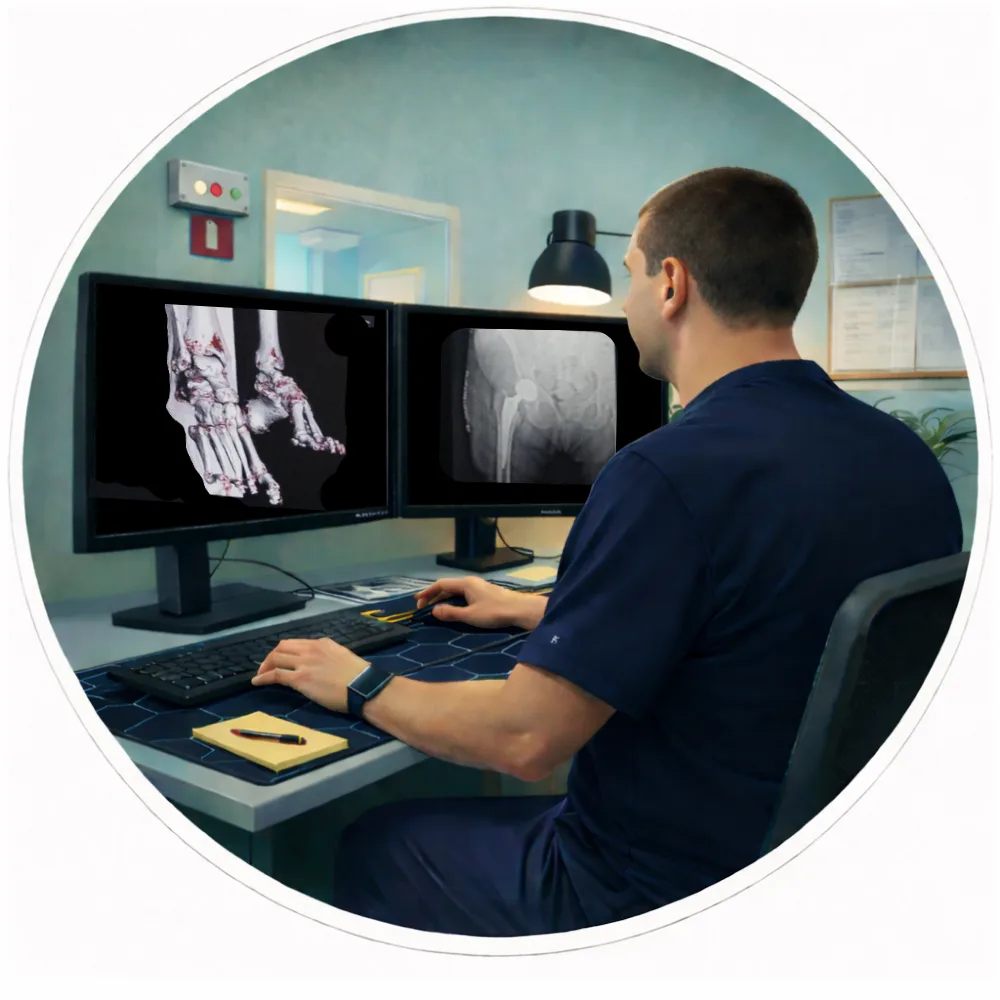
All necessary examinations are performed within one day. A CT scan of the joint is conducted, followed by computer-based 3D surgical planning and implant selection to ensure maximum precision.

Surgery
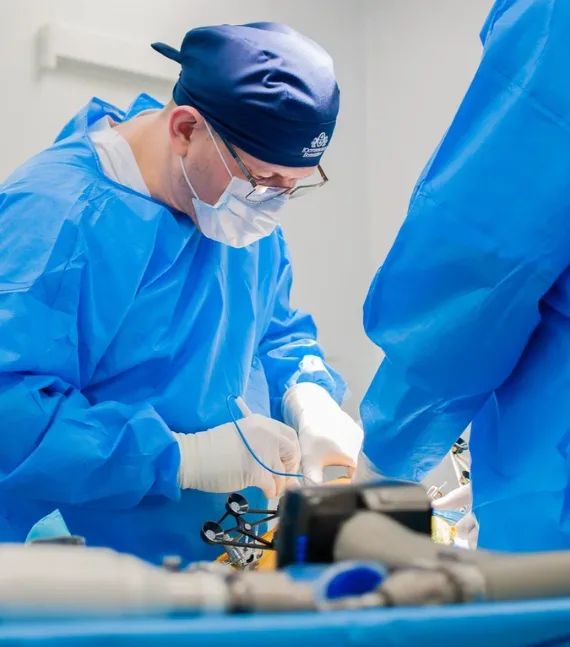
On the second day of the clinic stay, the surgical procedure is performed. Original implants by Stryker Corporation (USA) and the MAKO robotic-assisted system are used, ensuring a high level of precision in implant positioning.
Rehabilitation and follow-up
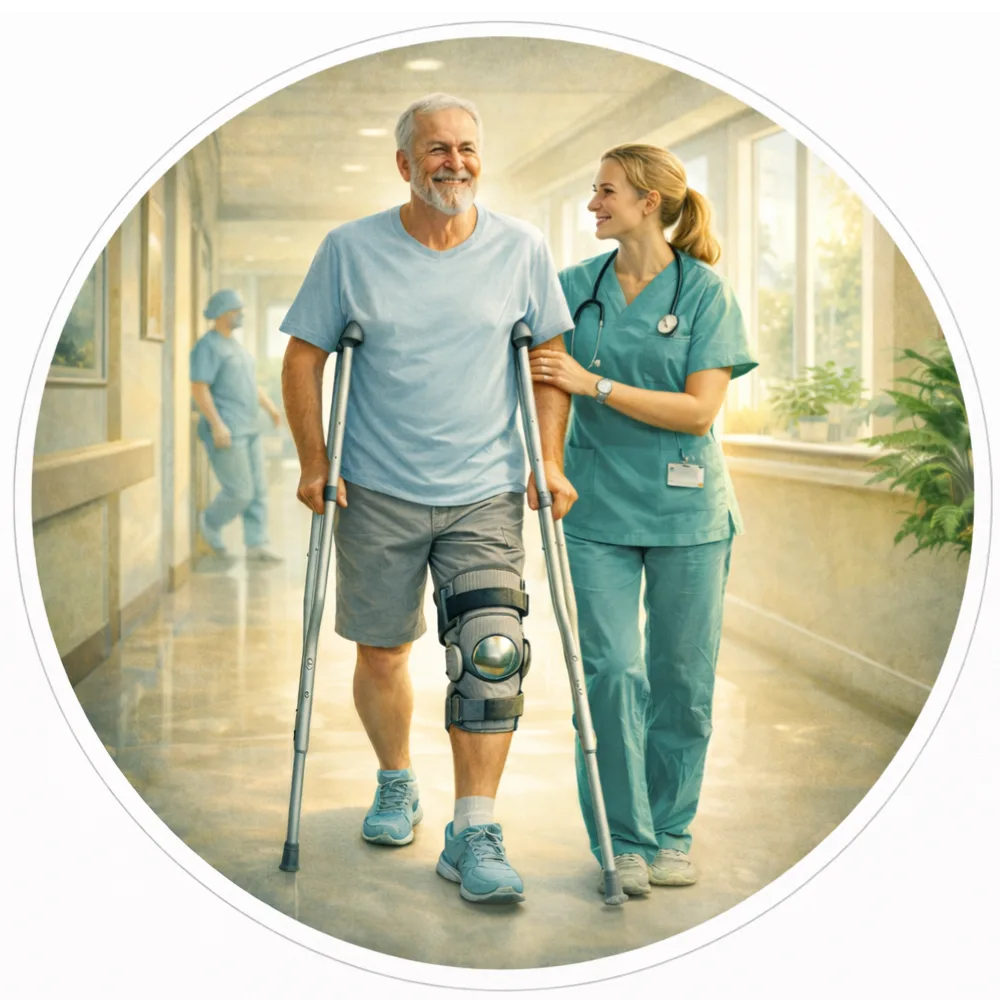
Recovery begins immediately after surgery. In most cases, you will be able to start walking on the day of the procedure. After discharge, we continue to provide online follow-up care, including recovery guidance, rehabilitation monitoring, and answers to any questions that may arise.
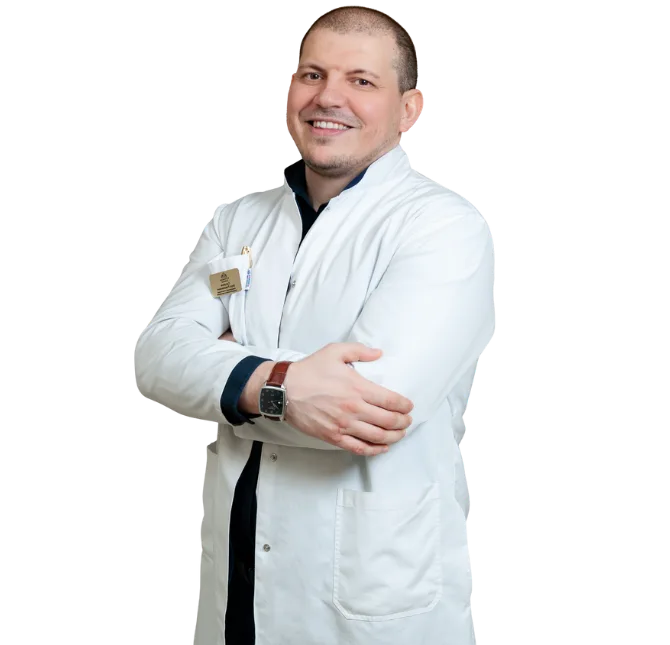
The surgery is performed personally by Zaur Sulumov
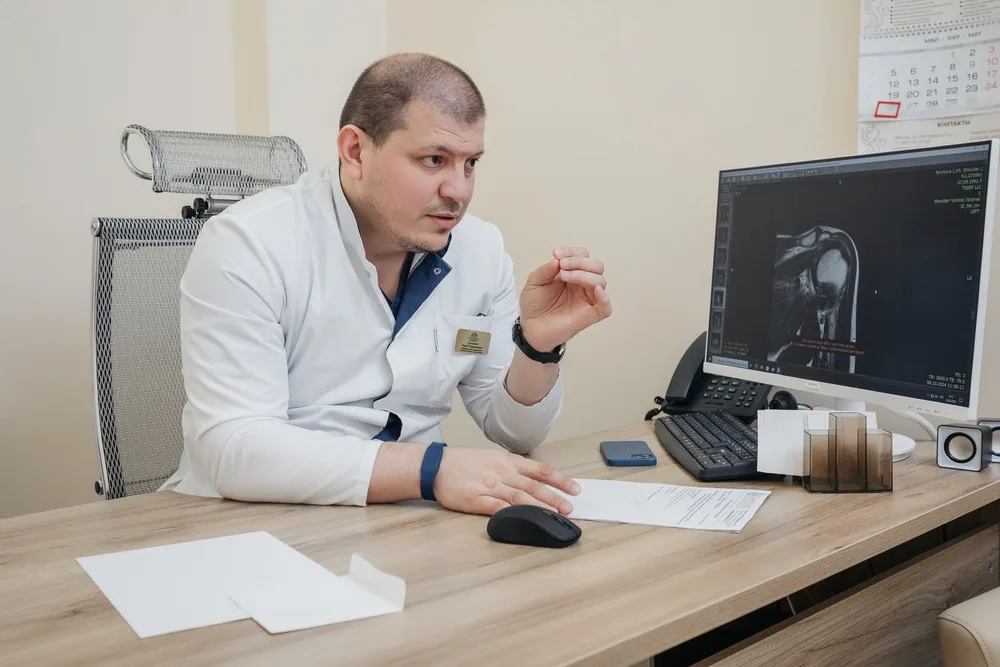
The doctor is personally involved in every stage of treatment — from the initial consultation and surgical planning to recovery monitoring and outcome evaluation.
Start Treatment
FAQ
This is a surgery in which only one damaged compartment of the knee joint (medial or lateral) is replaced, while healthy structures — ligaments and cartilage in other compartments — are preserved.
The method is used for isolated osteoarthritis of a single compartment.
In total knee replacement, the entire joint is replaced.
In unicompartmental replacement, only the damaged part is replaced.
Advantages of partial replacement:
Less traumatic
Preservation of the anterior cruciate ligament (if intact)
More natural kinematics
Faster recovery
Less blood loss
Note: Not suitable for all patients — strict patient selection is required.
Indications:
Isolated medial or lateral osteoarthritis
Preserved anterior cruciate ligament
Stable joint
No severe deformity
Preserved opposite compartment
Decision is made after clinical examination and MRI/X-ray under load.
On average — 45–90 minutes.
Duration depends on anatomy, severity of deformity, and chosen technique (classic or robotic-assisted).
As a rule, the patient begins to stand on the day of surgery or the next day.
Full weight-bearing is allowed immediately with stable implant fixation.
Modern pain management protocols are used:
Regional anesthesia
Multimodal analgesia
Local infiltration
Pain is usually moderate and well controlled.
Walking with support — immediately
Return to normal daily activity — 2–4 weeks
Low-impact sports — 6–8 weeks
Recovery is faster than after total knee replacement.
Modern implants last 15–20 years or more with correct placement and appropriate load.
If osteoarthritis progresses in other compartments, conversion to a standard total knee replacement is possible (only revision systems in cases of total replacement).
Yes. If osteoarthritis develops in other compartments over time, revision with conversion to standard total knee replacement is possible.
Avoid:
Jumping
Running on hard surfaces
Contact sports
Allowed:
Walking
Swimming
Cycling
Nordic walking
The robotic system allows:
More precise placement of components
Individual ligament balancing
Optimization of the mechanical axis
This improves the accuracy and reproducibility of the result and is the main method for the correct placement of unicompartmental knee implants.