

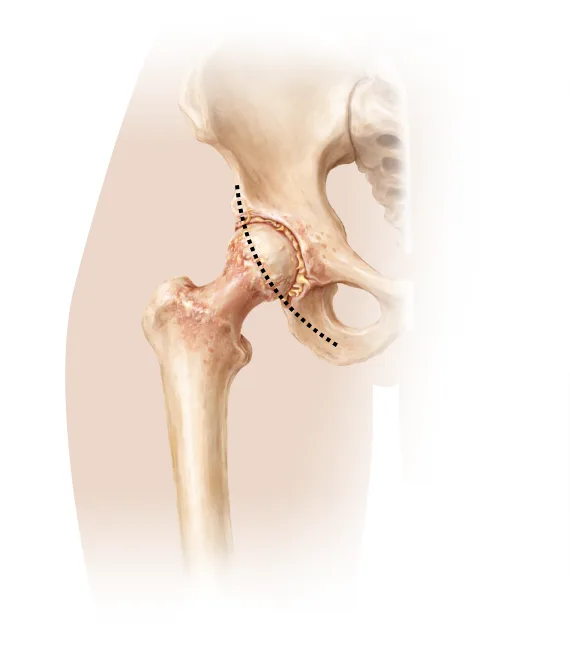
Anterior approach in hip replacement surgery in Moscow
The anterior approach in hip replacement surgery is considered a surgical option in cases where it is important to minimize soft tissue trauma and preserve the natural stabilizing structures of the hip. Unlike other surgical approaches, the procedure is performed through anatomical intervals, allowing the surgeon to avoid cutting major muscle groups.
In hip replacement, precision is a critical factor. Proper positioning of the implant components must ensure accurate restoration of limb alignment and physiological joint biomechanics. Even minor deviations in implant orientation may affect load distribution and the long-term durability of the prosthesis.
The anterior approach is not a universal standard for all patients. Its use depends on the clinical presentation, bone quality, and the patient’s individual anatomy. The method is selected as part of personalized surgical planning and is applied when it provides the optimal functional outcome.
The primary goal of the procedure is stable implant fixation, preservation of natural movement mechanics, and the creation of conditions for controlled postoperative recovery.
How the anterior approach influences early mobility and movement control
One of the key features of the anterior approach is the preservation of the muscle structures involved in hip joint stabilization. As a result, joint movements remain more controlled in the early postoperative period, and the risk of functional instability is reduced. Patients often report greater confidence during their first attempts to stand and begin walking, as the muscles responsible for joint support continue to function.
The anterior approach allows rehabilitation to focus on movement coordination and gradual adaptation to load. Since major muscle groups are not transected, joint control is facilitated and the need for prolonged restrictions — typical of some other surgical approaches — may be reduced. This is particularly important during the first weeks, when proper movement patterns are established and the patient adapts to the new joint.
At the same time, we do not view early mobilization as an end in itself. Recovery after hip replacement must be safe and well controlled. We carefully assess the joint’s response to loading, the condition of the soft tissues, and the patient’s overall well-being to ensure that the return to activity occurs without overload and with full consideration of individual factors.


When the anterior approach is truly indicated
Despite the advantages of the anterior approach, this method is not a universal solution for all patients. Its use requires specific anatomical conditions, the absence of significant hip deformities, and adequate bone quality. In some cases, the anterior approach may be technically challenging or may not provide the expected benefits compared to other surgical techniques.
Before selecting the method of hip replacement, we consider multiple factors: the patient’s body composition, the presence and severity of contractures, history of previous surgeries, and anatomical features of the pelvis and femur. We also evaluate the level of activity expected after surgery and the functional goals of the patient’s daily life. This comprehensive analysis allows us to choose the approach that will be safest and most predictable in a particular clinical situation.
Our goal is not to follow trends in minimally invasive surgery, but to use the anterior approach only when it is truly justified. An honest and individualized choice of surgical technique reduces the risk of complications, facilitates recovery, and helps achieve a stable functional outcome without unrealistic expectations.
Stages of treatment
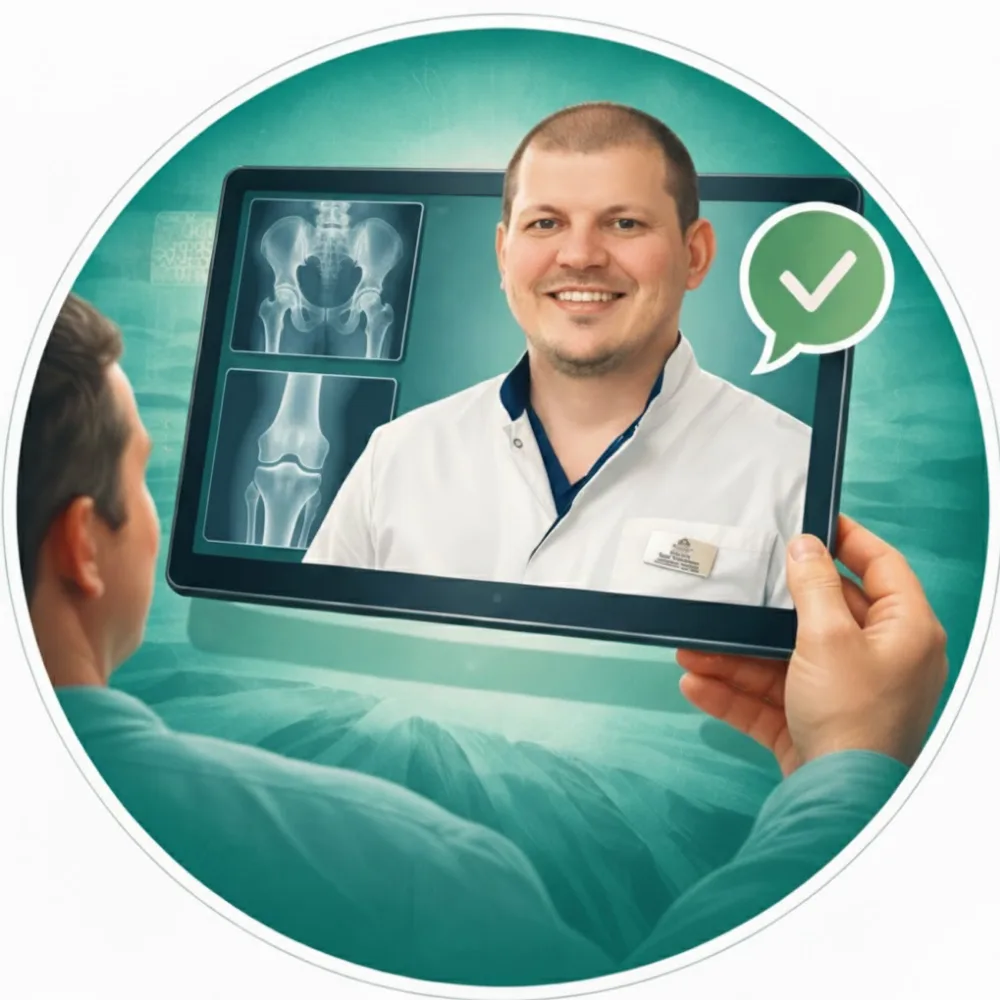
01
Online consultation
An online consultation allows you to discuss your condition, complaints, and symptoms in advance. You can submit imaging studies and medical documents, ask questions, and receive a preliminary treatment plan before visiting the clinic.
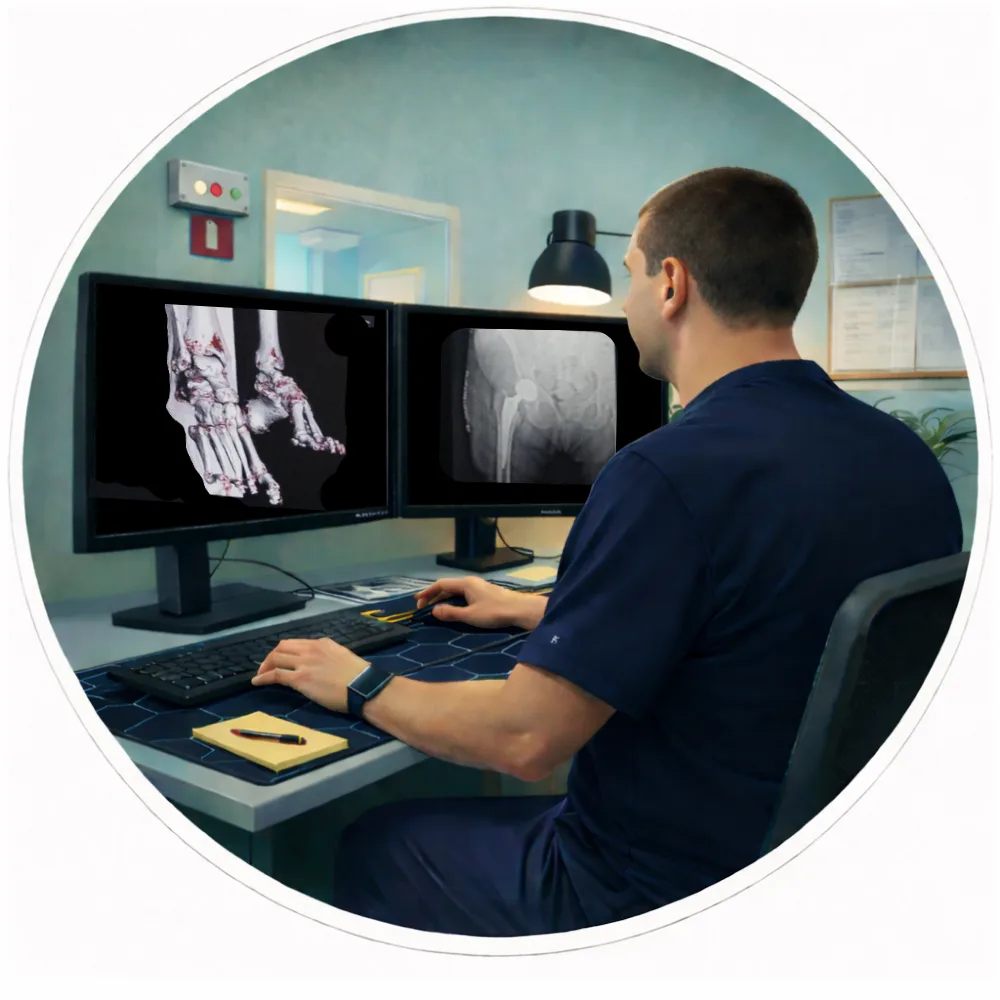
02
Examination and 3D surgical planning
All necessary examinations are performed within one day. A CT scan of the joint is conducted, followed by computer-based 3D surgical planning and implant selection to ensure maximum precision.

03
Surgery
On the second day of the clinic stay, the surgical procedure is performed. Original implants by Stryker Corporation (USA) and the MAKO robotic-assisted system are used, ensuring a high level of precision in implant positioning.
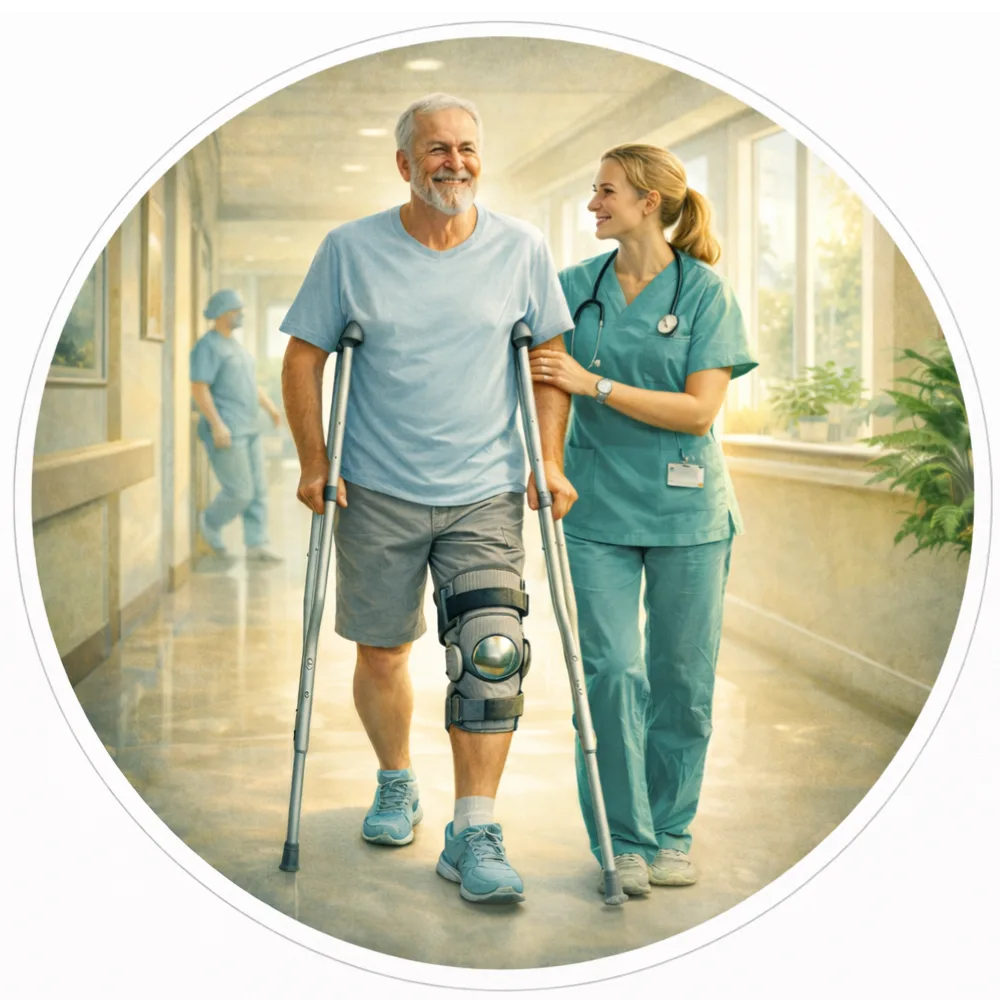
04
Rehabilitation and follow-up
Recovery begins immediately after surgery. In most cases, you will be able to start walking on the day of the procedure. After discharge, we continue to provide online follow-up care, including recovery guidance, rehabilitation monitoring, and answers to any questions that may arise.
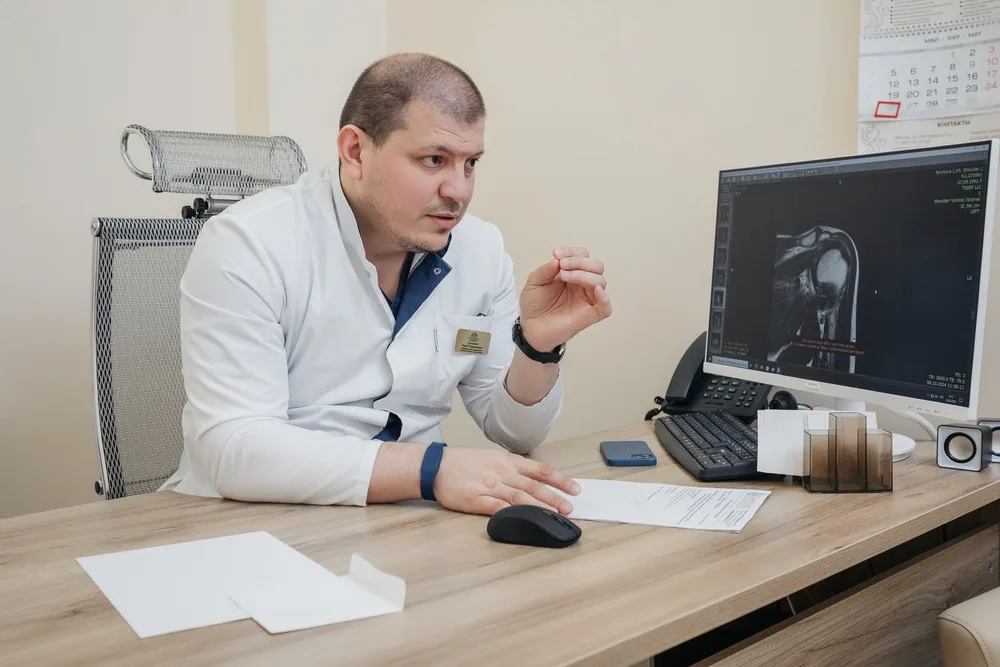
The surgery is performed personally by Zaur Sulumov
The doctor is personally involved in every stage of treatment — from the initial consultation and surgical planning to recovery monitoring and outcome evaluation.
Start Treatment

FAQ
The anterior approach (direct anterior, intermuscular) is a method of implant placement performed through a natural interval between muscles, without cutting them.
In most cases, the muscle structures are gently separated rather than detached, which reduces tissue trauma and helps preserve normal anatomy.
Main advantages:
Less soft tissue damage
Faster mobilization
Lower risk of dislocation
Reduced postoperative pain
Quicker return to daily activities
Additionally, the approach allows for reliable control of limb length and precise positioning of implant components.
No.
The suitability of the technique depends on:
The patient’s anatomical characteristics (including muscular build)
Body mass index (BMI)
Severity of joint deformity
History of previous surgeries
Presence of comorbidities
The decision is made individually after clinical examination and radiographic planning.
The duration depends on the complexity of the case, the patient’s anatomy, and the technology used (including robotic navigation, when applied).
Verticalization is performed on the day of surgery or the following day.
Full weight-bearing is usually permitted immediately if stable implant fixation is achieved.
Walking with support is recommended during the first days, followed by a gradual transition to independent ambulation.
Unlike the posterior approach, strict limitations on hip flexion and rotation are usually not required.
However, it is recommended to:
Avoid sudden extreme movements
Refrain from deep squatting in the early postoperative period
Gradually return to sports activities
Low-impact activities (such as walking, swimming, and cycling) are generally permitted after completion of the initial rehabilitation phase.
The longevity of the implant does not depend on the surgical approach, but is determined by:
Quality of implantation
Accuracy of component positioning
Type of fixation (cemented or press-fit)
The patient’s level of physical activity
Modern implant systems typically last 15–25 years or longer.
Surgery costs from $7,500