

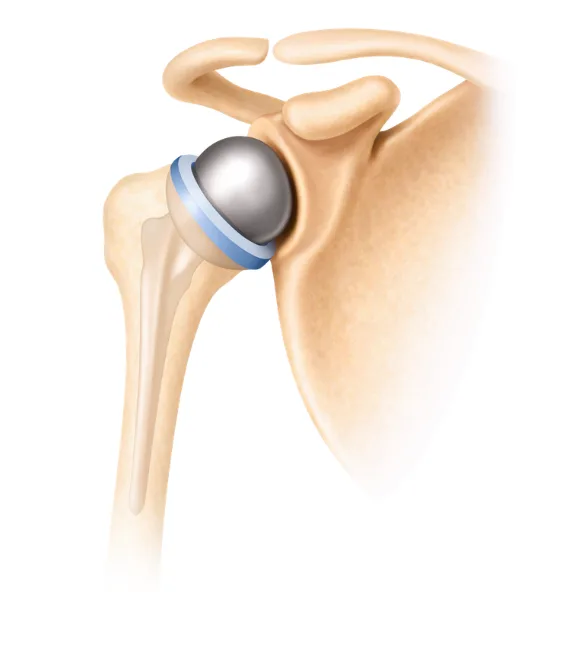
When reverse shoulder arthroplasty becomes the optimal option
Reverse shoulder arthroplasty is indicated in situations where it is impossible to restore joint function while preserving natural anatomy. This most commonly occurs in cases of severe rotator cuff damage or insufficiency, advanced post-traumatic changes, or after previous surgeries that did not achieve the expected outcome. In such conditions, an anatomical prosthesis cannot provide adequate stability or functional performance.
The principle of reverse arthroplasty involves altering the biomechanics of the shoulder joint. The center of rotation is shifted, allowing the deltoid muscle to assume the primary role in lifting and stabilizing the arm. This compensates for the loss of rotator cuff function and enables controlled movement even in the presence of significant structural damage.
Before deciding on reverse shoulder arthroplasty, a thorough evaluation of the joint, bone quality, and muscle balance is performed. We consider the extent of articular surface destruction, bone integrity, patient age, and functional expectations. This careful approach ensures that reverse shoulder arthroplasty is selected in cases where it can provide a stable, predictable, and clinically justified result.
How a reverse shoulder prosthesis works
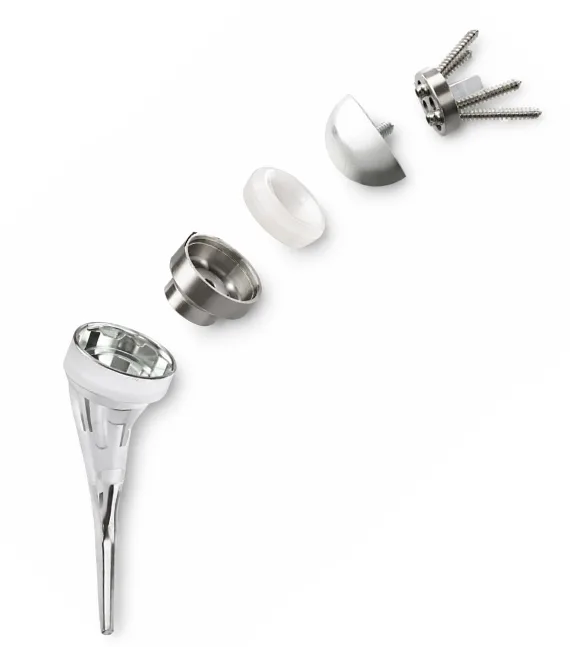
In reverse shoulder arthroplasty, the mechanics of the joint and the distribution of muscular load are fundamentally altered. Unlike an anatomical prosthesis, the reverse design shifts the center of rotation of the shoulder, allowing the deltoid muscle to assume the primary role in lifting and stabilizing the arm. This approach is essential in cases of absent or severely deficient rotator cuff function.
The modified joint mechanics provide more predictable arm movement even in the presence of significant anatomical damage. By redistributing load, shoulder function becomes less dependent on damaged tendons, and movements become more controlled and stable. This method restores essential shoulder function in situations where other treatment options are ineffective.
When planning reverse shoulder arthroplasty, particular attention is given to component positioning and muscle balance. Accurate implant placement directly influences range of motion, joint stability, and implant longevity. Careful biomechanical planning helps reduce the risk of overload and ensures stable shoulder performance in daily activities.
Restoration of function and limitations after reverse shoulder arthroplasty
After reverse shoulder arthroplasty, the main goal of treatment is to restore the ability to use the arm in daily life without significant pain or instability. The procedure enables patients to regain the ability to lift the arm, perform basic daily activities, and reduce pain even in complex clinical situations where other treatment options are ineffective.
It is important to understand that reverse arthroplasty has specific functional limitations. The range of motion after surgery typically differs from that achieved with anatomical arthroplasty, particularly regarding active rotational movements. We discuss in advance which functions are expected to recover first and which types of load may remain limited, ensuring that expectations align with realistic outcomes.
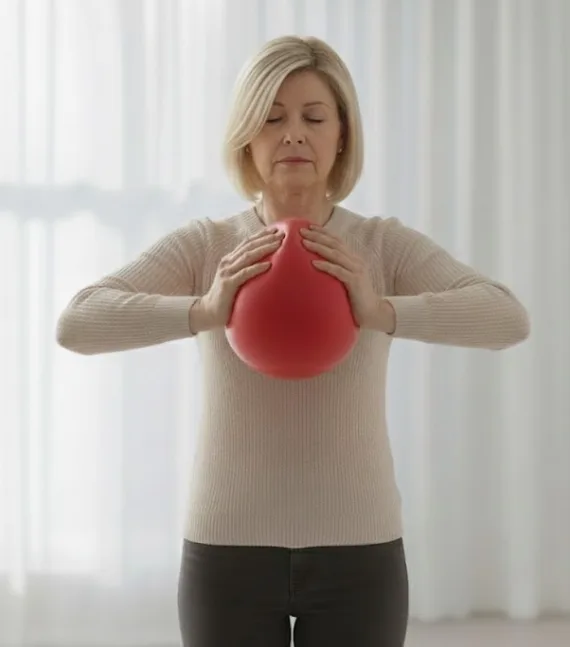
Recovery after reverse shoulder arthroplasty requires a gradual and careful approach. We support the patient throughout all stages of rehabilitation, assessing progress in motion and joint stability under load. This approach helps achieve a stable functional result, maintain independence in daily activities, and reduce the risk of complications related to shoulder overload.
Stages of treatment
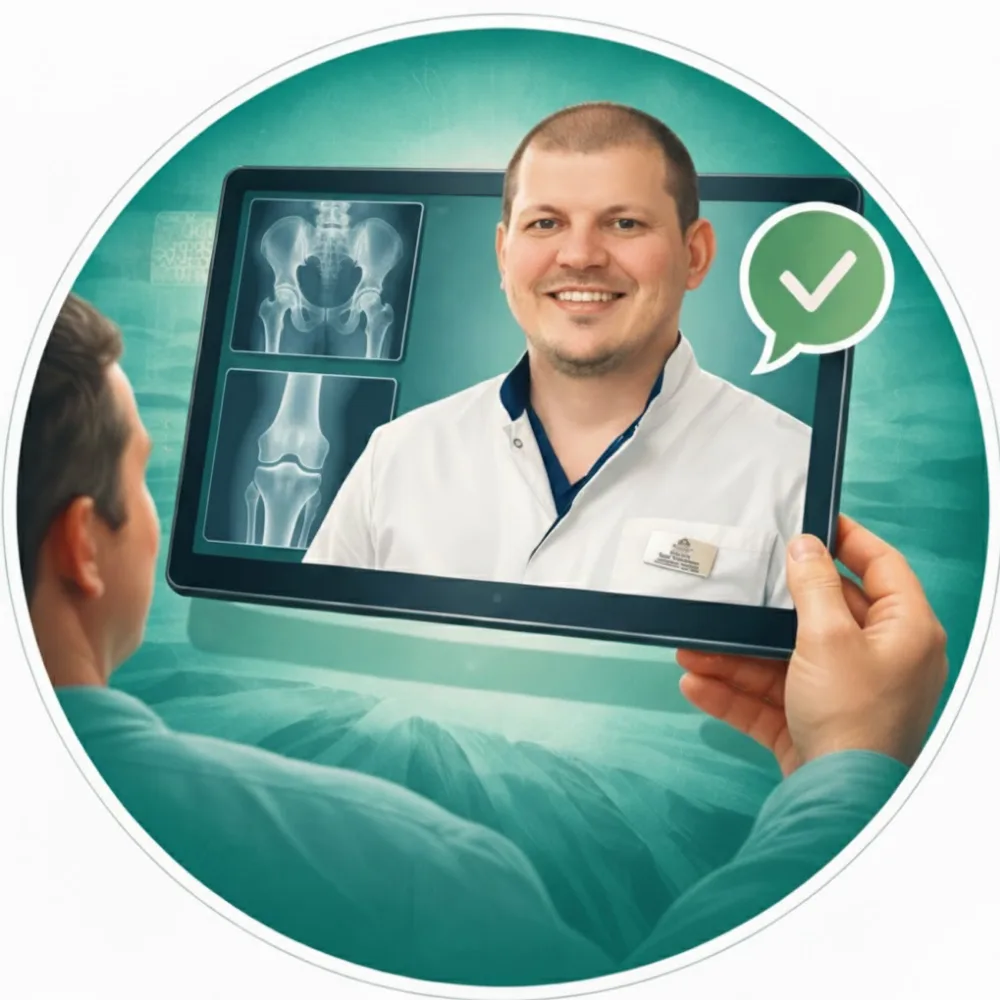
Online consultation
An online consultation allows you to discuss your condition, complaints, and symptoms in advance. You can submit imaging studies and medical documents, ask questions, and receive a preliminary treatment plan before visiting the clinic.
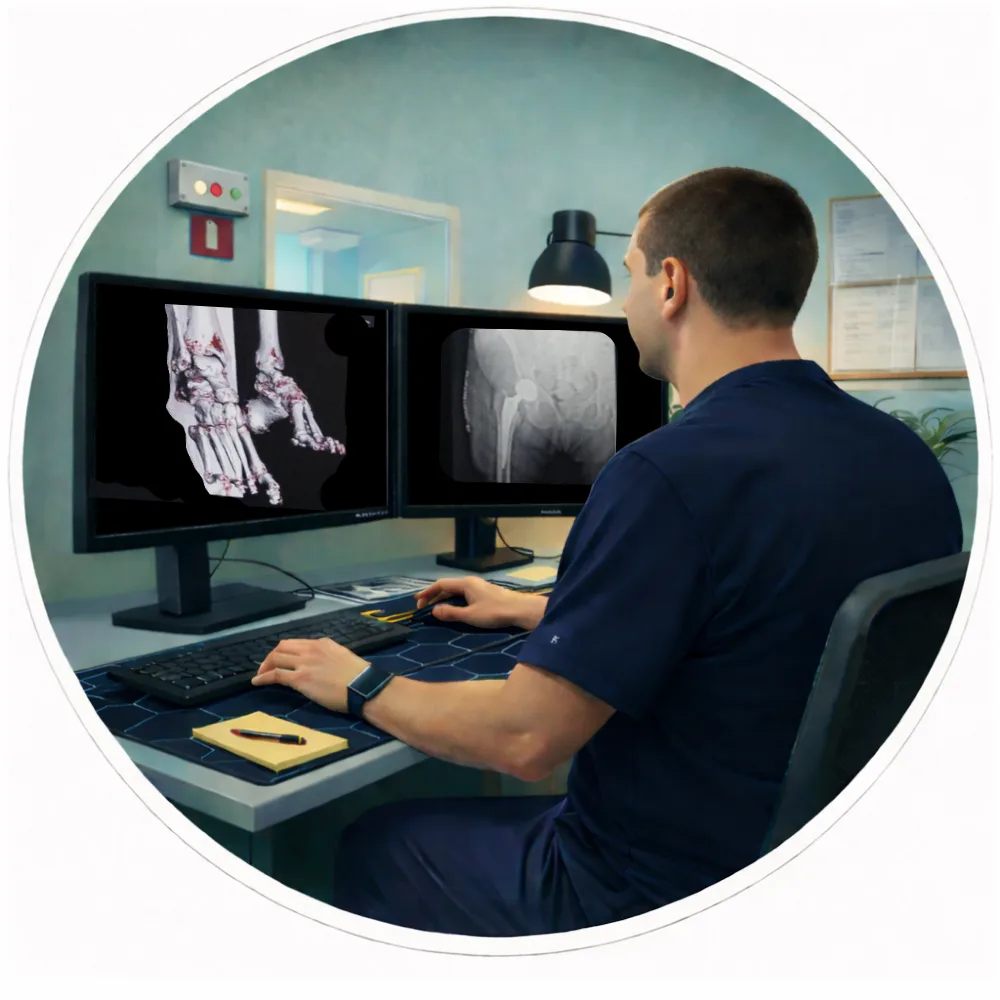
Examination and 3D surgical planning
All necessary examinations are performed within one day. A CT scan of the joint is conducted, followed by computer-based 3D surgical planning and implant selection to ensure maximum precision.

Surgery
On the second day of the clinic stay, the surgical procedure is performed. Original implants by Stryker Corporation (USA) and the MAKO robotic-assisted system are used, ensuring a high level of precision in implant positioning.
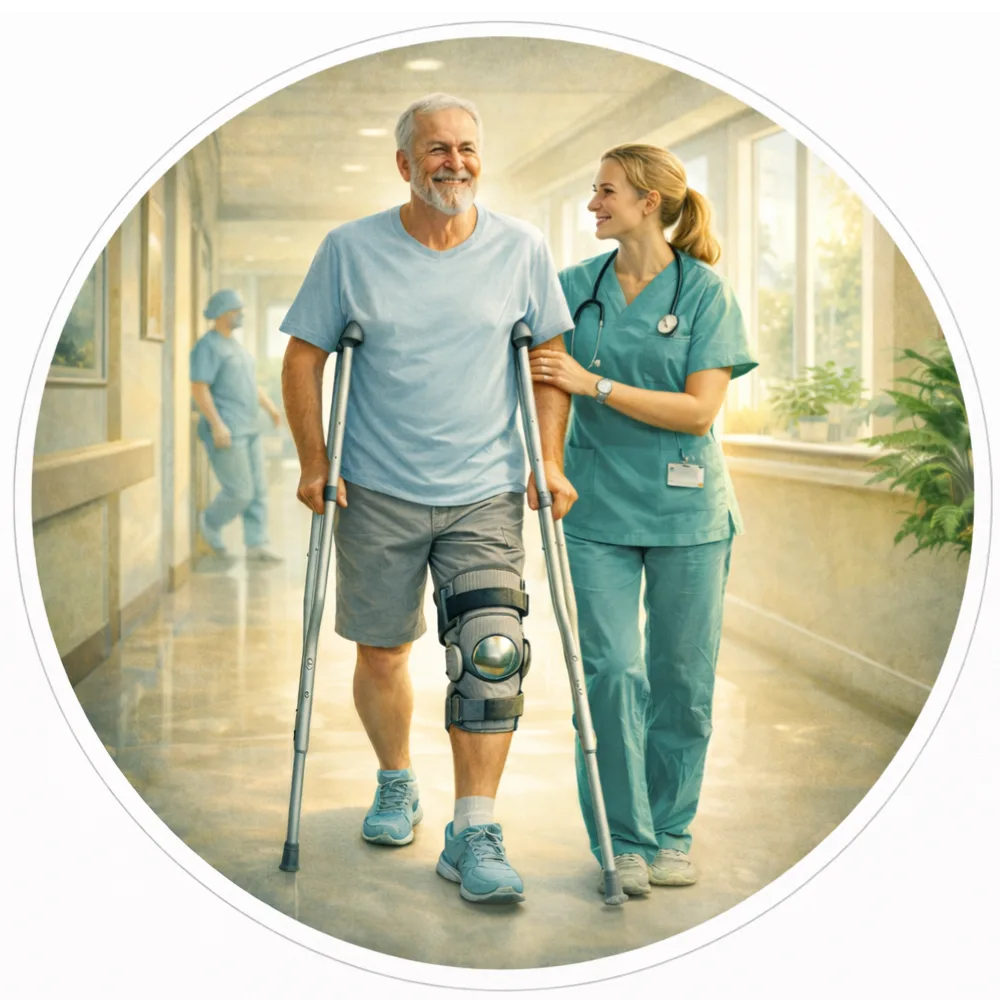
Rehabilitation and follow-up
Recovery begins immediately after surgery. In most cases, you will be able to start walking on the day of the procedure. After discharge, we continue to provide online follow-up care, including recovery guidance, rehabilitation monitoring, and answers to any questions that may arise.
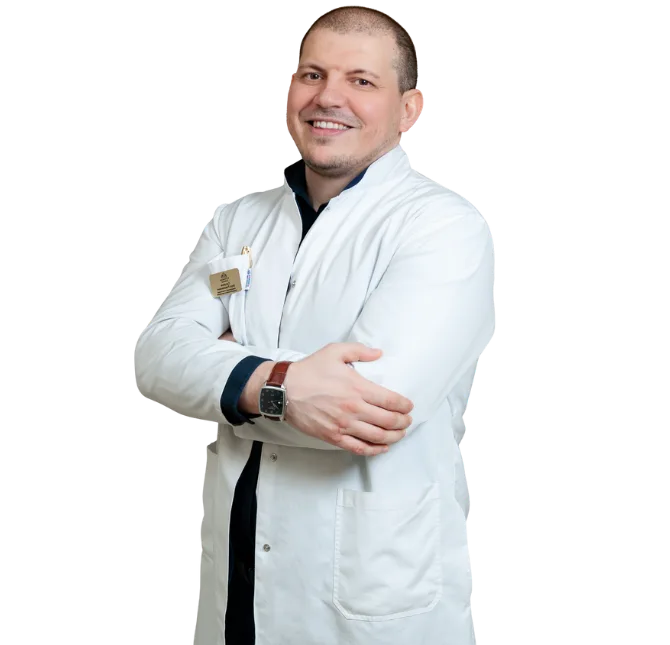
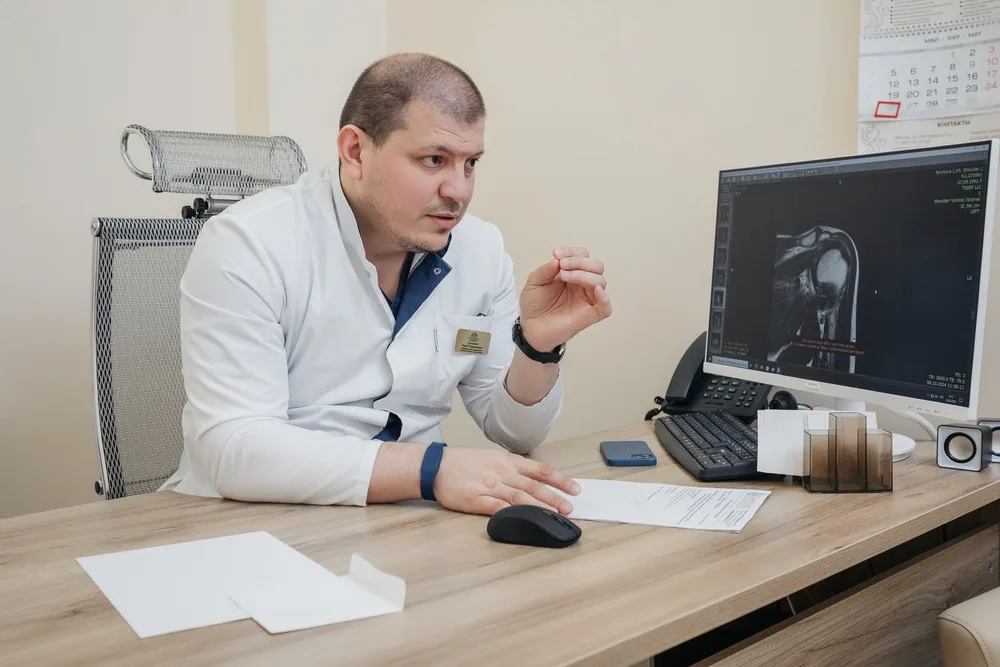
The surgery is performed personally by Zaur Sulumov
The doctor is personally involved in every stage of treatment — from the initial consultation and surgical planning to recovery monitoring and outcome evaluation.
Start Treatment
FAQ
This is a design in which the “ball” and the “socket” are switched:
The spherical component is fixed to the scapula
The cup component is on the humerus
This setup allows the deltoid muscle to work instead of the damaged rotator cuff.
Main indications:
Tear or absence of the rotator cuff
Severe cuff arthropathy
Complex fractures in elderly patients
Revision surgeries
Restoration of arm elevation even in the absence of the rotator cuff
Joint stability
Pain reduction
This is the method of choice when the rotator cuff is deficient.
The range of motion differs from an anatomical prosthesis:
Good arm elevation
Rotational movements may be limited
The outcome depends on the condition of the soft tissues and rehabilitation.
The average service life is 15–20 years.
Longevity depends on the patient’s age, bone quality, and level of activity.