

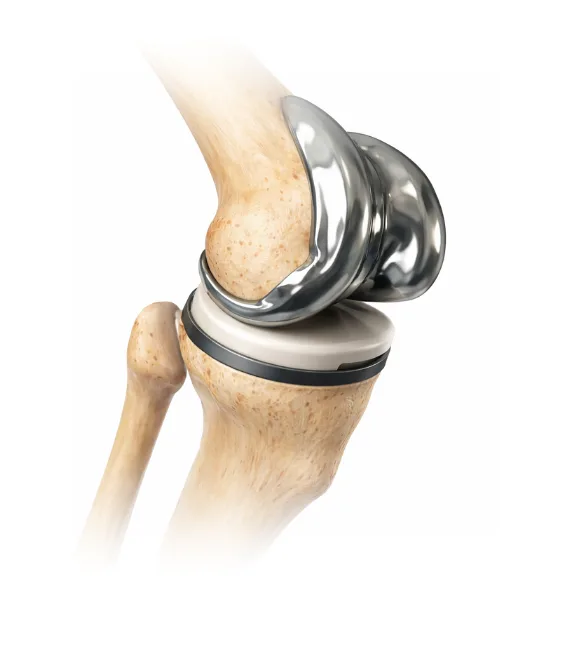
Total knee arthroplasty as a method of restoring the entire knee alignment
Total knee arthroplasty is indicated when the disease affects all compartments of the joint and leads to significant impairment of weight-bearing function. In progressive osteoarthritis, deformities, and persistent pain, the knee loses its primary role of providing stable and controlled movement during walking and loading. In such cases, partial treatment options are insufficient to fully restore joint biomechanics.
During total knee arthroplasty, all articular surfaces of the knee are replaced, allowing restoration of proper lower limb alignment and balanced load distribution between the femur and tibia. Correction of varus or valgus deformities, which develop over time and increase compartment overload, is particularly important. Precise implantation of the prosthetic components ensures even load distribution and stable knee function during movement.
We view total knee arthroplasty not simply as a “joint replacement,” but as a comprehensive restoration of knee function. Surgical planning takes into account the degree of deformity, the condition of the ligamentous structures, and the patient’s gait characteristics. This approach helps achieve durable results and restores the ability to bear weight without persistent pain or a sense of instability.
Knee stability and load distribution after surgery
After total knee arthroplasty, the key factor is restoring stability during movement and achieving even load distribution on the leg. The knee is involved in every step, ascent, and descent, so any imbalance after surgery can quickly affect gait and cause a sense of insecurity. Proper joint function depends not only on the implant design but also on the coordinated interaction of all knee structures.
During surgery, particular attention is given to ligament balancing. The ligaments provide stability during flexion, extension, and axial loading. In total knee arthroplasty, it is essential to position the components in a way that ensures stability both at rest and during movement. This helps reduce the risk of a “loose” sensation and improves joint control in daily activities.
We assess how the knee responds to dynamic loading and structure the rehabilitation process accordingly. Our goal is to create a stable and predictable joint that allows confident walking, stair climbing, and everyday movements without overload or discomfort.
Goals of total knee arthroplasty and recovery prognosis
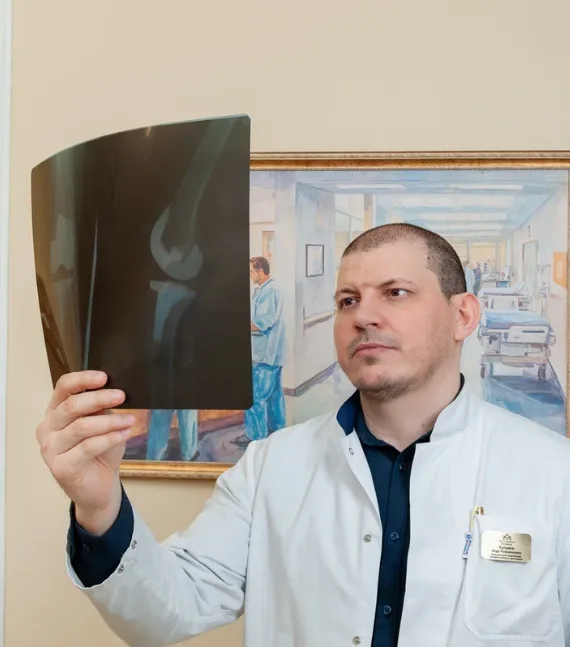
Total knee arthroplasty is performed in cases of advanced cartilage damage and limb axis deformity, when pain and restricted motion significantly limit daily activity. The procedure is aimed at eliminating pathological contact between joint surfaces and creating stable support under load.
After implantation, a new geometry of the knee joint is established. The body requires time to adapt to the altered weight distribution pattern, so the outcome of surgery largely depends on proper postoperative management.
Recovery after total knee arthroplasty includes training gait control, normalizing limb alignment, and gradually increasing functional load. We assess not only the range of flexion and extension, but also gait quality, weight-bearing stability, and movement symmetry. This approach helps achieve stable joint function and maintain long-term patient activity.
Stages of treatment
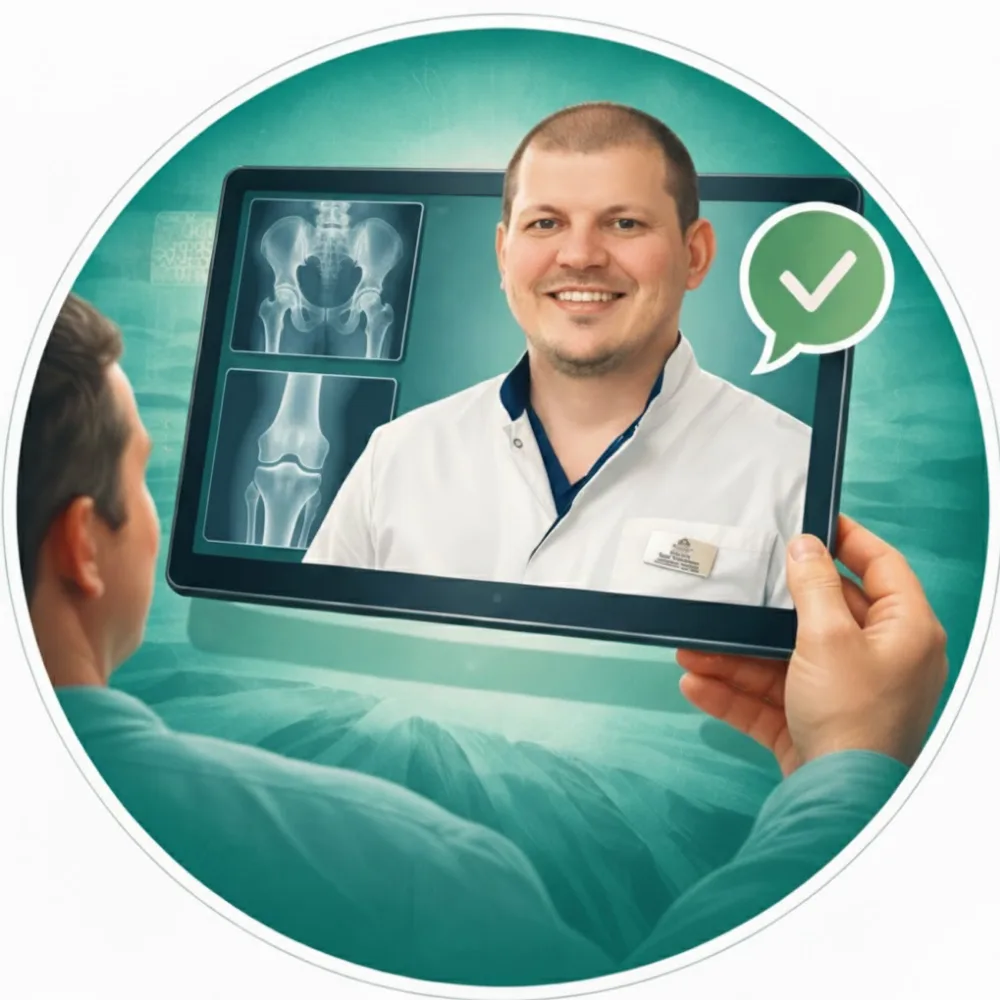
Online consultation
An online consultation allows you to discuss your condition, complaints, and symptoms in advance. You can submit imaging studies and medical documents, ask questions, and receive a preliminary treatment plan before visiting the clinic.
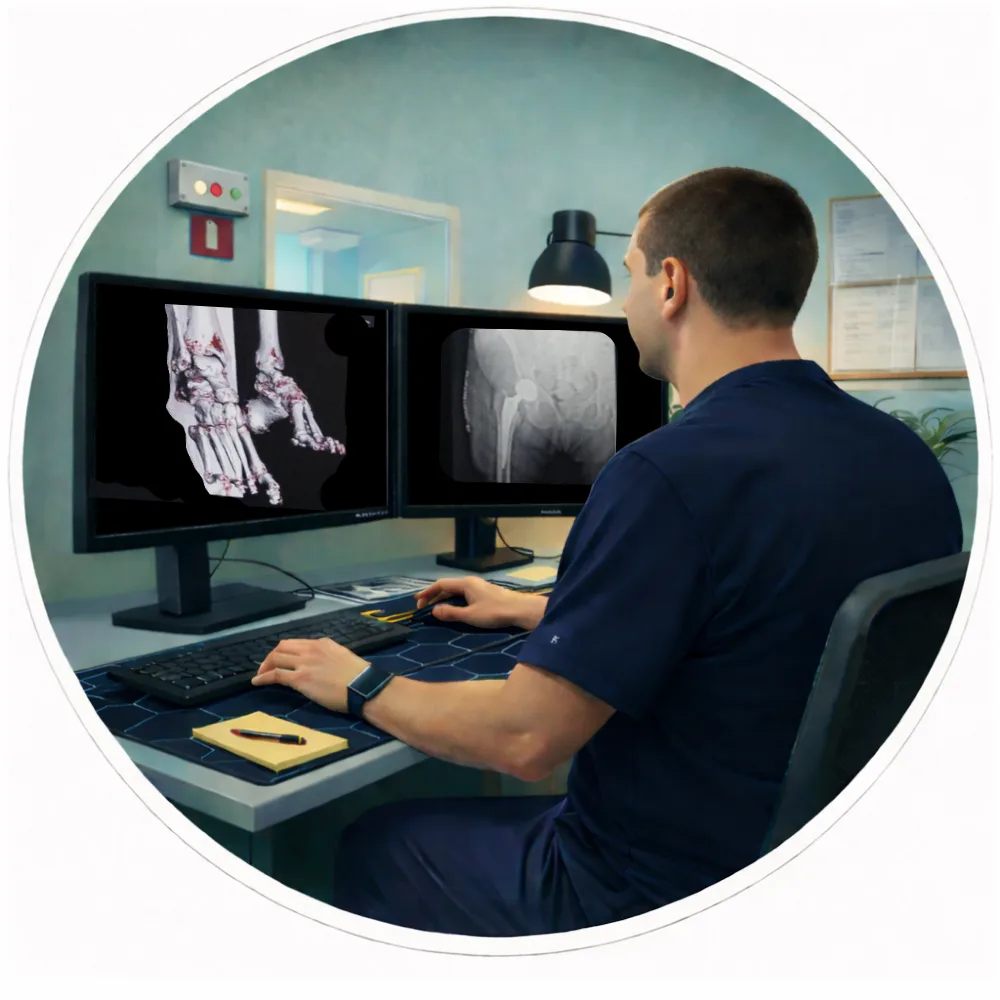
Examination and 3D surgical planning
All necessary examinations are performed within one day. A CT scan of the joint is conducted, followed by computer-based 3D surgical planning and implant selection to ensure maximum precision.

Surgery
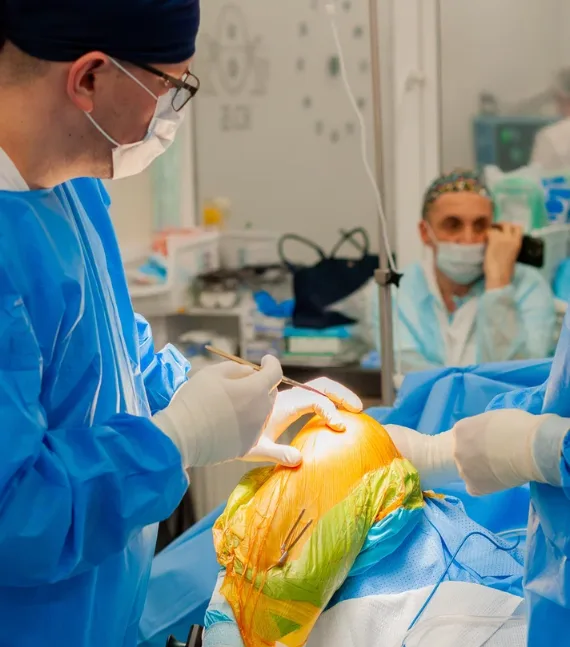
On the second day of the clinic stay, the surgical procedure is performed. Original implants by Stryker Corporation (USA) and the MAKO robotic-assisted system are used, ensuring a high level of precision in implant positioning.
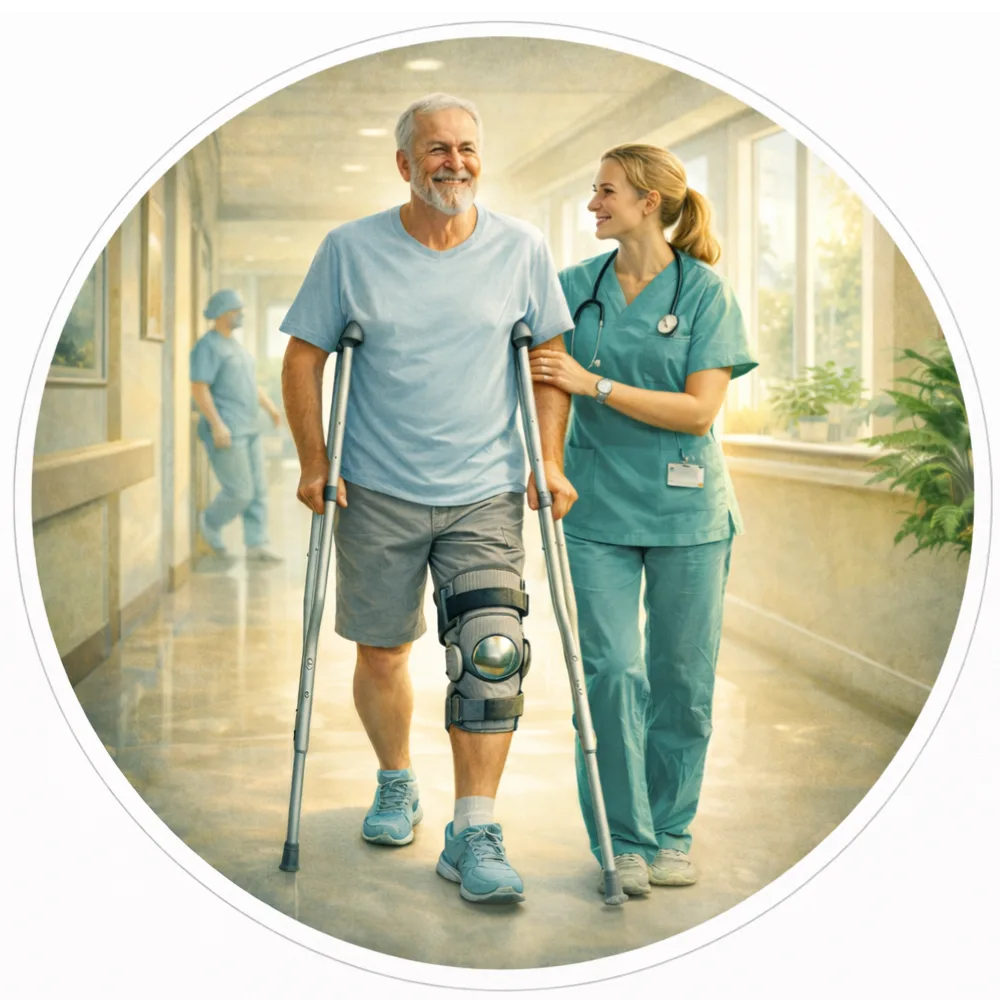
Rehabilitation and follow-up
Recovery begins immediately after surgery. In most cases, you will be able to start walking on the day of the procedure. After discharge, we continue to provide online follow-up care, including recovery guidance, rehabilitation monitoring, and answers to any questions that may arise.
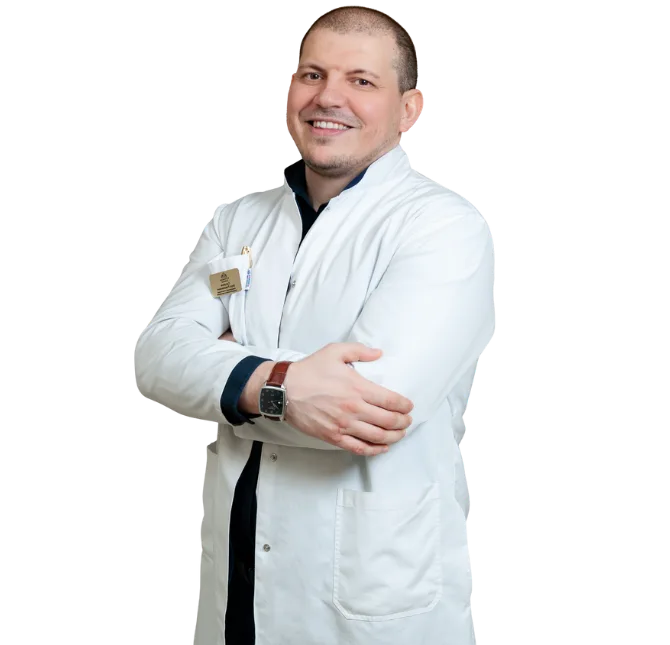
The surgery is performed personally by Zaur Sulumov
The doctor is personally involved in every stage of treatment — from the initial consultation and surgical planning to recovery monitoring and outcome evaluation.
Start Treatment
FAQ
On average, knee replacement surgery lasts from 60 to 120 minutes. The duration depends on the degree of joint wear, the patient’s anatomical features, and the selected surgical technique.
In most cases, patients can stand on the day of surgery or the following day. Walking begins with support (walker or crutches) under the supervision of a doctor and a physical therapy specialist.
There is no pain during the operation due to anesthesia. Postoperative pain is effectively controlled with a modern pain management protocol that begins before surgery and continues continuously for the first 48 hours. Most patients report that discomfort is significantly less than expected. Pain usually decreases progressively during the first weeks.
Modern knee implants typically last 15–20 years or more when medical recommendations are followed, with appropriate physical activity and weight control.
Rehabilitation begins within the first 24 hours after surgery and includes exercises to restore mobility, muscle strength, and proper gait. Active recovery usually takes 4–6 weeks, while full recovery may take up to 3 months.
During the first months, it is recommended to avoid sudden movements, jumping, and excessive нагрузки. Later, most patients return to an active daily life, including prolonged walking and moderate sports activities.
Not only can you — in early stages, conservative treatment is often recommended. However, in cases of significant joint destruction, knee replacement remains the most effective method to relieve pain and restore knee function.