

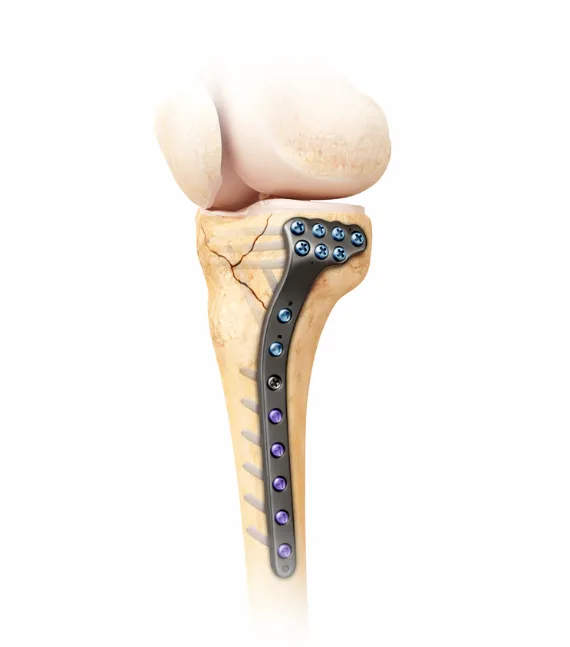
Osteosynthesis for a tibial fracture
A tibial fracture directly affects the ability to bear weight and support the body during walking. Unlike many other fractures, preserving the correct limb alignment is crucial, as the tibia carries the primary load during standing and movement. Even minor displacement of bone fragments can, over time, lead to gait alterations, overload of the knee or ankle joint, and chronic discomfort.
Osteosynthesis for a tibial fracture is indicated when the fracture is unstable, accompanied by displacement, or when there is a risk of axis deviation with conservative treatment. During surgery, precise alignment of the fragments and stable fixation are performed to restore the anatomical position of the bone and create conditions for reliable healing. This approach is essential for establishing stable support and enabling a gradual return to weight-bearing.
We assess the fracture pattern, the condition of the soft tissues, and the patient’s level of daily activity. Our goal is not only to achieve bone union but also to preserve proper lower limb biomechanics, ensuring recovery without persistent limping, pain, or walking limitations.
What determines the treatment strategy for a tibial fracture
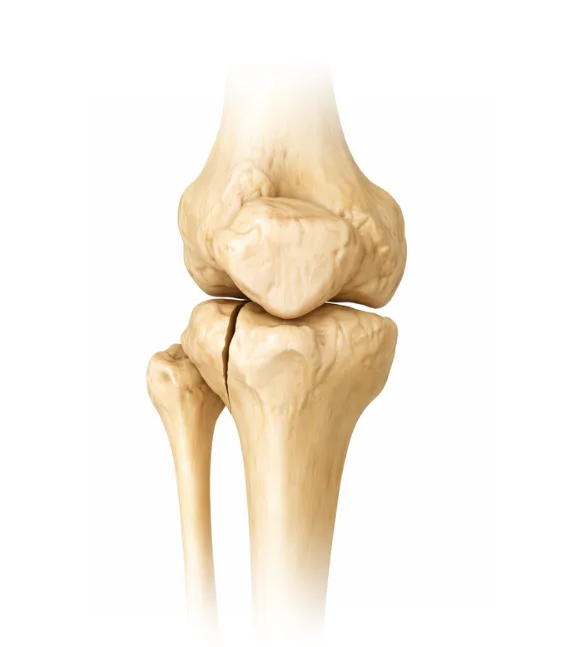
Tibial fractures are characterized by their high load-bearing significance, as the tibia forms the axis of the lower leg and carries most of the body weight during walking. In such injuries, it is important to consider not only the fracture line but also changes in bone position under load. Even moderate displacement or rotational deviation can lead to limb axis misalignment and overload of the knee or ankle joint.
The complexity of these fractures is related to the extent of the injury, the condition of the soft tissues, and fragment stability. In some cases, a tibial fracture may appear stable on imaging but fail to withstand early weight-bearing. We assess the risk of secondary displacement and the impact of the injury on the biomechanics of the entire limb in order to select a treatment strategy focused on restoring proper alignment and weight-bearing function.
When the articular surface is involved, particularly precise fragment reduction and carefully planned fixation are required. The decision is made based on the clinical presentation, X-ray and CT findings, and the anticipated load during recovery.
Proper leg alignment and confident gait
In a tibial fracture, the treatment outcome largely depends on how accurately the lower limb axis is restored. Even with proper bone healing, minor deviations can affect gait, cause a sense of instability, and lead to overload of the knee or ankle joint. Over time, this may limit physical activity and reduce comfort when walking usual distances.
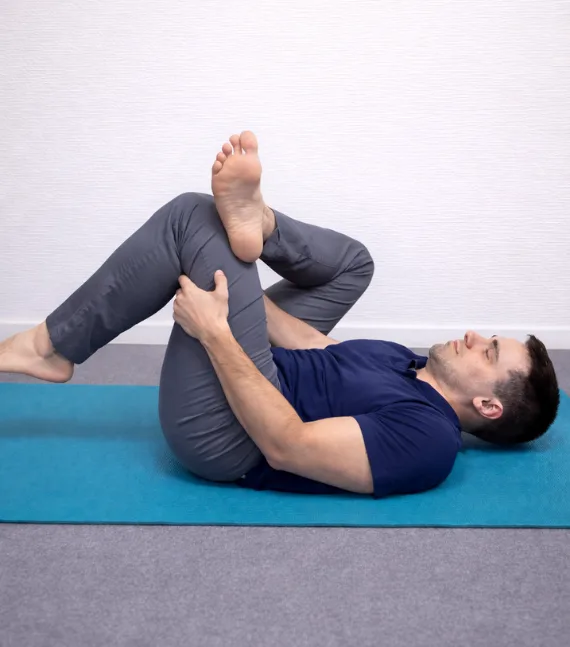
After osteosynthesis, it is important not only to monitor bone healing but also to gradually adapt the leg to weight-bearing. We focus on establishing stable support, restoring step symmetry, and ensuring even weight distribution during movement. Premature or improperly controlled loading can negatively affect the result, so recovery is structured in stages.
We support the patient throughout the rehabilitation period, assessing gait and the limb’s response to load. This approach helps restore confidence while walking, reduce the risk of chronic pain, and prevent long-term limitations in daily activity.
Stages of treatment

Online consultation
An online consultation allows you to discuss your condition, complaints, and symptoms in advance. You can submit imaging studies and medical documents, ask questions, and receive a preliminary treatment plan before visiting the clinic.
Examination and 3D surgical planning
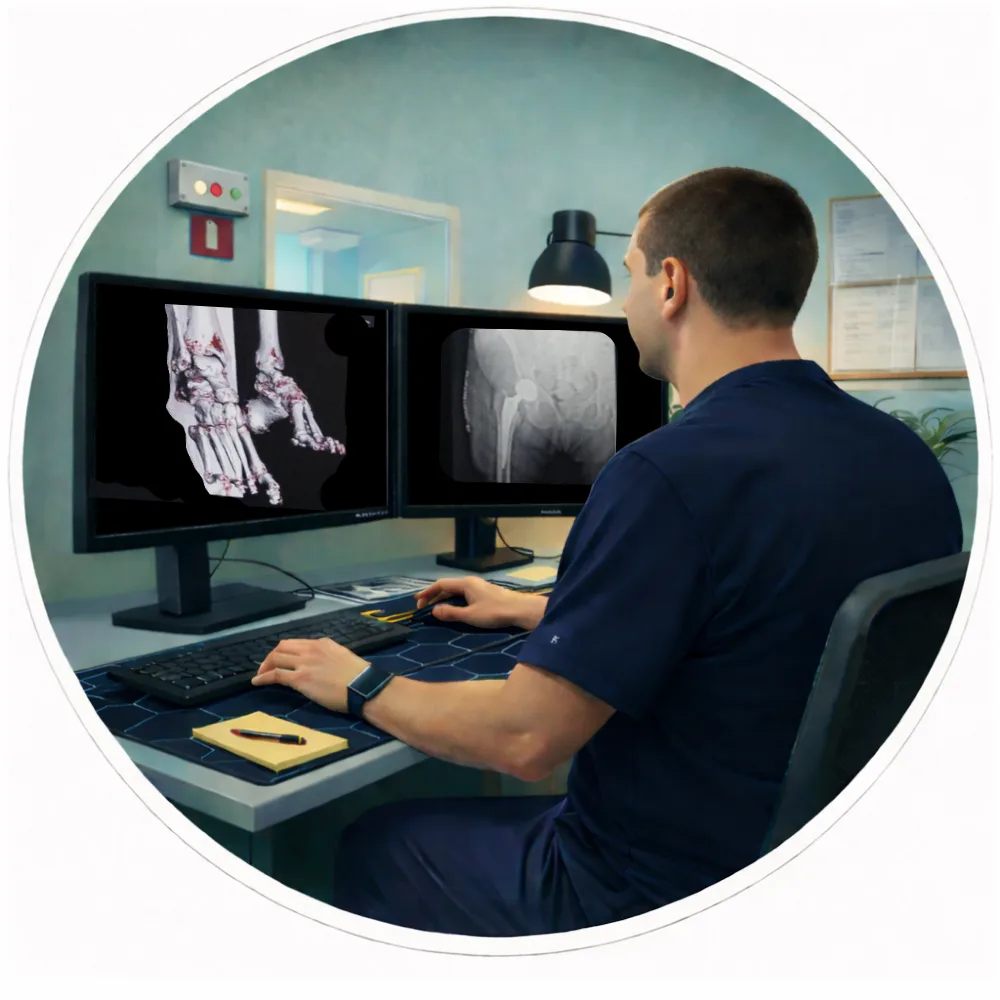
All necessary examinations are performed within one day. A CT scan of the joint is conducted, followed by computer-based 3D surgical planning and implant selection to ensure maximum precision.

Surgery
On the second day of the clinic stay, the surgical procedure is performed. Original implants by Stryker Corporation (USA) and the MAKO robotic-assisted system are used, ensuring a high level of precision in implant positioning.

Rehabilitation and follow-up
Recovery begins immediately after surgery. In most cases, you will be able to start walking on the day of the procedure. After discharge, we continue to provide online follow-up care, including recovery guidance, rehabilitation monitoring, and answers to any questions that may arise.
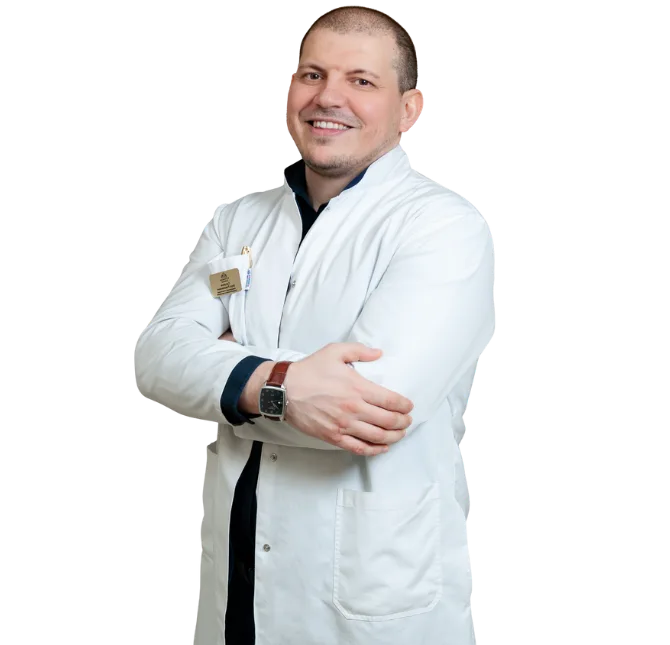
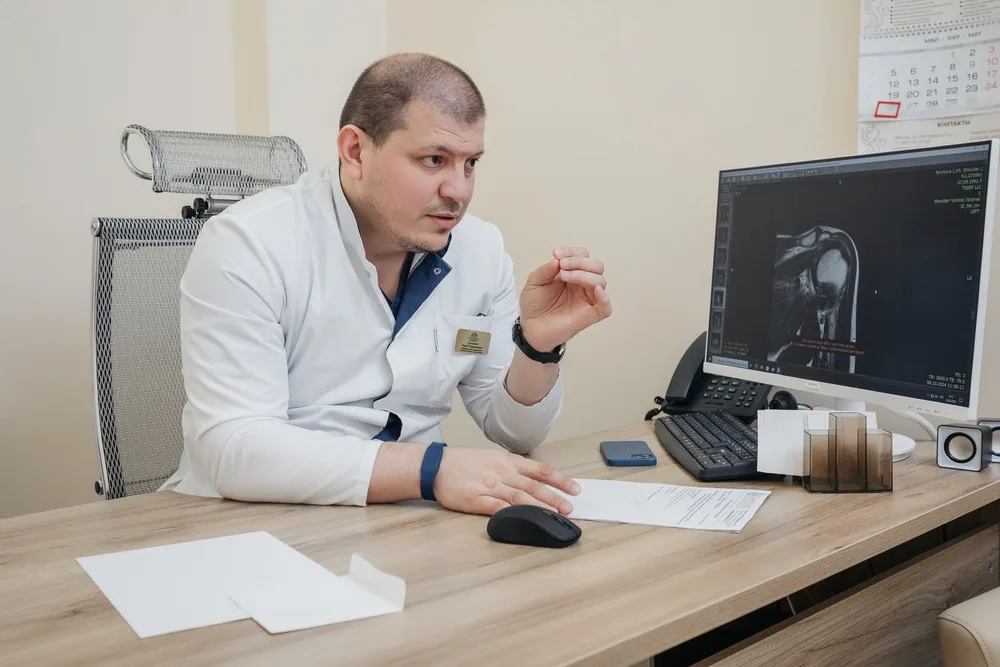
The surgery is performed personally by Zaur Sulumov
The doctor is personally involved in every stage of treatment — from the initial consultation and surgical planning to recovery monitoring and outcome evaluation.
Start Treatment
FAQ
The duration depends on the type of fracture and the fixation method. On average, surgery lasts from 30 to 120 minutes. In complex or comminuted fractures, operative time may be longer.
The timing of weight-bearing depends on the fracture location and stability of fixation. In some cases, movement is allowed within the first days after surgery, while full weight-bearing depends on the fracture type. For intra-articular fractures, a forced pause of 4–8 weeks may be required, with gradual progression under medical supervision and follow-up X-rays.
There is no pain during the operation due to anesthesia. After surgery, discomfort is managed with a modern pain-control protocol and typically decreases as the fracture heals.
Not always. Implants from leading manufacturers are commonly used, and in most cases plates and screws can remain in the body permanently. Removal is considered individually if there is discomfort or specific medical indications.
Average bone healing time ranges from 6 to 12 weeks, but this may vary depending on the patient’s age, fracture type, and overall health condition.
Rehabilitation focuses on restoring movement, muscle strength, and limb function. The program is individualized and may include physical therapy, physiotherapy, and gradual increase of load.
Not all fractures require surgical treatment. However, in cases of fragment displacement, instability, or risk of improper healing, osteosynthesis ensures accurate alignment and improves the functional outcome.