

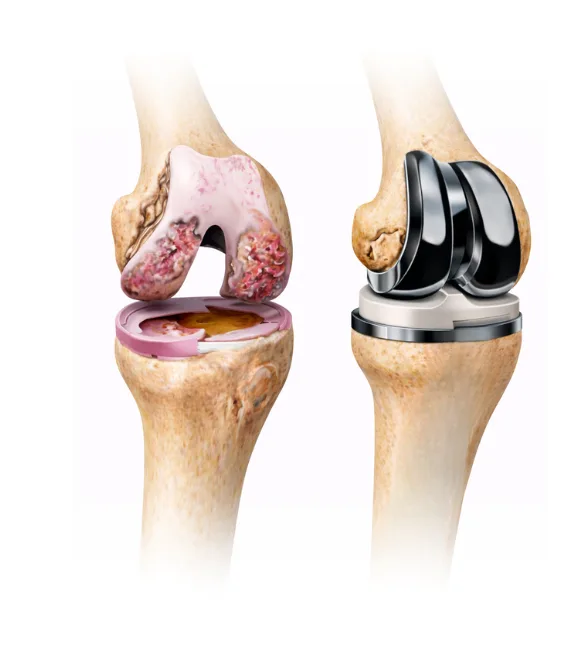
Revision arthroplasty as a distinct level of surgical complexity
Revision knee arthroplasty is an independent and significantly more complex type of surgical treatment compared to primary joint replacement. During such procedures, the surgeon works not with the native anatomy but with altered structures: previously implanted components, scar tissue, areas of bone loss, and disrupted joint biomechanics. This requires a different approach to planning and performing the surgery.
The primary goal of revision surgery is to restore knee stability and weight-bearing function in conditions of limited anatomical resources. It is often necessary to consider the degree of implant wear, bone quality, and the consequences of previous interventions. The treatment strategy depends on how reliably new components can be fixed and how well they can function under load over time.
We view revision knee arthroplasty as an individualized surgical process with no universal solutions. Before surgery, a detailed analysis is performed to identify the causes of primary treatment failure, assess the condition of bone and soft tissues, and evaluate the patient’s overall functional status. This approach allows for a carefully considered strategy and improves the predictability of outcomes, even in complex clinical situations.
Causes leading to the need for revision surgery
The need for revision knee arthroplasty arises when a previously implanted prosthesis no longer performs its function or causes significant discomfort. Over time, implant components may undergo wear, and their fixation can weaken under load. This may result in pain, a sense of instability, and reduced weight-bearing capacity of the leg that does not respond to conservative treatment.
One of the most common reasons for revision surgery is aseptic loosening of the prosthetic components. Other indications include recurrent joint effusion, limb axis malalignment, ligament instability, and the consequences of previous surgical interventions. In some cases, revision becomes necessary due to complications or progressive bone changes around the implant.
We place particular emphasis on identifying the underlying cause of the problem, as this directly determines the scope and strategy of the repeat procedure. A detailed analysis of the clinical presentation, imaging findings, and treatment history allows us to select the most appropriate solution and reduce the risk of recurrent complications after revision knee arthroplasty.
Goals of revision arthroplasty and realistic prognosis
The primary goal of revision knee arthroplasty is to restore stable weight-bearing and reduce pain in the setting of already altered anatomy. Unlike primary surgery, the surgeon must consider the consequences of previous procedures, the condition of the bone and ligamentous structures, and the degree of functional limitation that has developed over time. These factors determine the scope of the operation and the overall recovery strategy.
Outcomes of revision arthroplasty largely depend on the initial clinical situation. In most cases, it is possible to significantly improve knee stability, increase load tolerance, and restore confident mobility. However, recovery after revision surgery typically takes longer and requires more cautious weight-bearing compared to primary joint replacement.
We discuss the goals of the procedure and potential limitations with the patient in advance to establish realistic expectations. Careful planning, stability control, and staged rehabilitation help achieve the best possible functional result and improve quality of life, even in complex clinical circumstances.
Stages of treatment
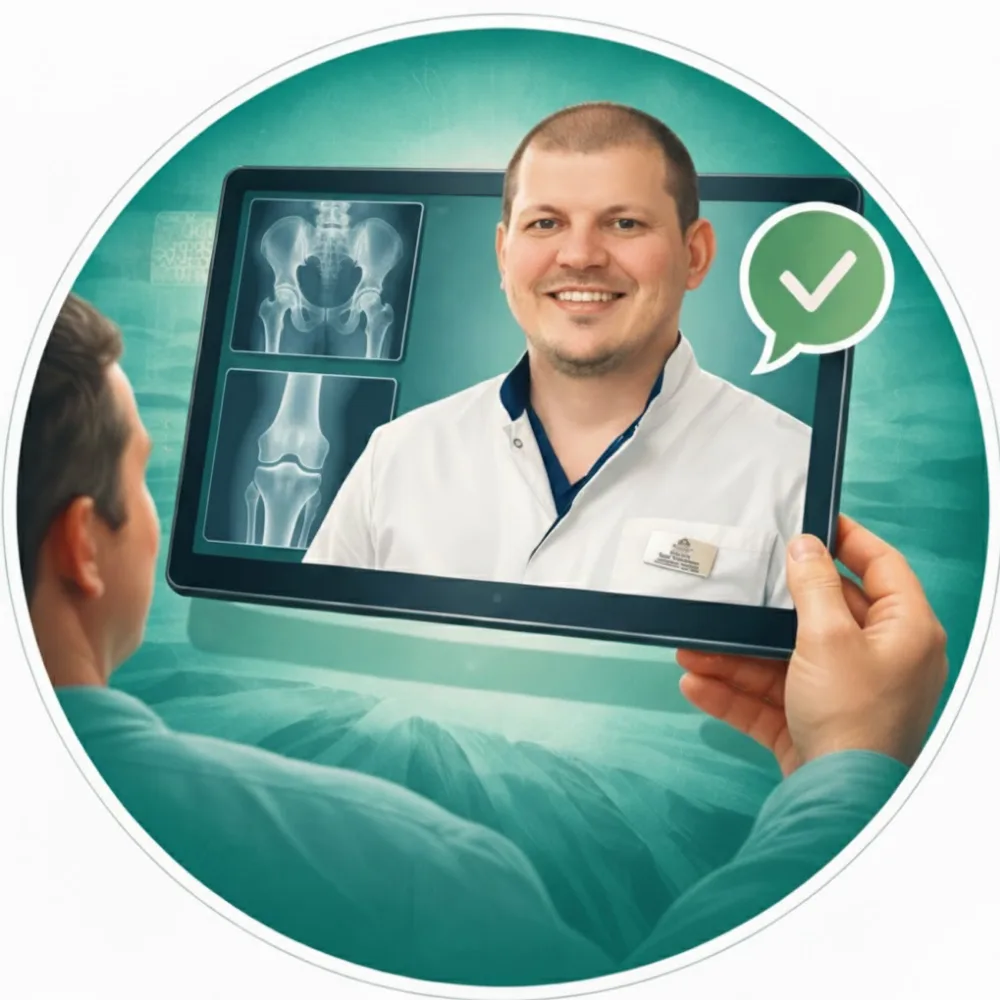
Online consultation
An online consultation allows you to discuss your condition, complaints, and symptoms in advance. You can submit imaging studies and medical documents, ask questions, and receive a preliminary treatment plan before visiting the clinic.
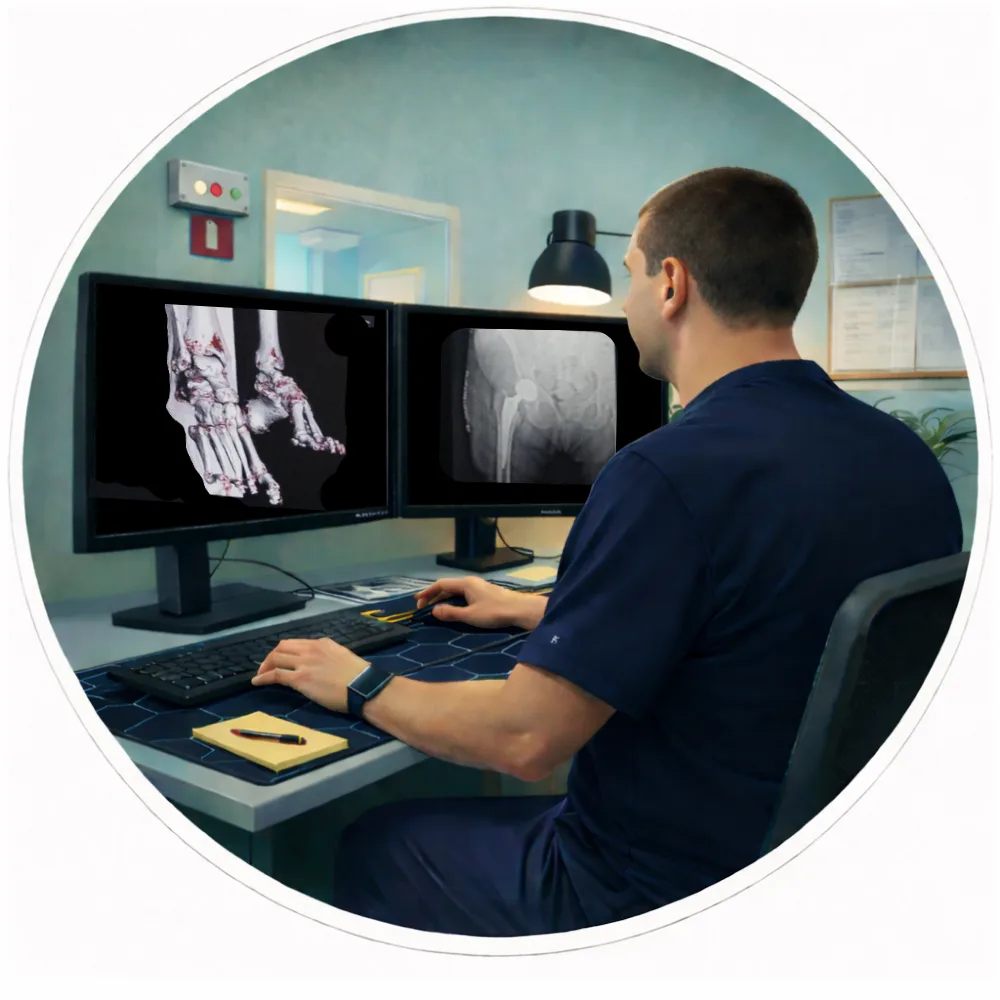
Examination and 3D surgical planning
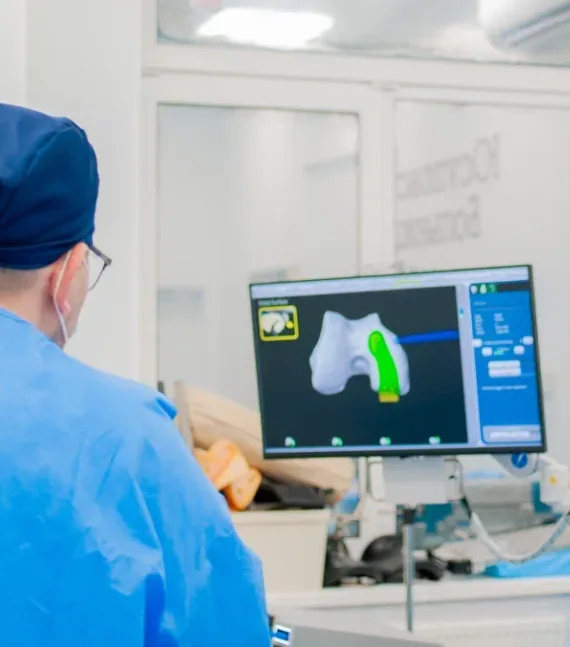
All necessary examinations are performed within one day. A CT scan of the joint is conducted, followed by computer-based 3D surgical planning and implant selection to ensure maximum precision.

Surgery
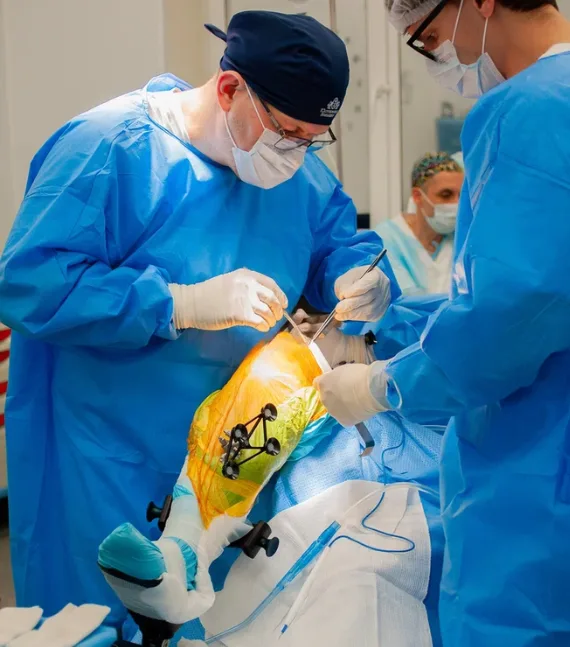
On the second day of the clinic stay, the surgical procedure is performed. Original implants by Stryker Corporation (USA) and the MAKO robotic-assisted system are used, ensuring a high level of precision in implant positioning.
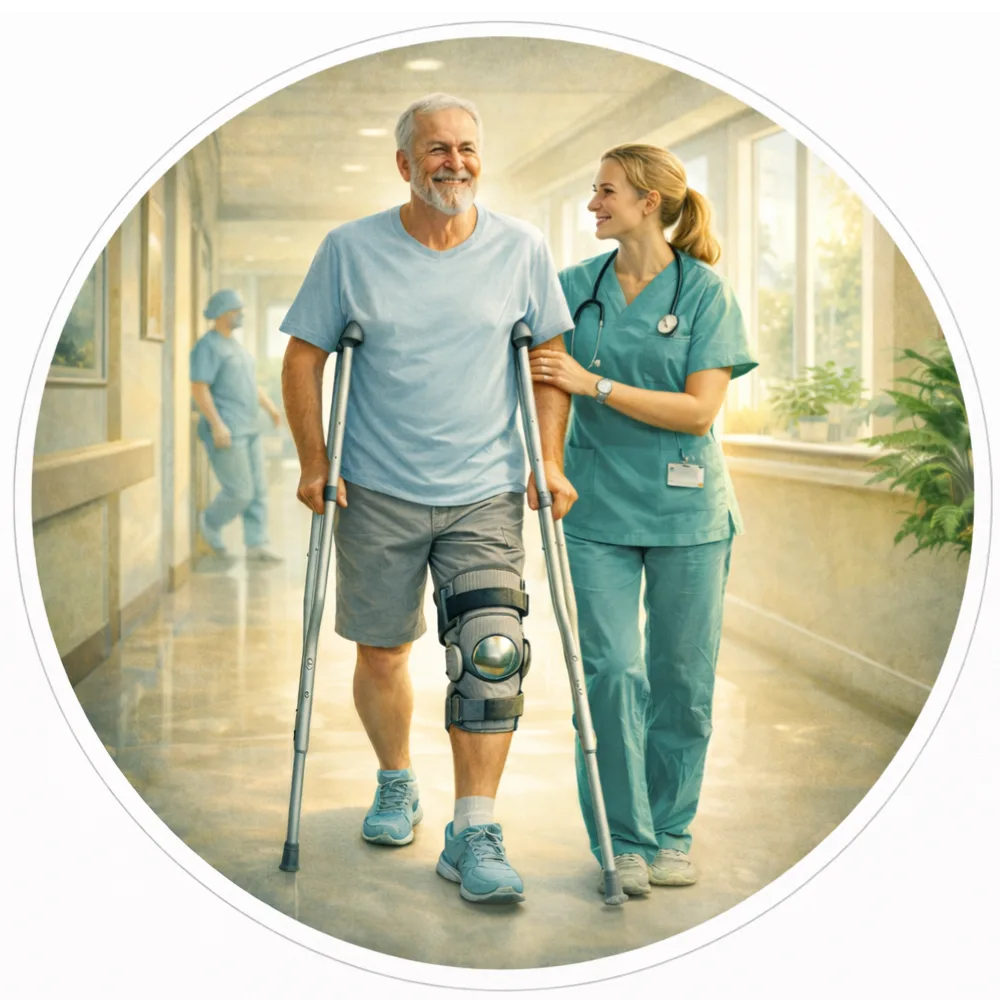
Rehabilitation and follow-up
Recovery begins immediately after surgery. In most cases, you will be able to start walking on the day of the procedure. After discharge, we continue to provide online follow-up care, including recovery guidance, rehabilitation monitoring, and answers to any questions that may arise.
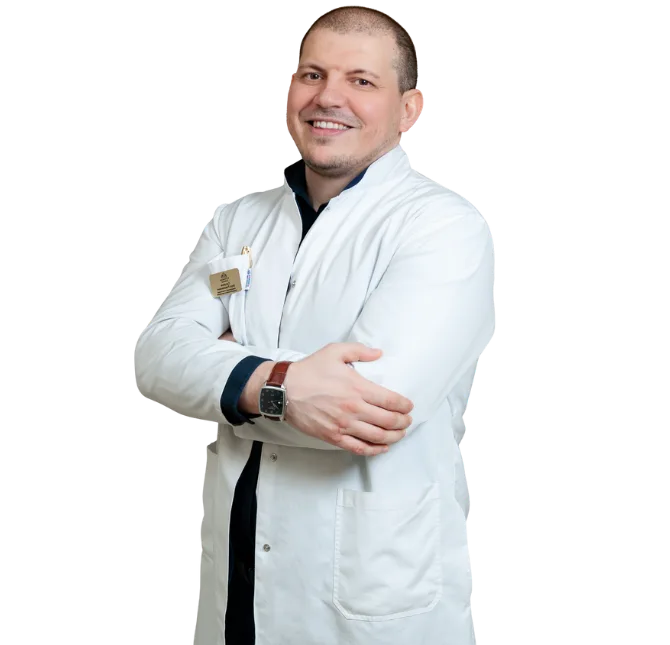
The surgery is performed personally by Zaur Sulumov
The doctor is personally involved in every stage of treatment — from the initial consultation and surgical planning to recovery monitoring and outcome evaluation.
Start Treatment
FAQ
Answer: This is a repeat surgery to replace a previously implanted prosthesis.
It is performed in cases of:
loosening of components
infection
polyethylene wear
instability
fractures around the implant
Revision surgery is technically more complex than the primary procedure.
Main reasons:
aseptic loosening
prosthesis infection
joint instability
severe wear of the insert
progressive bone loss
The exact cause is determined clinically, based on tests and imaging (X-ray, CT, MRI, laboratory indicators of inflammation).
Revision requires:
removal of old components
work with bone defects
use of extended stems, augments, or cones
more precise soft tissue balancing
The duration of the surgery is usually longer — from 90 to 180 minutes.
Recovery usually takes longer than after primary knee replacement:
Early mobilization — within the first day
Weight-bearing — as indicated (depends on the extent of bone reconstruction)
Full functional recovery — 6–12 weeks or more
In two-stage infection treatment, the recovery period is extended.
Revision surgery carries a higher risk of:
recurrent infection
instability
limited range of motion
loosening of components
However, with proper planning and adherence to protocols, outcomes in most cases allow for restored function and reduced pain.
Modern revision designs are expected to last 10–20 years, depending on:
the patient’s age
the extent of the bone defect
level of physical activity
any comorbid conditions
Longevity largely depends on the accuracy of implantation and adherence to recommendations.