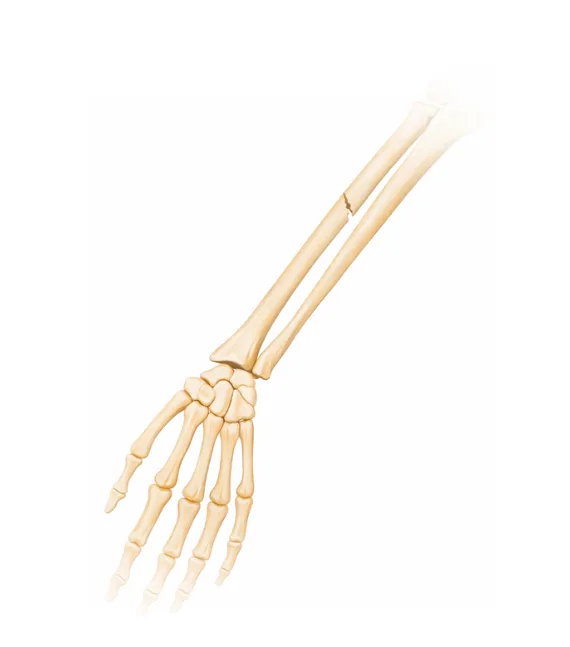


An ulna fracture primarily affects the function of the elbow joint and the stability of the forearm. With this type of injury, patients often experience not only pain but also impaired flexion and extension of the arm, reduced strength, and difficulty performing everyday movements. The ulna plays a key role in load transmission and coordination of arm motion, so even minor displacement of bone fragments can significantly impact upper limb function.
Osteosynthesis for an ulna fracture is indicated when the injury is accompanied by displacement, instability, or a risk of improper healing. In such cases, conservative treatment may not provide sufficient stability and can result in long-term motion limitations. During surgery, precise alignment of bone fragments is performed, followed by stable fixation, allowing restoration of the bone’s anatomy and creating optimal conditions for controlled healing.
We take into account the fracture pattern, the condition of the elbow joint, and the functional demands placed on the arm. Our goal is not only to achieve bone union but also to preserve coordinated movement, enabling the patient to confidently use the arm in daily activities and under load without pain or a sense of instability.