

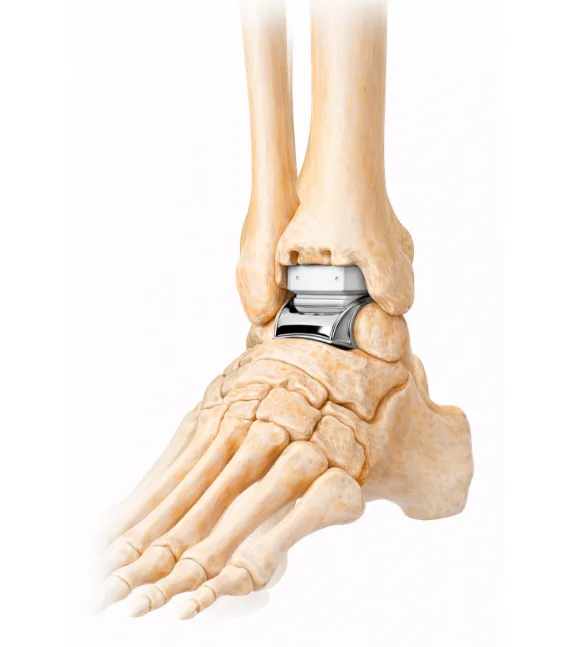
Ankle Replacement Surgery
The ankle joint bears the body’s weight every day and plays a key role in stability, balance, and smooth walking. When it is damaged or severely worn, a person may quickly lose confidence in movement: pain appears during weight-bearing, instability develops, and walking on uneven surfaces or stairs becomes difficult.
Ankle replacement is considered when the joint can no longer perform its function and other treatment options fail to maintain quality of life. Unlike the knee or hip, the ankle requires special attention to gait biomechanics, load distribution, and preservation of foot mobility.
The goal of surgery is to reduce pain, restore weight-bearing function, and maintain physiological motion in the ankle joint. This allows patients to return to daily activities without constant discomfort or rigid walking limitations.
Treatment planning is always individualized. We consider the cause of joint damage, bone quality, limb alignment, activity level, and the patient’s functional expectations to determine the optimal surgical strategy and realistic outcome.
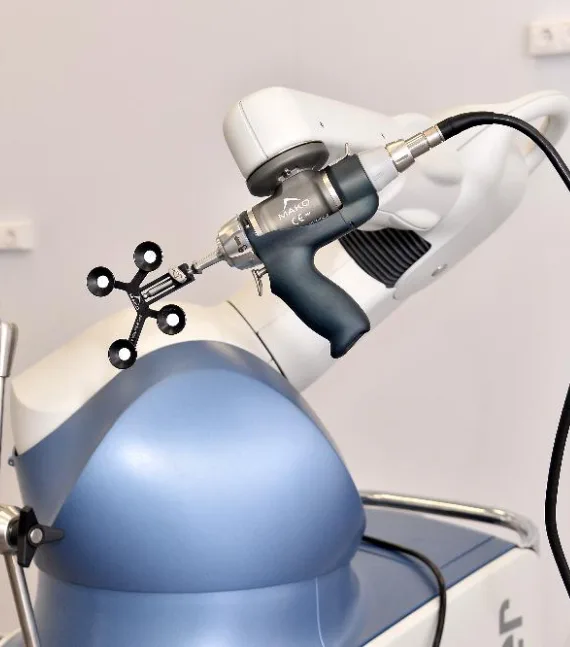
MAKO Robot and Ankle Surgery: Current State of Technology
In orthopedics, robotic systems are already used for major lower-limb joints. However, ankle replacement using the MAKO system is currently not performed routinely — neither in Russia nor in global clinical practice.
This is due to the anatomical and biomechanical complexity of the ankle joint. Unlike the hip and knee, ankle function depends not only on implant positioning accuracy but also on the complex interaction of foot bones and dynamic load during every step. These factors require different technological solutions and navigation approaches.
It is important to understand: the absence of MAKO robotic assistance in ankle replacement does not mean outdated treatment. Modern ankle surgery relies on precise preoperative planning, specialized instruments, and implants adapted to individual anatomy. Robotic technologies in this area are considered promising but are not yet the standard of care.
Main Indications for Ankle Replacement
Ankle dysfunction significantly affects quality of life: gait changes, pain increases during weight-bearing, and additional stress is placed on the knee, hip, and spine. Over time, this may lead to substantial limitations even with minimal activity.
Surgical replacement is considered when the joint loses its stabilizing and supportive function and preservation of the native joint no longer provides acceptable results.
The most common clinical situations include:
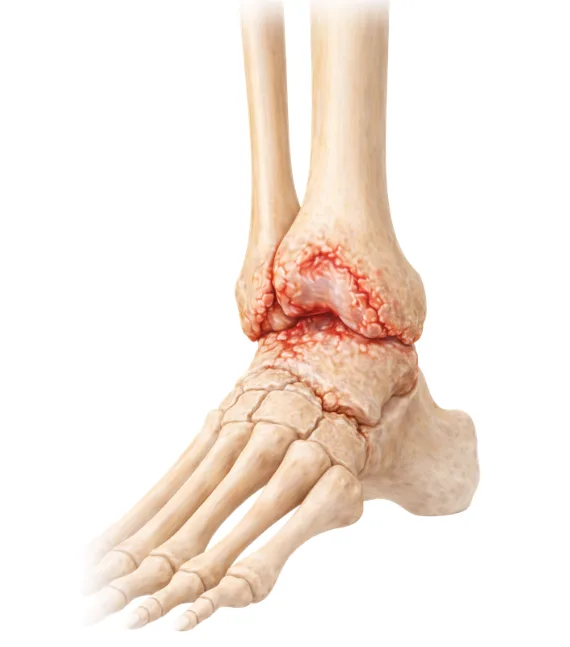
Post-traumatic ankle arthritis – consequences of fractures and joint surface injuries leading to chronic pain, stiffness, and reduced weight-bearing ability.
Degenerative ankle osteoarthritis – progressive cartilage destruction accompanied by pain while walking and limited endurance.
Joint malalignment and instability – biomechanical changes causing uneven load distribution and accelerated wear.
Aseptic and degenerative talus conditions – bone damage resulting in impaired smooth and painless joint motion.
The final decision regarding surgery is made after comprehensive clinical evaluation and imaging studies. We assess not only the ankle joint itself but also its influence on the overall biomechanics of the lower limb — from the foot to the spine.
Stages of treatment

Online consultation
An online consultation allows you to discuss your condition, complaints, and symptoms in advance. You can submit imaging studies and medical documents, ask questions, and receive a preliminary treatment plan before visiting the clinic.
Examination and 3D surgical planning
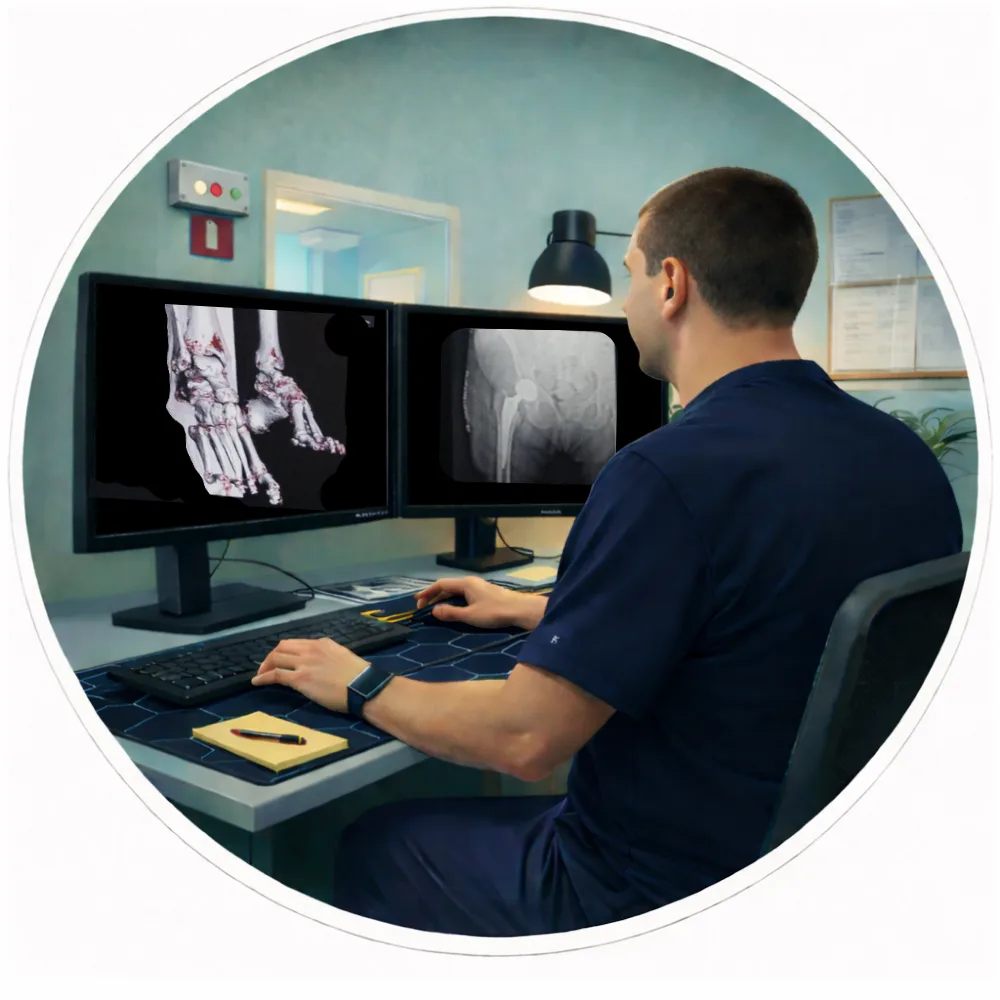
All necessary examinations are performed within one day. A CT scan of the joint is conducted, followed by computer-based 3D surgical planning and implant selection to ensure maximum precision.

Surgery
On the second day of the clinic stay, the surgical procedure is performed. Original implants by Stryker Corporation (USA) and the MAKO robotic-assisted system are used, ensuring a high level of precision in implant positioning.

Rehabilitation and follow-up
Recovery begins immediately after surgery. In most cases, you will be able to start walking on the day of the procedure. After discharge, we continue to provide online follow-up care, including recovery guidance, rehabilitation monitoring, and answers to any questions that may arise.
The surgery is performed personally by Zaur Sulumov
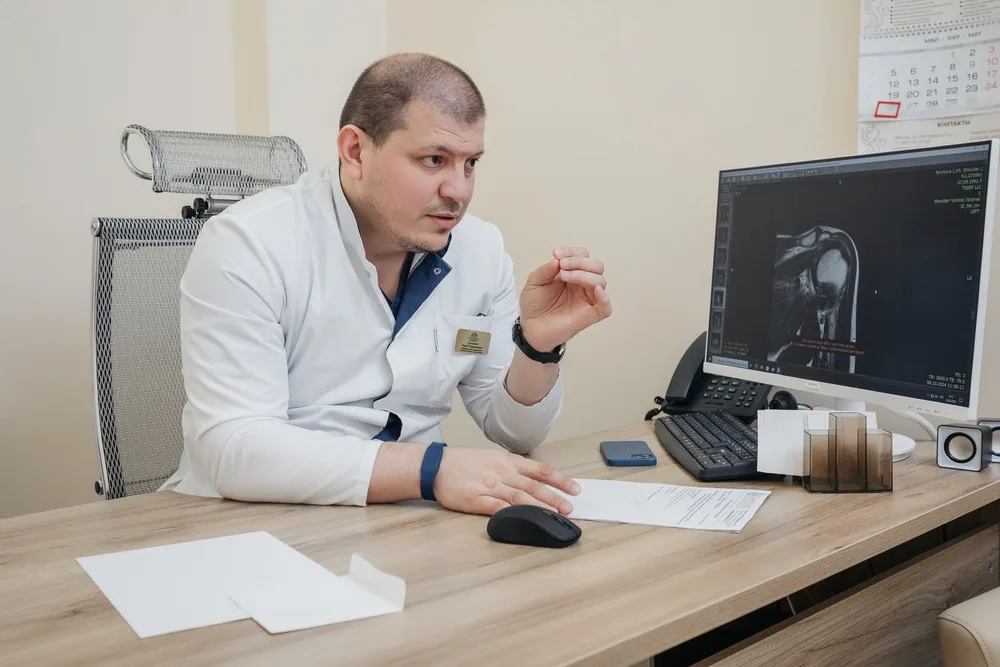
The doctor is personally involved in every stage of treatment — from the initial consultation and surgical planning to recovery monitoring and outcome evaluation.
Start Treatment

FAQ
On average, the procedure lasts from 90 to 150 minutes. The duration depends on the degree of joint deformity, bone quality, and the selected type of implant.
Patients are usually allowed to stand 1–2 days after surgery. Weight-bearing increases gradually, most often with the use of crutches or a walker and under medical supervision.
There is no pain during the operation due to anesthesia. After surgery, discomfort is managed with medication and gradually decreases over the following weeks.
Modern ankle prostheses typically last 10–15 years or longer. Longevity depends on body weight, level of physical activity, and adherence to medical recommendations.
Rehabilitation includes a period of limited weight-bearing, exercises to restore mobility, and gait training. Active recovery usually takes 3–6 months, while full adaptation may take up to one year.
During the first months, running, jumping, and high-impact activities are restricted. Later, comfortable walking, daily activities, and moderate physical exercise are generally permitted.
At early stages, conservative treatment may be possible. However, in cases of advanced arthritis and ankle deformity, joint replacement is one of the most effective methods to restore function and reduce pain.