

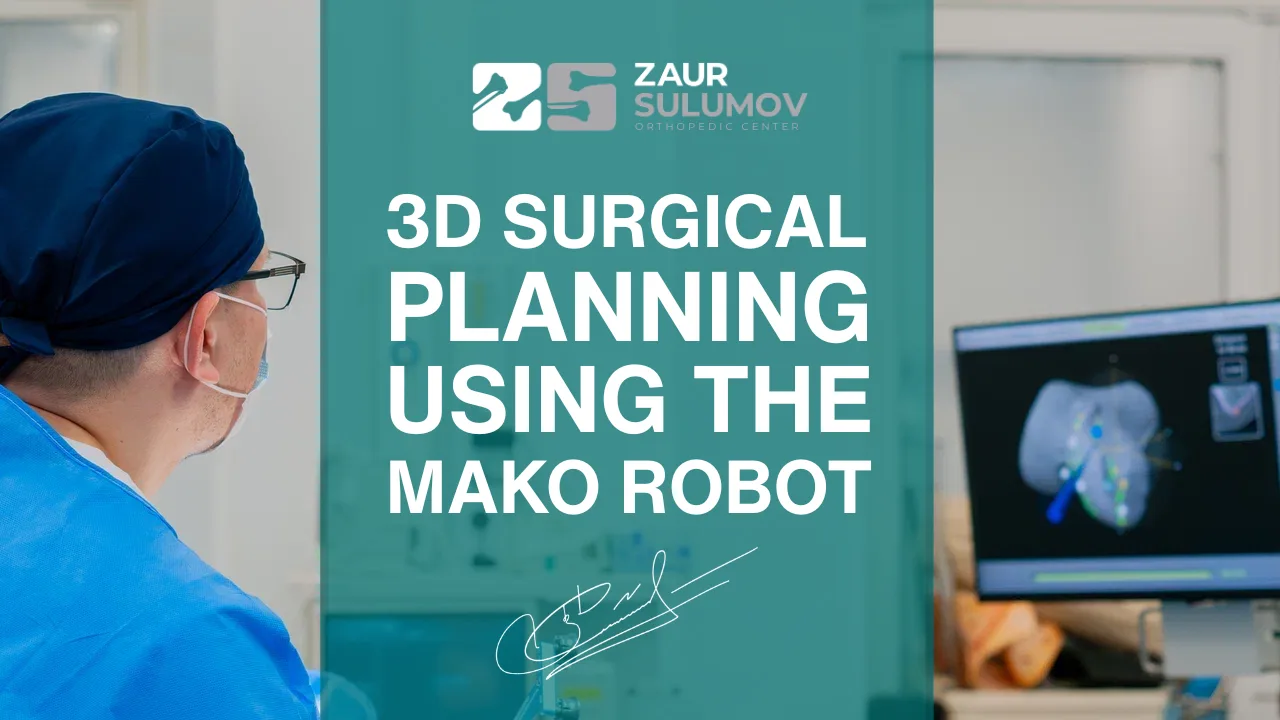
3D surgical planning using the MAKO robot
What is 3D Planning in Orthopedics
One of the key stages of modern joint replacement surgery is preoperative planning. Computer modeling technologies allow the surgeon to study the patient’s joint anatomy in advance and calculate the parameters of the future operation.
When using the Mako robotic system, a three-dimensional digital model of the joint is created. This model helps plan implant positioning and determine the optimal surgical strategy.
More information about the technology can be found on the Mako robot page.
Why Surgical Planning is Important
Each joint has unique anatomical characteristics. Even in patients with the same diagnosis, bone shape, joint surface alignment, and the degree of tissue wear can vary significantly.
Therefore, accurate preparation plays a crucial role. Preoperative planning helps to:
- assess joint anatomy
- determine implant size
- calculate the position of prosthetic components
- predict joint movement after surgery
This approach makes the procedure more predictable.
How a Digital Joint Model is Created
A three-dimensional model is built using computed tomography (CT). The scans are processed with specialized software that generates an accurate image of the bone structures.
The surgeon can then study the model on a computer and define key surgical parameters in advance.
During planning, the surgeon can:
- select implant size
- determine component positioning
- assess potential surgical challenges
As a result, a significant part of the preparation is completed before the operation begins.
Parameters Calculated During Planning
The digital model allows evaluation of several important surgical parameters, including:
- prosthetic component positioning
- implant alignment angles
- limb axis
- estimated volume of bone preparation
These parameters help the surgeon prepare in advance and account for the patient’s individual anatomy.
Planning in Hip Replacement Surgery
In hip replacement surgery, correct positioning of the acetabular cup and femoral stem is essential. Even minor deviations can affect joint function.
A digital model allows for preoperative assessment of implant positioning and selection of the optimal prosthesis configuration.
More details can be found on the hip replacement page.
Planning in Knee Replacement Surgery
In knee replacement, proper limb alignment and soft tissue balance are critical.
Digital planning enables calculation of surgical parameters before the procedure begins. This helps the surgeon better prepare and account for the anatomical specifics of the knee joint.
More details can be found on the knee replacement page.
How Planning is Connected to Robotic Assistance
Once the surgical plan is created, it is used during the procedure. The robotic system helps control the execution of the planned parameters.
Thus, planning and intraoperative navigation function as a unified system. The surgeon performs the procedure, while robotic technology helps ensure precision in instrument movements.
More details can be found in the article: “How the Mako Robot Works in Joint Replacement Surgery.”
Can the Surgical Plan Change During the Procedure?
Despite detailed preoperative planning, the surgeon continuously evaluates the situation during surgery. If necessary, adjustments can be made.
The digital model serves as a guide, but the final decisions are made by the surgeon during the procedure.
How Planning Affects Surgical Outcomes
Preoperative preparation allows the surgeon to better understand the patient’s anatomy and define the optimal treatment strategy in advance.
This makes the procedure more predictable and helps reduce the risk of implant positioning errors.
Accurate planning is especially important in cases of complex anatomy or significant deformities.
3D planning is an essential part of modern orthopedic surgery. Creating a digital joint model allows the surgeon to assess patient-specific anatomy in advance and prepare surgical parameters.
The use of the Mako robotic system enhances accuracy and helps ensure that the planned steps are precisely followed during the procedure.
