

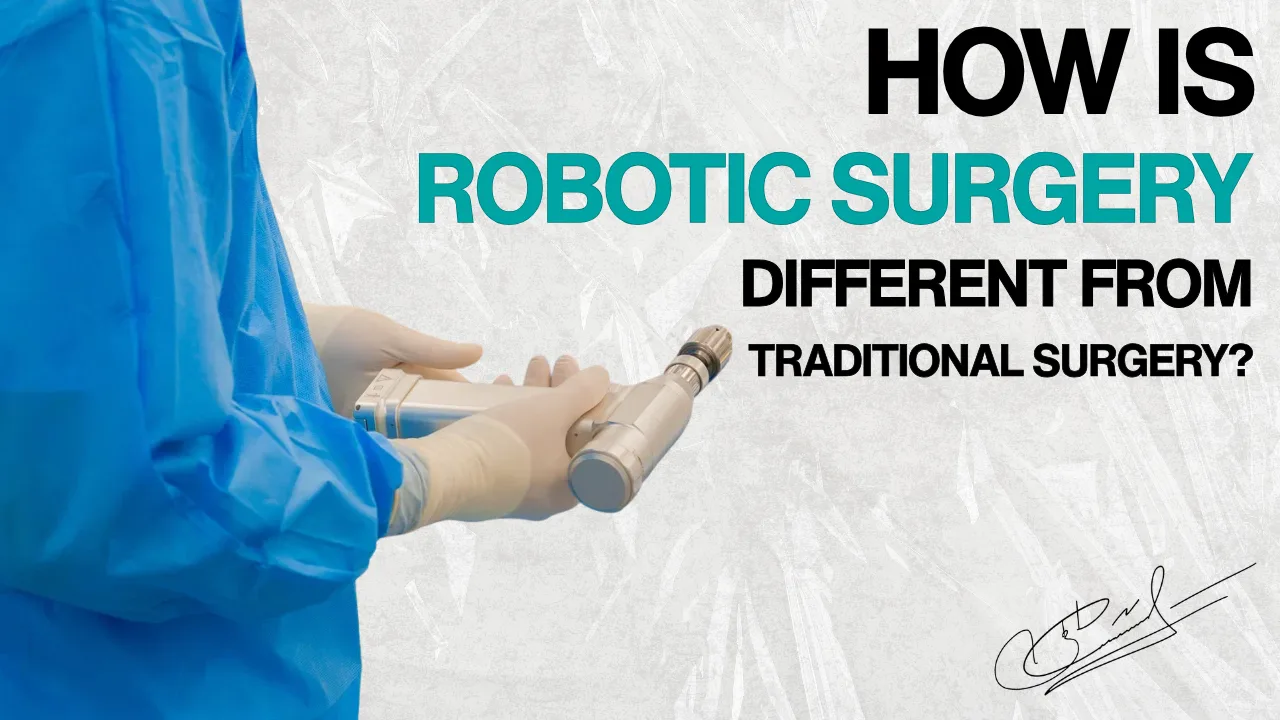
How robotic surgery differs from traditional surgery
Why robotic joint surgery is becoming more common
Joint replacement has evolved significantly over the past decades. Previously, surgery relied entirely on the surgeon’s manual work and standard instruments. Today, robotic systems are increasingly used in orthopedics.
These technologies allow for more precise planning and better control of implant positioning during surgery. One of the most well-known systems is the MAKO robot, used in joint replacement procedures.
It is important to understand: the robot does not perform the surgery independently. It enhances the surgeon’s precision and safety, remaining a tool in the hands of the physician.
How a traditional joint replacement is performed
In conventional arthroplasty, the surgeon uses standard instruments and relies on anatomical landmarks.
Preoperative assessment typically includes X-rays or CT scans. Based on this data, the surgeon determines the size and position of the implant.
During the procedure, the bone is prepared manually, and implant positioning is guided by the surgeon’s experience and visual assessment.
This method is well established and has been used worldwide for many years.
What changes with robotic assistance
Robotic surgery introduces an additional step — digital preoperative planning.
Before surgery, a CT scan is used to create a precise 3D model of the patient’s joint. The surgeon plans implant positioning, alignment angles, and the extent of bone preparation in advance.
During the procedure, the system helps guide instrument movement and prevents deviation beyond predefined boundaries. This improves accuracy and reduces the risk of deviation from the plan.
(For more details, see “How the MAKO robot works in shoulder joint replacement.”)
Key differences between traditional and robotic surgery
The main difference lies not in the procedure itself, but in the level of planning and control.
In traditional surgery, outcomes depend heavily on the surgeon’s experience and technique.
In robotic-assisted surgery, computer navigation and motion control systems are added, allowing more precise execution of the planned implant positioning.
The surgeon remains the central decision-maker throughout the procedure.
When robotic surgery is used
Robotic technologies are most commonly applied in large joint replacements.
They are especially useful in cases requiring high precision and individualized planning.
As technology advances, these systems are being adopted by an increasing number of orthopedic centers.
(For more on this topic, see “Robotics in orthopedics: 5 facts about MAKO Shoulder without illusions.”)
What patients should understand
The robot itself does not guarantee a successful outcome. The key factors remain the surgeon’s experience, accurate diagnosis, and an individualized treatment approach.
A robotic system is a tool that enhances precision and control during surgery.
Therefore, when choosing treatment, it is important to consider not only the technology, but also the expertise of the surgeon performing the procedure.
Robotic surgery differs from traditional surgery primarily in the level of planning and precision. Technologies such as the MAKO robot allow creation of a 3D model of the joint and more accurate control of implant positioning during the procedure.
However, the robot does not replace the surgeon. All key decisions are made by the physician, while the technology serves as a tool to improve accuracy and predictability.
Ultimately, successful treatment depends on the combination of surgical expertise, accurate diagnosis, and the use of modern technologies.
