

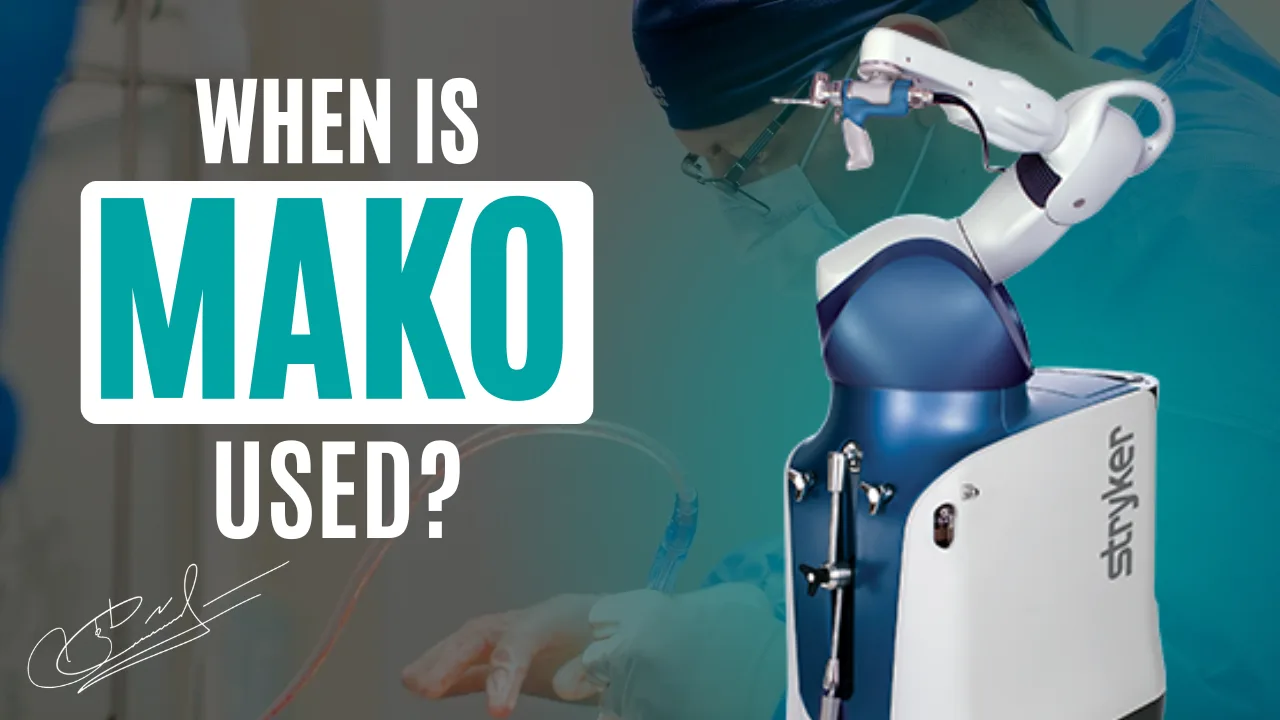
When the Mako Robot Is Used in Joint Surgery
When Joint Surgery is Considered
Joint disorders can gradually limit movement and cause pain during everyday activities. Initially, conservative treatment methods are usually applied, including medication therapy, physiotherapy, exercise therapy, and other approaches.
However, in some cases, joint changes become more advanced, and surgical treatment may be considered.
Most commonly, joint surgeries are performed in cases of progressive osteoarthritis.
More information about the condition can be found in the article “Osteoarthritis: What It Is and Why It Develops.”
What the Mako Robot Is
The Mako robot is a robotic navigation system used in joint replacement surgery. The technology is applied for surgical planning and for controlling the accuracy of implant component positioning.
The system analyzes computed tomography (CT) data and creates a digital model of the patient’s joint.
More details about how the technology works can be found on the Mako robot page.
In Which Procedures the Mako Robot Is Used
Today, the robotic system is used in joint replacement procedures involving major joints.
It is most commonly used in:
- hip replacement surgery
- knee replacement surgery
Robotic navigation helps the surgeon plan surgical parameters and control implant positioning.
Who May Be Suitable for Robotic Surgery
The use of a robotic system is considered in joint replacement procedures where highly accurate planning is required.
The physician evaluates several factors:
- degree of joint damage
- patient-specific anatomical features
- presence of joint deformity
- overall condition of bone structures
Based on this information, the optimal treatment strategy is selected.
When Robotic Technology Is Especially Useful
In certain situations, navigation technologies can help the surgeon perform the procedure more accurately.
For example:
- significant joint deformities
- complex anatomical structures
- need for precise restoration of limb alignment
In such cases, digital planning helps calculate surgical parameters in advance.
Can the Robot Replace the Surgeon?
Some patients believe that the robot performs the surgery independently. In reality, this is not the case.
The Mako system is used as an assisting navigation tool. All decisions during the procedure are made by the surgeon, who controls the instruments and manages the operation.
The technology helps the surgeon follow preplanned parameters and improve surgical precision.
How the Mako Robot Improves Surgical Accuracy
Before surgery, a digital model of the patient’s joint is created. Based on this model, the surgeon can preoperatively determine implant positioning.
More details about the planning process can be found in the article “3D Surgical Planning Using the Mako Robot.”
During surgery, the system helps monitor instrument positioning and maintain the planned implant alignment parameters.
More information about the importance of accuracy can be found in the article “Why Implant Positioning Accuracy Depends on Planning: The Role of the Mako Robot.”
Postoperative Recovery
After joint replacement, the rehabilitation phase begins. Its goal is to restore joint mobility, strengthen muscles, and return the patient to normal activity.
The recovery program depends on the type of surgery, the condition of the joint before treatment, and the patient’s individual characteristics.
The Mako robotic system is used as a modern tool that helps surgeons plan joint replacement procedures and control implant positioning accuracy. Digital planning allows for consideration of patient-specific anatomy and improves the predictability of treatment outcomes.
At the same time, the surgeon remains the central figure in the procedure, while robotic technology enhances precision and supports the execution of the surgical intervention.
