

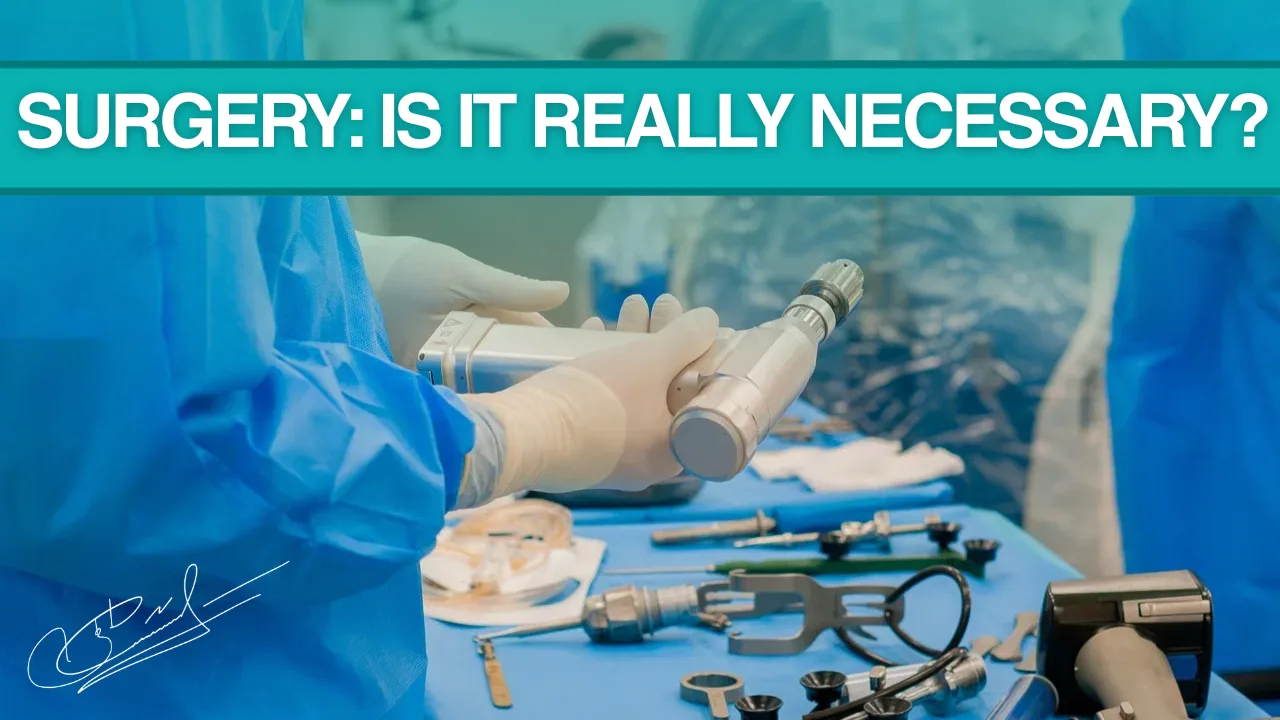
You’ve been advised to undergo surgery: how to know if it’s really necessary?
When a patient hears a recommendation for joint surgery, the first reaction is often anxiety. Even if the pain is significant and the diagnosis sounds convincing, a key question remains: is surgery truly the only option?
The decision should be based not only on MRI findings, but also on the clinical picture: the nature of pain, functional limitations, impact on quality of life, and response to conservative treatment. Sometimes the indications are clear. Sometimes they are premature.
It is important to understand: the presence of osteoarthritis or structural damage on imaging does not automatically mean that surgery is required. This is discussed in detail in the article “When surgery can be avoided in joint conditions.”
Why recommendations may differ
It is not uncommon for patients to receive different opinions from different specialists. One doctor may say “operate,” while another advises to wait. This is not necessarily a mistake — it often reflects different clinical approaches.
Some prioritize imaging findings, while others focus on functional impairment. In some cases, the key factor is the interpretation of MRI or CT scans.
(For more details, see “Errors in interpreting MRI and CT scans of joints.”)
It is important to understand: the decision should not be driven by fear of “missing the right moment,” but by objective clinical indications.
When surgery is truly justified
There are situations where surgical treatment is appropriate:
• severe pain unresponsive to therapy;
• persistent limitation of movement;
• progressive deformity;
• reduced quality of life affecting daily activities.
In such cases, surgery becomes a rational stage of treatment.
However, with moderate symptoms, alternative approaches or postponing surgery may be possible without worsening the prognosis.
Why a second opinion matters
If doubts remain, seeking an independent clinical evaluation is a reasonable step. It is important not just to hear “yes” or “no,” but to understand:
• whether there are objective indications;
• whether the condition can be managed conservatively;
• what risks are associated with waiting;
• what risks are associated with surgery.
This type of expert assessment is available on the page “Treatment Review (Second Opinion).”
This is not about finding a “convenient answer,” but about a professional analysis.
Joint surgery is a serious step and must be well justified. Modern orthopedics allows time for decision-making when there are no urgent indications.
An independent evaluation helps make a calm, informed decision without unnecessary pressure.
