

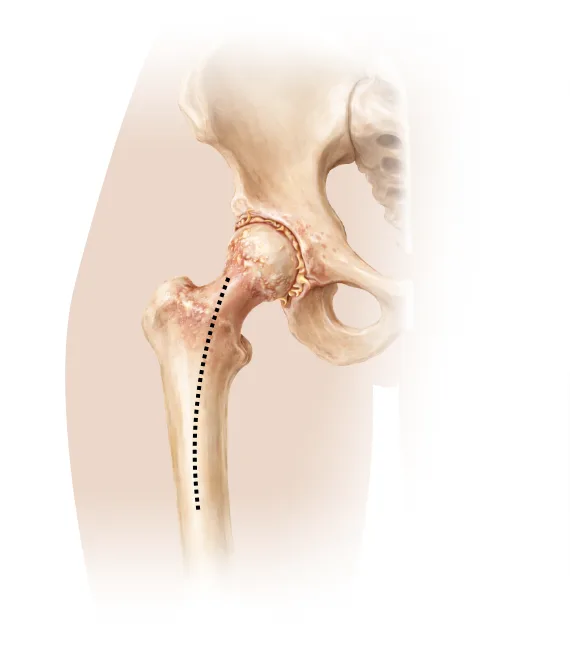
Anatomical precision without muscle cutting
The minimally invasive anterolateral intermuscular Röttinger approach is used in total hip arthroplasty as a method focused on preserving anatomy. The procedure is performed through natural intermuscular intervals without cutting the muscles, which helps minimize soft tissue damage and avoid disruption of stabilizing structures.
This approach reduces surgical trauma and postoperative discomfort. Because the muscle fibers are not detached, they retain their function in the early recovery period. This is important for maintaining the natural biomechanics of the hip joint after prosthesis implantation.
The anterolateral approach provides clear visualization of the surgical field and precise control of anatomical landmarks. During hip replacement, this allows for highly accurate component positioning without compromising physiological movement patterns.
Early mobilization and accelerated recovery
With minimally invasive total hip arthroplasty using the Röttinger approach, the body tolerates surgical stress more easily. The limited extent of intervention reduces the inflammatory response, which is reflected in decreased swelling and improved overall well-being during the first postoperative days.
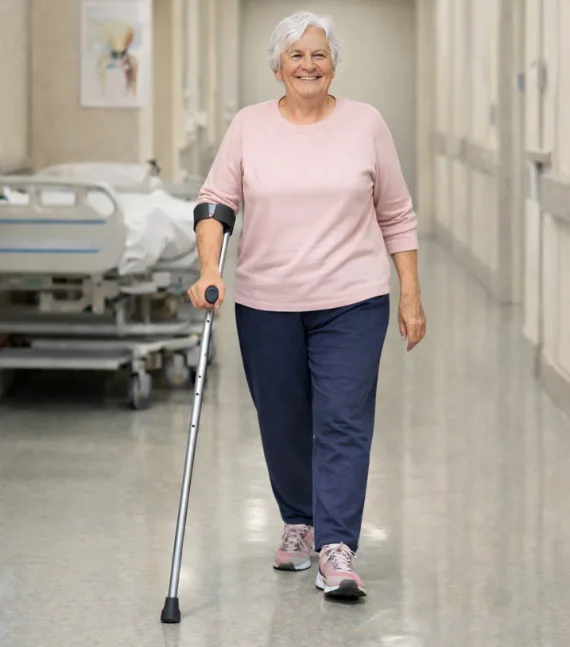
Early mobilization becomes possible due to preserved muscle function and hip joint stability. Supervised walking begins at an early stage, allowing the joint to be safely engaged and natural recovery mechanisms to be activated.
A shorter hospital stay is a logical result of the tissue-sparing technique. The patient returns to daily activities more quickly and adapts to the implanted prosthesis without prolonged movement restrictions.
Biomechanical stability and long-term reliability
The Röttinger approach in total hip arthroplasty is designed to preserve the natural load distribution within the hip joint. This creates conditions for stable implant performance and balanced function of the surrounding structures.
Precise positioning of the prosthetic components is essential for optimal range of motion and long-term wear resistance. The anterolateral intermuscular approach allows accurate placement of the cup and stem, taking into account the patient’s individual anatomy.
Minimal soft tissue disruption reduces the risk of postoperative instability and promotes reliable integration of the implant into daily activity. As a result, hip replacement using this technique offers a high level of predictability in both the early and long-term postoperative periods.
Stages of treatment
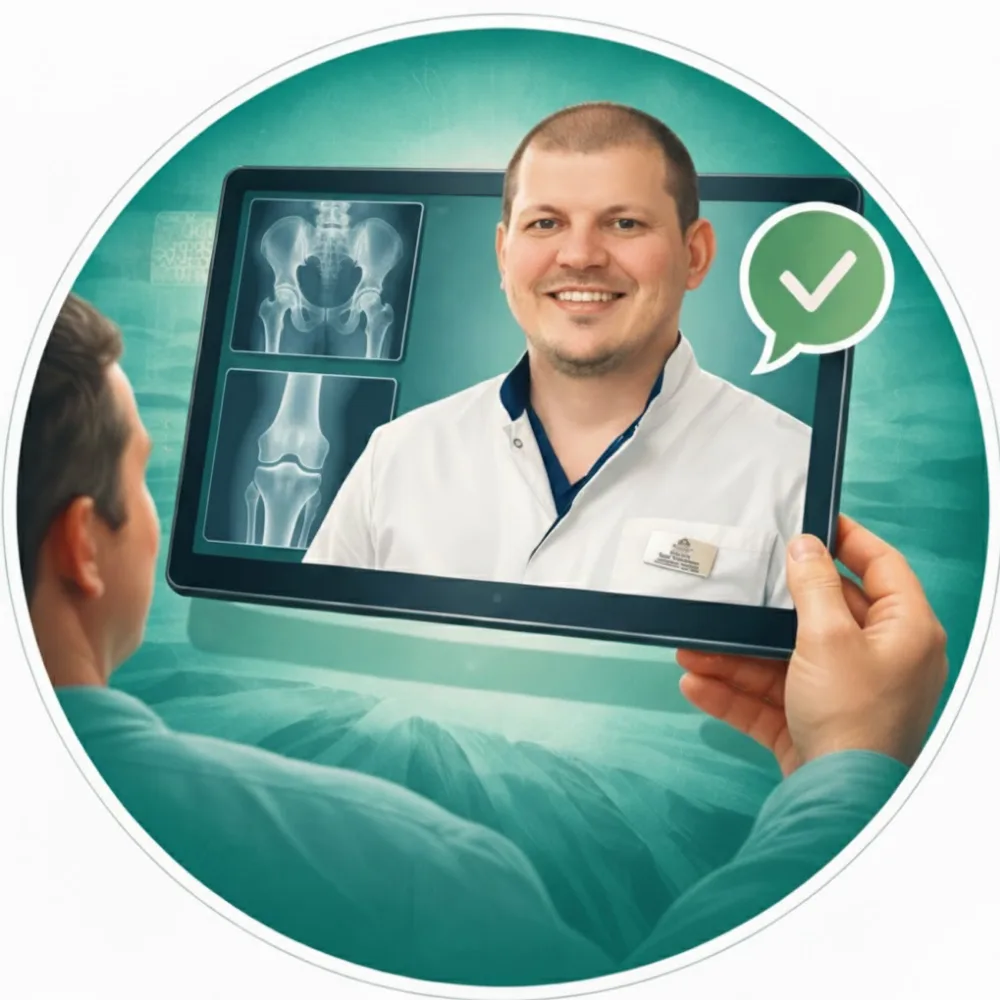
Online consultation
An online consultation allows you to discuss your condition, complaints, and symptoms in advance. You can submit imaging studies and medical documents, ask questions, and receive a preliminary treatment plan before visiting the clinic.
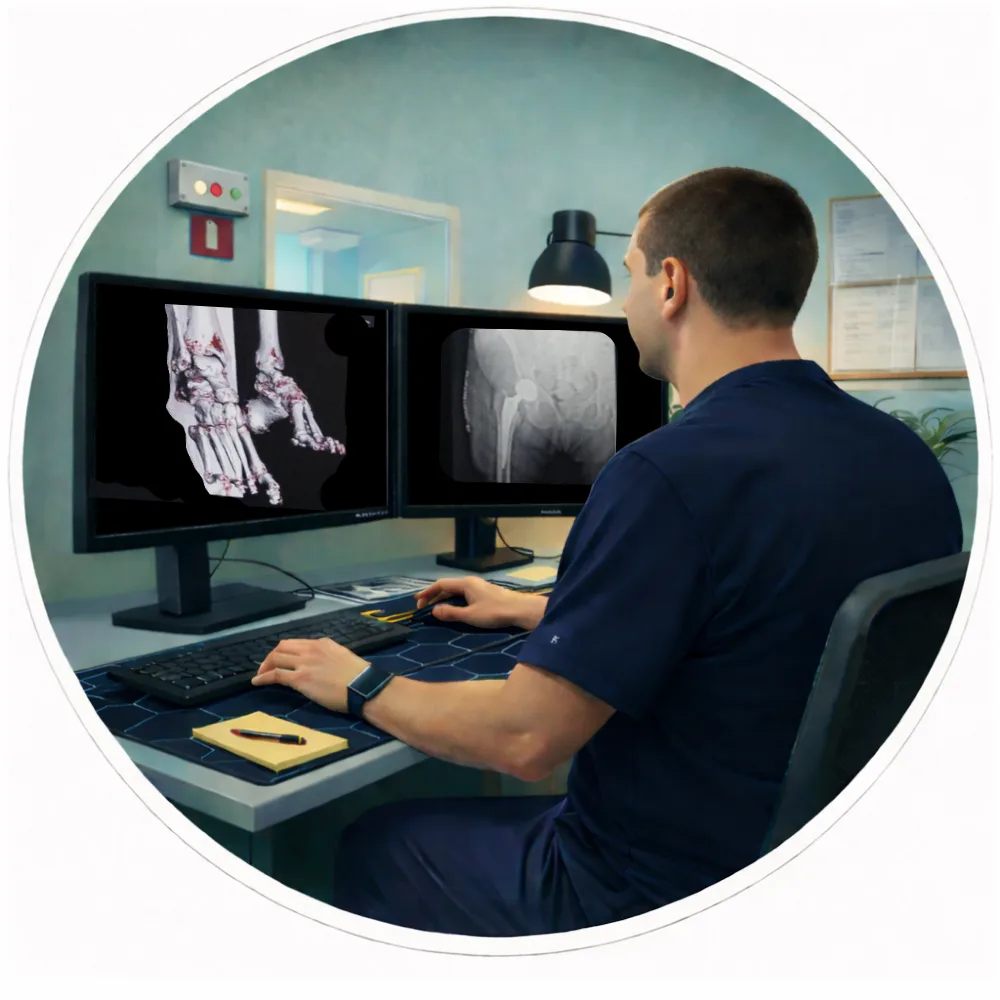
Examination and 3D surgical planning
All necessary examinations are performed within one day. A CT scan of the joint is conducted, followed by computer-based 3D surgical planning and implant selection to ensure maximum precision.

Surgery
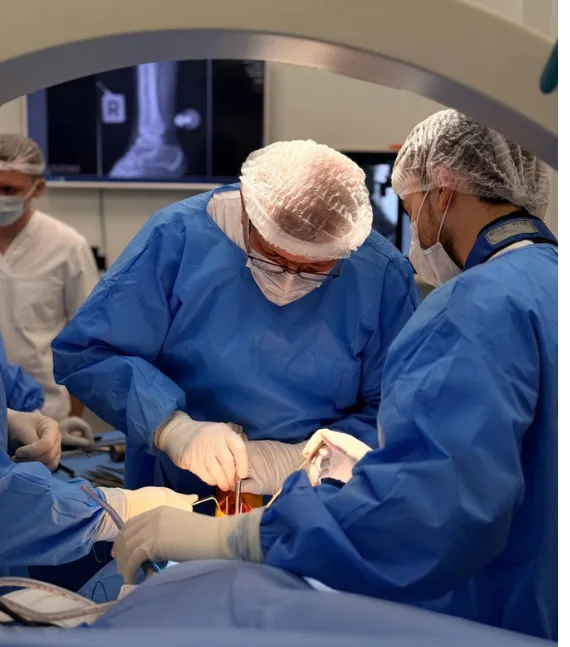
On the second day of the clinic stay, the surgical procedure is performed. Original implants by Stryker Corporation (USA) and the MAKO robotic-assisted system are used, ensuring a high level of precision in implant positioning.
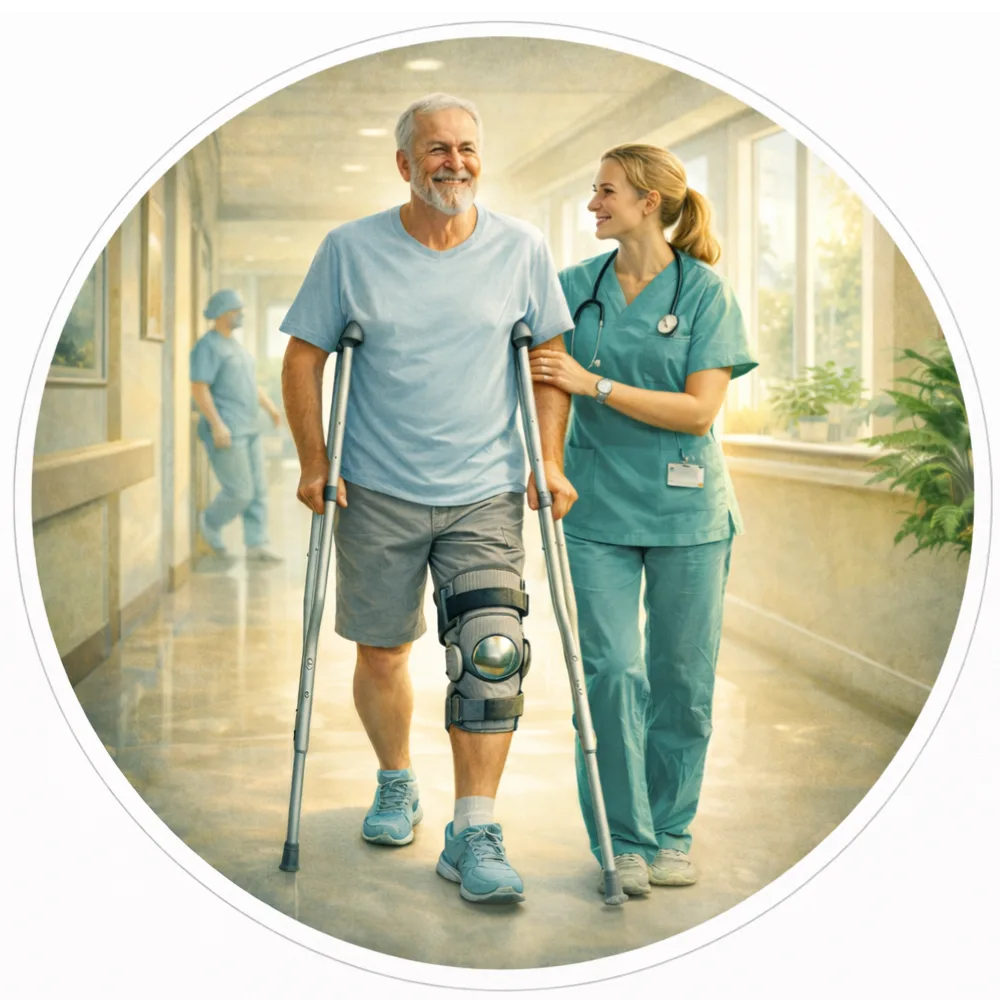
Rehabilitation and follow-up
Recovery begins immediately after surgery. In most cases, you will be able to start walking on the day of the procedure. After discharge, we continue to provide online follow-up care, including recovery guidance, rehabilitation monitoring, and answers to any questions that may arise.
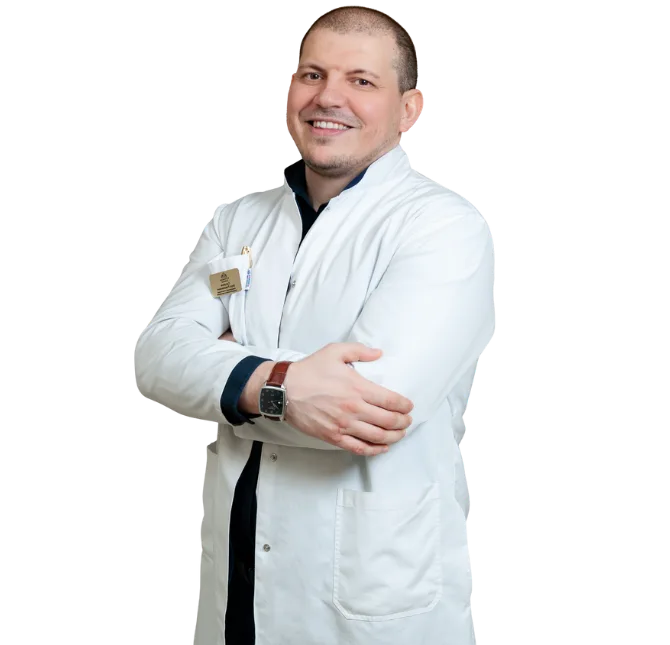
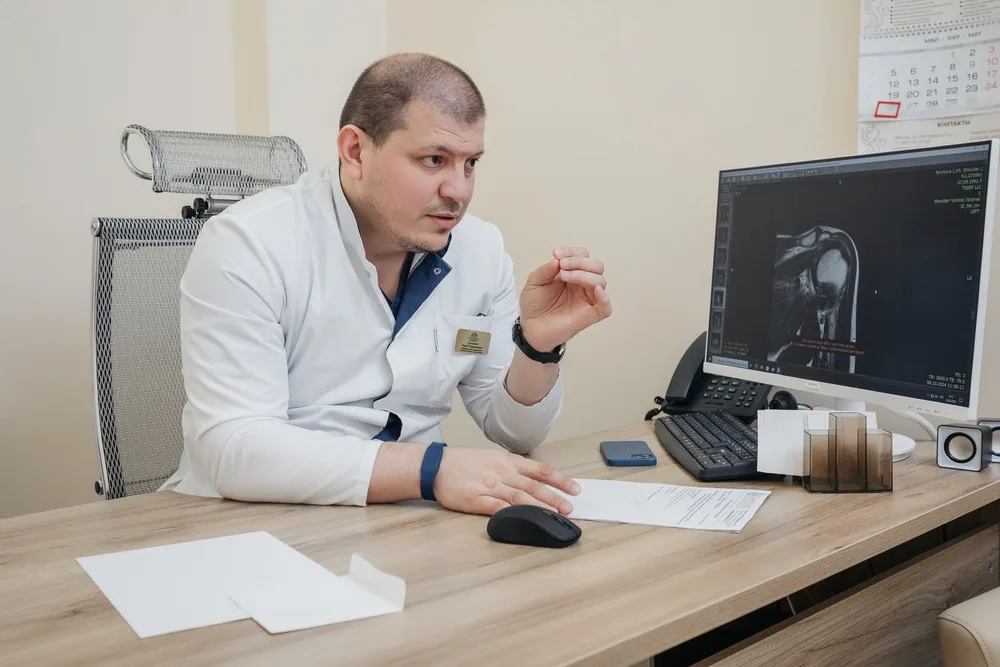
The surgery is performed personally by Zaur Sulumov
The doctor is personally involved in every stage of treatment — from the initial consultation and surgical planning to recovery monitoring and outcome evaluation.
Start Treatment
FAQ
The minimally invasive anterolateral intermuscular Röttinger approach is performed through a natural interval between muscles, without cutting them.
The surgeon works between the tensor fasciae latae and the gluteus medius, which allows:
preservation of muscle function
reduced soft tissue trauma
maintenance of hip joint stability
precise positioning of the prosthetic components
The technique combines a tissue-sparing approach with good visualization of the surgical field.
Unlike the direct anterior approach (DAA):
fewer anatomical limitations
fewer contraindications (obesity, pronounced muscle mass, deformities)
lower risk of injury to the lateral femoral cutaneous nerve
The incidence of temporary neuropathy with DAA is reported to range from 5–15%,
whereas with the Röttinger approach it is significantly lower — typically less than 1%.
This reduces the likelihood of numbness and paresthesia along the anterolateral thigh.
The method is suitable for most patients with primary coxarthrosis.
Limitations may occur in cases of:
severe post-traumatic deformities
complex revision surgery
significant bone defects
Compared to the direct anterior approach, the range of indications is broader.
In most standard cases, the Röttinger approach can be applied; however, the final decision is made after thorough evaluation and surgical planning.
Due to the tissue-sparing technique, postoperative pain is generally less intense compared to more invasive approaches. This allows earlier mobilization and facilitates the early recovery period.
Because of the intermuscular nature of the approach:
postoperative pain is usually moderate
patients mobilize more quickly
significant muscle spasm is less common
Modern multimodal analgesia protocols are used.
Mobilization is performed early — typically on the first postoperative day under medical supervision. Early weight-bearing improves circulation and accelerates adaptation to the implant.
Preservation of muscle and ligament balance contributes to joint stability. This reduces the risk of instability and helps maintain proper movement mechanics after surgery.
The incision is performed carefully and is shorter compared to traditional approaches. After healing, it typically results in a neat and aesthetically acceptable scar.
Precise component positioning and preserved joint biomechanics create conditions for even load distribution. This positively affects implant wear resistance and the predictability of long-term outcomes.