
How CORI Differs From Standard Knee Replacement
When knee replacement is recommended, patients quickly encounter new terms: robotic surgery, digital navigation and the CORI robot.
A natural question follows: if the implant is still an implant and the operation is still performed by a surgeon, what is the difference between robotic and traditional knee replacement?
The answer is connected less with the implant itself and more with the amount of information available to the surgeon during the operation.
Modern knee replacement is gradually moving from a purely mechanical approach toward a digital one. Robotic systems such as CORI appeared as part of this transition.
How is traditional knee replacement performed?
Conventional knee replacement remains one of the most successful operations in modern orthopedics. For decades, surgeons worldwide have replaced knee joints using imaging, anatomical landmarks, surgical instruments and clinical experience.
This approach has proved effective and continues to be used successfully.
During surgery the doctor removes damaged joint areas and places implant components. Decisions are based on anatomy, examination data and visual assessment of the surgical field. Therefore, the quality of the result has always depended primarily on the surgeon's training, experience and understanding of knee biomechanics.
As technology developed, it became clear that some parameters could be assessed not only visually, but also with digital tools.
Why did robots begin to be used in joint replacement?
Interest in robotic surgery is linked to a simple trend: modern medicine increasingly relies on objective data.
Doctors now use digital systems for diagnosis, navigation, planning and outcome analysis. Joint replacement is no exception.
During surgery the surgeon makes many decisions involving bone position, joint motion, soft tissue condition and other parameters that cannot be fully described by one X-ray. Robotic systems were developed to provide more information directly during the operation.
What changes when CORI is used?
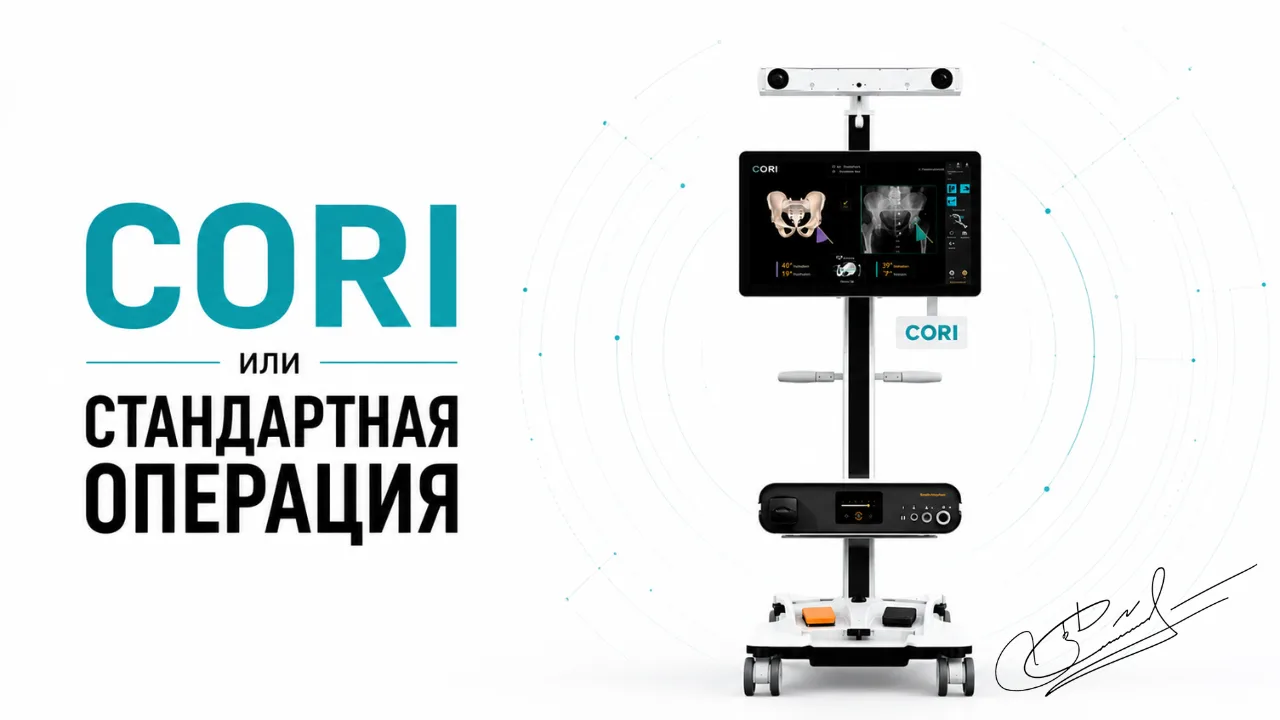
The most important difference is that the surgeon receives an additional layer of digital analysis during surgery.
In traditional joint replacement, decisions are based on anatomical landmarks and experience. The robotic system supplements this with objective measurements.
CORI creates a digital environment in which the surgeon can evaluate joint parameters and use them when planning individual steps of the procedure. It does not replace the principles of knee replacement. The goal of surgery remains the same; the amount of information available to the surgeon changes.
How does decision-making differ?
Traditional surgery relies heavily on the specialist's experience and ability to interpret anatomical landmarks. This remains the foundation of orthopedic surgery.
Digital technology adds another source of information. The robotic system displays parameters and helps use them while planning and performing the operation.
As a result, the surgeon can rely on experience, preoperative studies and intraoperative digital data at the same time. This is one of the key differences between the robotic and traditional approaches.
Why is personalization discussed more often?
Modern orthopedics is moving away from the idea of an average patient. Implants may be produced in standard sizes, but patients are never identical. Joint anatomy, disease pattern, trauma consequences and many other factors vary.
Robotic technologies are one tool for adapting surgical tactics to a specific clinical situation. Their task is not to change the principles of joint replacement, but to help the surgeon take more individual features into account.
Does this mean robotic surgery is always better?
This is a popular patient question. Evidence-based medicine avoids universal statements like this.
Results depend on many factors: the initial joint condition, correct indications, rehabilitation quality, general health and the surgeon's skill. The use of a robot alone does not automatically guarantee a better result.
It is more important to understand how the technology is used in a specific clinical situation and how well the surgeon knows it.
What is the surgeon's role when CORI is used?
Despite the phrase "robotic surgery," the surgeon remains the main person in the operating room.
The doctor determines indications, chooses the treatment strategy, performs the key steps and is responsible for the result. The robotic system does not consult, diagnose or make clinical decisions independently. Its role is to provide information and support navigation.
Why has CORI become part of modern orthopedics?
Medicine is moving toward more precise data analysis and a personalized approach. Patients expect not only a successful operation, but also well-grounded planning of each stage.
CORI helps expand the amount of information available to the surgeon during knee replacement and brings digital analysis into the operating room.
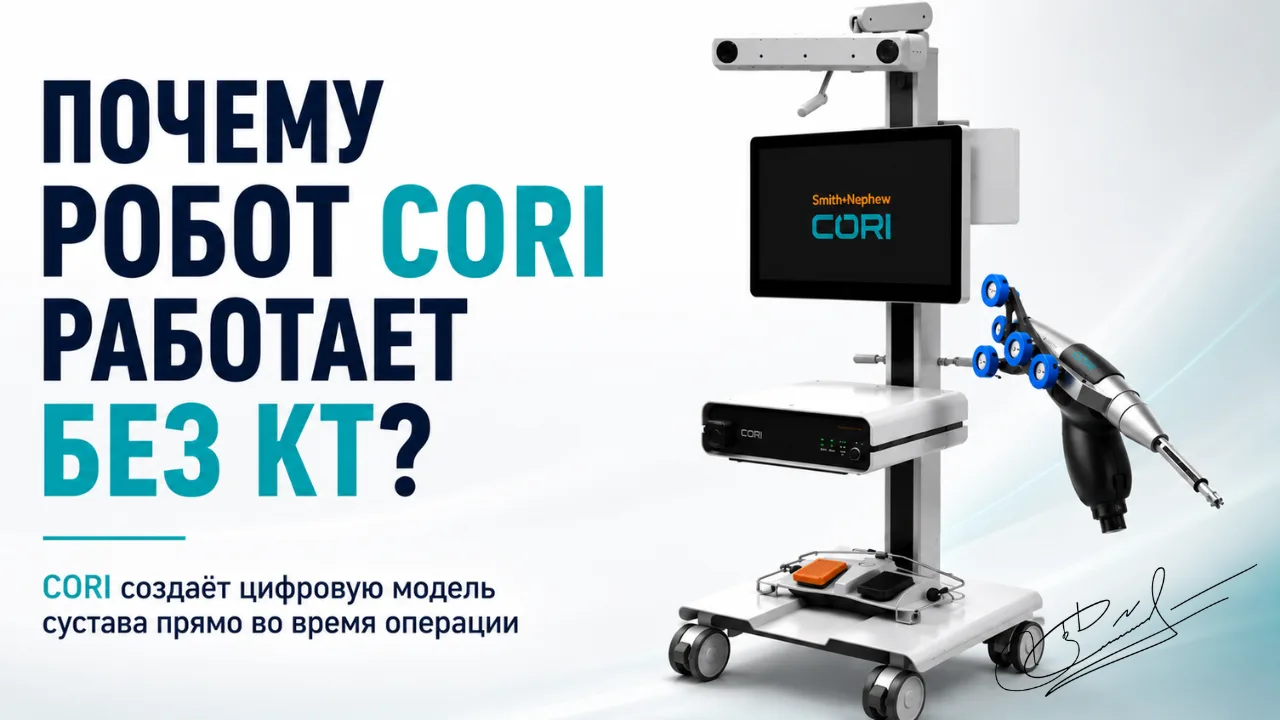
If you want to know how the system creates a digital joint model without mandatory CT, see "Why the CORI Robot Works Without Preoperative CT".
Standard and robotic knee replacement have the same goal: to relieve pain, restore joint function and help the patient return to normal activity.
The main difference is not the implant or the extent of surgery, but the amount of information the surgeon can use during the operation. CORI supplements traditional methods with digital analysis and navigation, while the success of treatment still depends on surgical experience, correct tactics and a comprehensive approach.