
Why the CORI Robot Works Without Preoperative CT
When patients first learn about robotic knee replacement, they often discover an unexpected fact: not all robotic systems work in the same way. Some systems require a CT scan before surgery, while the CORI robot can function without a preoperative CT study.
This can be surprising. Robotic surgery is often associated with 3D models and complex computer calculations, so the absence of CT may seem like a loss of important information. In practice, it is not a simplification of technology, but a different way of obtaining data about the patient's joint.
To understand why CORI does not require mandatory preoperative computed tomography, it is useful to look at what information robotic systems use during knee replacement.
Why does a robot need information about the joint?
The main idea of robotic surgery is not automation, but data.
Every knee joint has individual features. Even if two patients have the same diagnosis, such as advanced osteoarthritis, their anatomy can differ significantly. Bone size, joint surface position, limb axis, ligament condition and deformity can all vary.
During joint replacement, the surgeon must take these parameters into account. The more objective information is available, the better the surgeon understands the clinical case and the more individualized the surgical plan can be.
This is why modern robotic systems are built around collecting and analyzing anatomical data.
How do CT-based systems work?
Many robotic platforms are image-based systems. Before surgery, the patient undergoes CT scanning. The images are used to create a digital 3D model of the knee joint. During surgery, this model is used for navigation and planning of individual steps.
This approach is widely used and familiar to specialists working with robotic technologies. For this reason, many patients begin to see CT as a mandatory element of robotic joint replacement.
However, technology has also developed another approach.
What does imageless robotics mean?
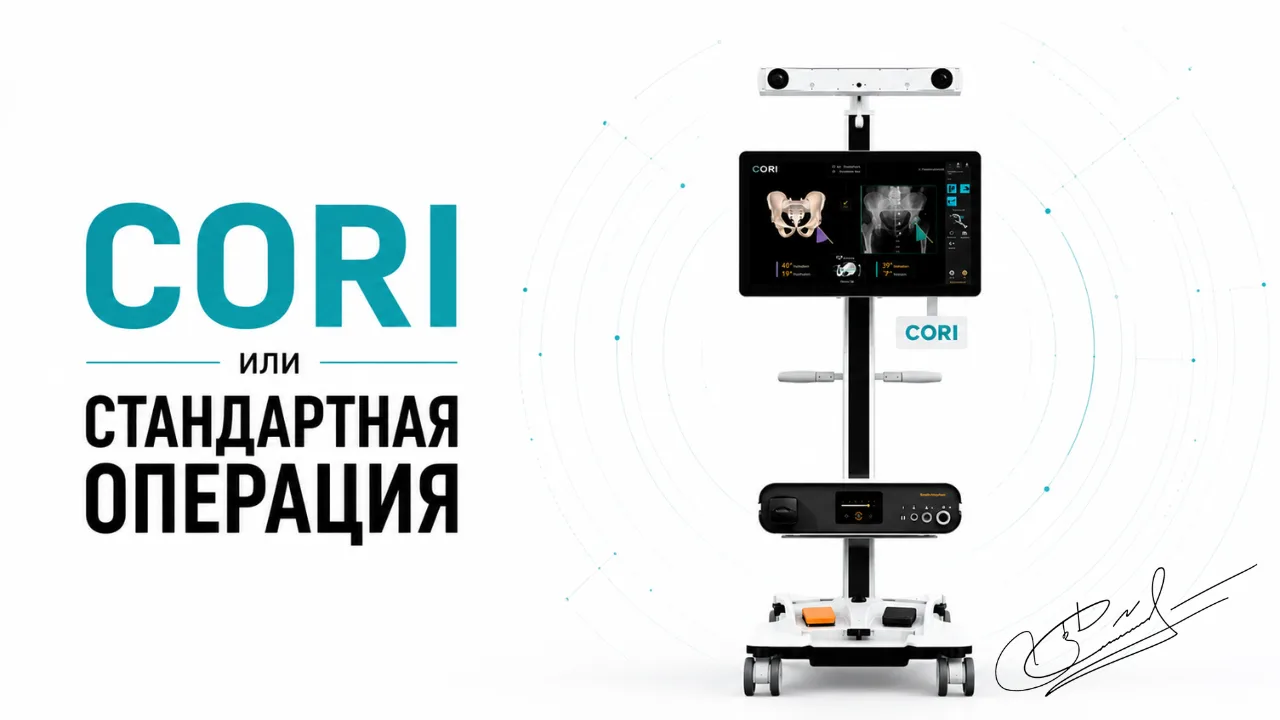
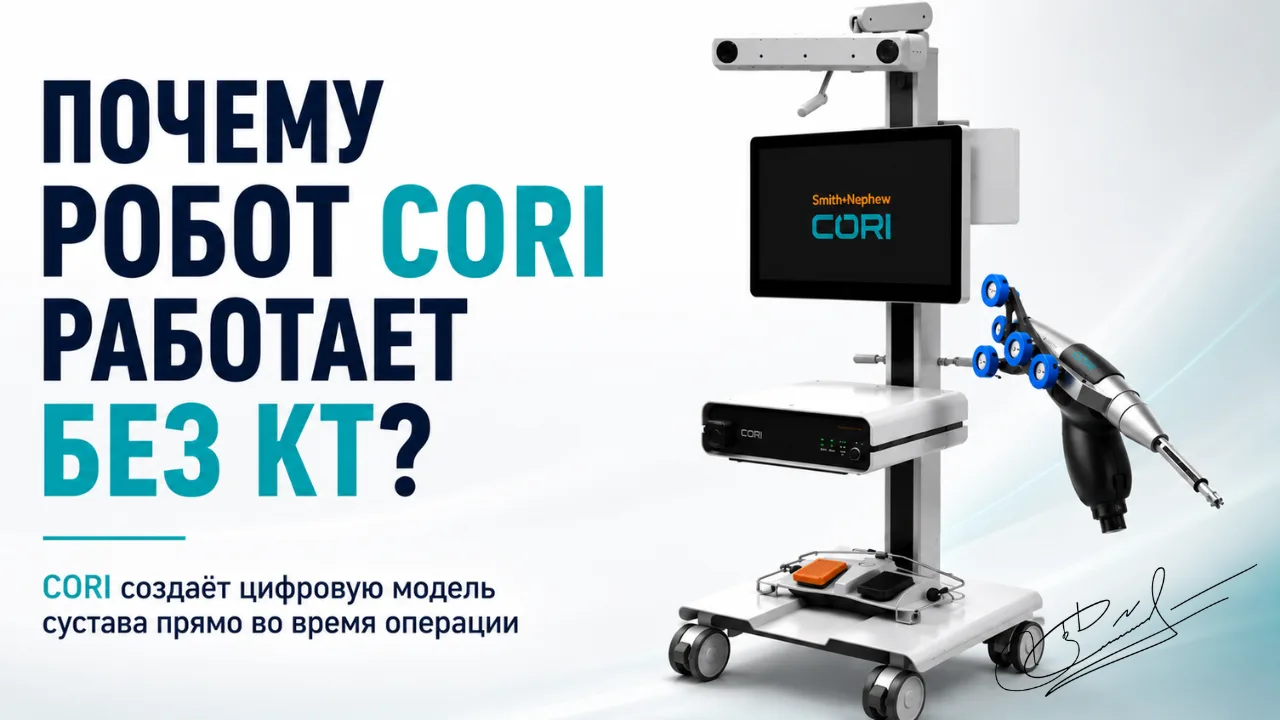
CORI belongs to the category of imageless robotics, which means robotic systems that do not require mandatory preoperative CT.
The word imageless does not mean that there is no digital technology or no analysis of the patient's anatomy. It refers only to the way information is obtained.
Instead of building a model in advance from CT data, CORI creates a digital representation of the joint directly during surgery. The system works with data collected in the operating room.
This approach is one of the best-known features of CORI technology.
How is the digital model created during surgery?
During robotic knee replacement, the surgeon sequentially collects information about the patient's knee anatomy.
The system registers anatomical landmarks, analyzes the position of bone structures and forms a digital map of the joint. This information is then used for navigation.
For the patient this process is almost invisible, but for the surgeon it becomes an important source of information. Compared with a traditional approach based mainly on X-rays, landmarks and experience, the robotic system adds digital analysis directly during the procedure.
Why does the absence of CT not mean the absence of digital analysis?
This is one of the most common patient questions. It may seem logical that without CT the robot has less information. This view is not entirely correct.
The difference is not only the amount of data, but the mechanism by which it is obtained. CORI does not use a pre-built CT model, but it continues to collect and analyze information about the joint in the operating room, using the patient's actual anatomy at the time of surgery.
Therefore, the absence of CT should not be seen as the absence of digital planning or navigation. It is another technological approach to the same task.
What are the advantages of intraoperative data collection?
The key feature of this approach is that analysis is performed during the operation itself.
The system works with data the surgeon receives in real time, not only with information collected before surgery. This is why imageless robotics attracts interest among both specialists and patients who study modern knee replacement methods.
At the same time, the choice between robotic platforms is not reduced only to whether CT is required. Each technology has its own features, advantages and limitations.
Why do patients discuss CT so often?
Most people first encounter robotic surgery after they learn that joint replacement may be necessary. When searching for information, they quickly notice that some systems require CT and others do not.
In reality, the CT discussion is a way of asking a broader question: how does the robot obtain information about the patient's anatomy and how does it use that information during surgery?
If you are interested in other aspects of CORI, see the article "How CORI Differs From Standard Knee Replacement".
The CORI robotic system belongs to imageless robotics and does not require mandatory preoperative CT. Instead of using a pre-built CT model, the technology creates a digital representation of the knee joint directly during surgery.
This approach allows anatomical data to be collected and analyzed in the operating room, using the actual parameters of the patient. The absence of CT does not mean the absence of digital navigation or joint analysis. The system obtains information in a different way.