

Shoulder osteoarthritis: causes of pain and modern treatment options
What happens in the shoulder joint in osteoarthritis
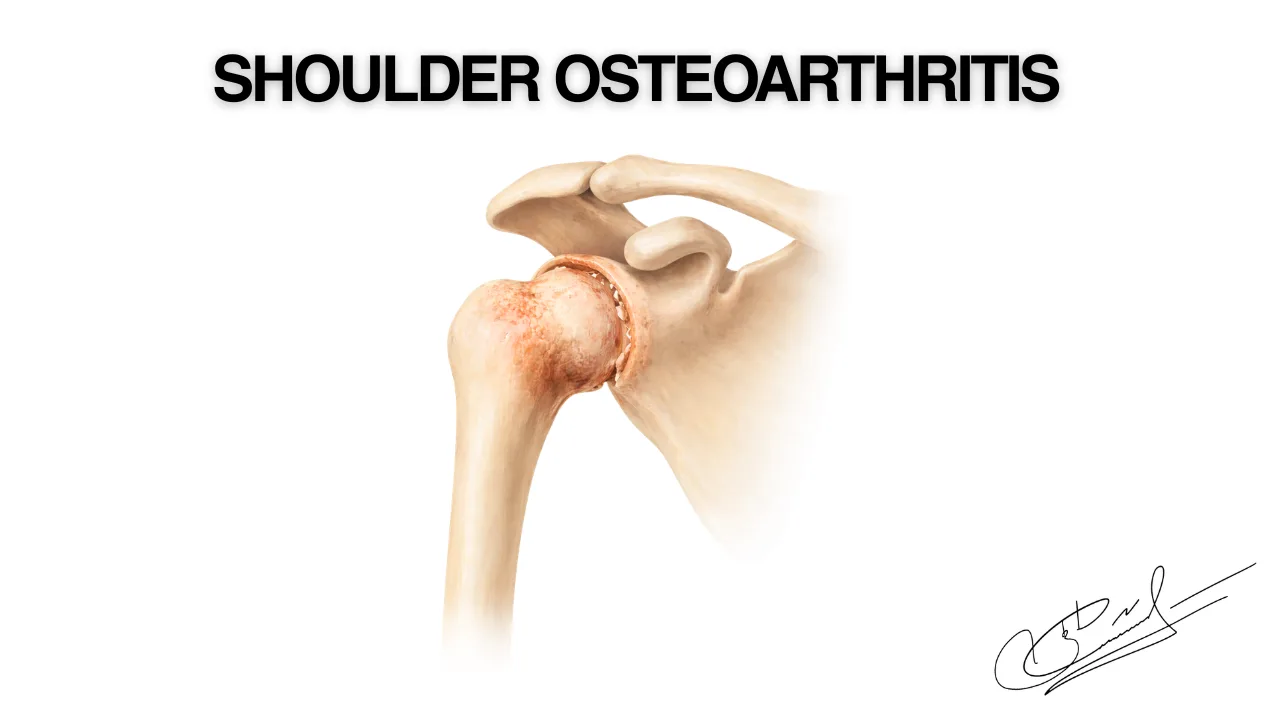
Shoulder osteoarthritis is a condition in which the articular cartilage gradually deteriorates and the structures involved in shoulder movement are affected. Over time, the joint surface becomes less smooth, and movement may be accompanied by pain and limited mobility.
The shoulder joint has a wide range of motion and a complex structure. Therefore, any structural changes can significantly affect the ability to raise the arm, perform daily activities, and maintain normal function of the limb.
In general, osteoarthritis belongs to the group of degenerative joint diseases. For more details on its mechanisms, see “Osteoarthritis of the joints.”
Main causes of shoulder osteoarthritis
Shoulder osteoarthritis may develop for various reasons. In some cases, it progresses gradually without a clear injury, while in others it is associated with trauma or prolonged joint overload.
The most common causes include:
• age-related cartilage degeneration;
• previous shoulder injuries;
• chronic overuse of the joint;
• rotator cuff dysfunction;
• history of inflammatory joint conditions.
Over time, these factors may lead to progressive wear of joint surfaces and the development of symptoms.
How shoulder osteoarthritis presents
In early stages, osteoarthritis may cause only mild discomfort during arm movement. As the condition progresses, symptoms become more pronounced.
Common signs include:
• pain in the shoulder during movement;
• reduced range of motion;
• difficulty raising the arm;
• discomfort during rotational movements;
• decreased strength in the arm.
In some cases, pain may worsen at night or after physical activity.
Stages of the condition
Like other forms of osteoarthritis, shoulder joint degeneration progresses gradually.
In early stages, cartilage changes may be minimal and detectable only through imaging. As the condition advances, joint surface damage becomes more significant, potentially leading to severe restriction of movement.
(For more details, see “Stages of osteoarthritis.”)
Conservative treatment options
In early stages, treatment usually begins with conservative methods aimed at reducing pain and preserving joint mobility.
These may include:
• therapeutic exercises;
• physiotherapy;
• medication;
• modification of physical activity.
These approaches help control symptoms and may slow disease progression.
When surgery may be required
If osteoarthritis progresses to an advanced stage and significantly limits shoulder function, surgical treatment may be considered.
One of the effective options is shoulder replacement, in which damaged joint structures are replaced with an artificial implant.
Modern technologies allow for more accurate planning and improved surgical outcomes.
The role of robotic technologies
In recent years, robotic systems have been actively developed in orthopedics to enhance surgical precision.
These technologies allow preoperative planning of implant positioning and intraoperative control of its placement.
(For more details, see “Advantages of robotic shoulder replacement: precision, recovery, outcomes.”)
A step-by-step explanation of the procedure using robotic systems is described in “How the MAKO robot works in shoulder joint replacement.”
Shoulder osteoarthritis is a condition that gradually affects arm mobility and may cause chronic pain. Its causes may include age-related changes, injuries, and prolonged joint stress.
In early stages, treatment focuses on pain relief and preservation of joint function. In advanced cases, surgical intervention may be required.
Modern approaches, including shoulder arthroplasty, allow restoration of mobility and significant improvement in patients’ quality of life.
