

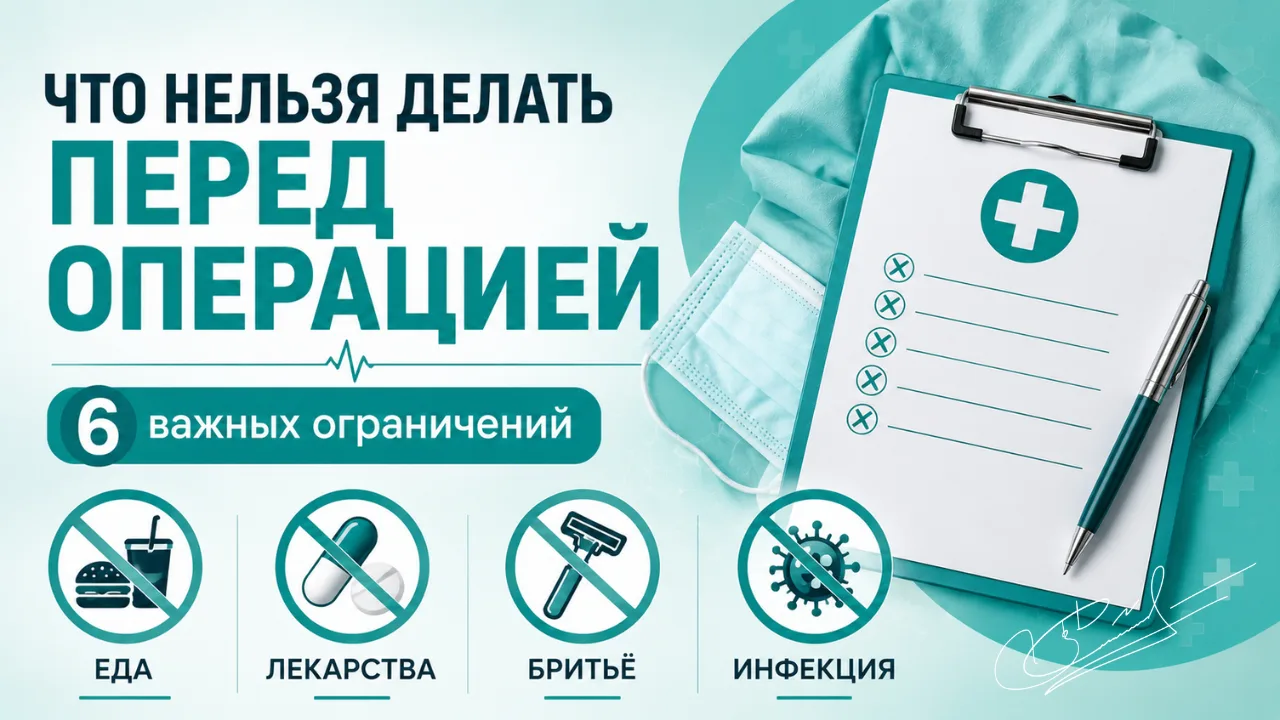
What not to do before surgery: food, medicines, shaving and other restrictions
Specific restrictions before elective surgery, and situations in which general rules do not apply.
Before surgery, the priority is to avoid additional risks rather than to do as much as possible. Most mistakes involve stopping medicines without advice, fasting incorrectly, shaving at home or trying to hide symptoms of illness.
1. Do not stop your regular medicines on your own
Stopping anticoagulants or antiplatelet medicines, blood pressure medicines, treatments for arrhythmia or epilepsy, hormones or insulin without an agreed plan can be particularly dangerous. A medicine may sometimes need to be paused, but this depends on the diagnosis and the procedure.
For example, the ACC generally classifies joint replacement as a major orthopaedic procedure with a high bleeding risk. Direct oral anticoagulants are usually interrupted briefly, but the interval changes when kidney function is reduced or spinal or epidural anaesthesia is planned.
Doctor's comment. You need a written, individual plan stating the last dose before surgery and the first dose afterwards, rather than general advice from the internet.
2. Do not fast longer than instructed
Longer fasting does not automatically make anaesthesia safer. It increases thirst, weakness and dehydration. For healthy patients, the ASA gives minimum intervals of two hours for clear liquids, six hours for a light meal, and eight hours or more for fatty foods or meat. These are reference intervals, not permission to choose your own time for your last meal or drink.
Individual instructions are needed for delayed stomach emptying, significant reflux, pregnancy, diabetes, obesity with associated problems or marked gastrointestinal symptoms. Current multidisciplinary guidance allows most patients taking GLP-1 receptor agonists to continue treatment, but higher-risk patients may be prescribed a liquid-only diet for 24 hours or a change in their anaesthetic plan.
Important. If you have eaten or drunk after the instructed time, do not hide it. The team must assess the aspiration risk and decide whether it is safe to proceed.
3. Do not shave the surgical area with a razor
A razor causes small skin injuries. The CDC recommends not shaving the planned surgical site. If hair removal is necessary, it is performed shortly before the procedure using clippers or another method specified by the local protocol.
Do not use a depilatory cream without the clinic's permission: it may cause irritation or contact dermatitis. If you have already shaved and notice a cut, rash or inflammation, tell your doctor.
4. Do not ignore signs of infection
Fever, cough, a throat infection, flu or COVID-19;
An inflamed tooth or gum;
A pustule, abrasion or non-healing wound near the planned incision;
Burning when passing urine or a confirmed urinary tract infection.
Do not start an antibiotic on your own “just in case”. It may temporarily change symptoms and culture results without addressing the source of the risk.
5. Do not leave out supplements, injections or newly prescribed medicines
Herbal supplements can affect bleeding, blood pressure and the action of anaesthetic medicines. St John's wort speeds up the metabolism of many drugs; ginkgo, high doses of garlic and vitamin E can affect blood clotting. Also report omega-3 supplements, although current studies do not show that fish oil necessarily increases surgical bleeding in everyone who takes it.
Before joint replacement, always give the date of your last injection into the joint, whether it contained steroids, hyaluronic acid, PRP or another substance. The interval before surgery is particularly important for steroid injections.
6. Do not try to “improve your blood tests” on your own
Do not start iron, high doses of vitamin D, calcium, hormones or diuretics without a diagnosis. Anaemia, vitamin D deficiency, impaired kidney function and electrolyte disturbances require investigation of the cause rather than an attempt to conceal a single abnormal result.
The time of your last food and drink is written down;
Morning medicines have been agreed;
The surgical area has not been shaved and the skin is not irritated;
There are no new infection symptoms;
Your medication and allergy list is ready;
You have the clinic's contact details for any questions.
Important. This information does not replace individual instructions from your surgeon and anaesthetist. If the clinic's leaflet differs from general guidance, follow the personal instructions given by your treating team.
