
CORI, CUVIS or MAKO: How Modern Joint Replacement Robots Differ
Robotic joint replacement has become one of the most discussed topics in modern orthopedics. More patients learn about robotic technologies before they even meet a surgeon, study videos and try to understand which systems are used during joint replacement.
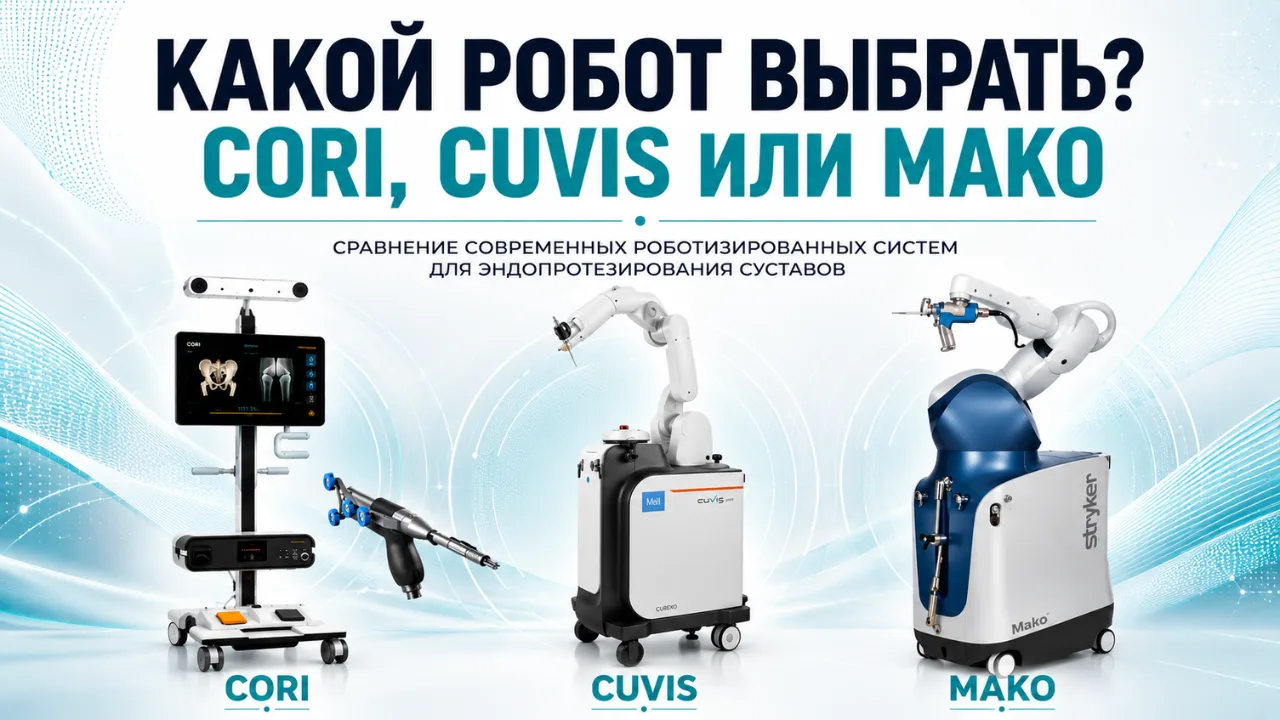
The three names patients most often encounter are CORI, CUVIS and MAKO. A natural question follows: if all three belong to robotic surgery, does that mean one is better than the others?
At first glance, comparison may seem simple: look at the specifications, list the functions and choose a winner. Robotic surgery is more complex. These platforms were created by different companies, developed in different contexts and emphasize different aspects of joint replacement. Correct comparison requires understanding not only technical characteristics, but also the philosophy of each system.
Why did robotic joint replacement become a separate area?
For many decades, knee and hip replacement were successfully performed without robotic systems. Modern implants, surgical experience and improved techniques had already produced strong treatment results.
At the same time, medicine underwent a digital transformation. Doctors gained access to new imaging methods, computer modeling, digital planning and data analysis. Gradually, the idea emerged to use these possibilities directly during surgery.
The main task of robotic systems is not to replace the surgeon. They were developed to give the doctor more information about the specific patient and provide additional navigation tools during the operation.
Modern robotic platforms are therefore systems of digital support for the surgeon, not devices that automatically perform surgery.
What do CORI, CUVIS and MAKO have in common?
Despite differences, all three systems have a common goal: they help the surgeon use digital technologies during joint replacement and obtain additional information about the patient.
Each platform works within the modern concept of personalized surgery. Instead of performing an operation by one standard template, robotic technologies help take individual anatomy into account and adapt the plan to the clinical situation.
Another important point is that none of these systems performs the operation independently. In every case, the surgeon remains the main participant. The doctor determines indications, makes decisions and controls each stage of treatment.
What is distinctive about CORI?
One of the best-known features of CORI is its approach to anatomical data.
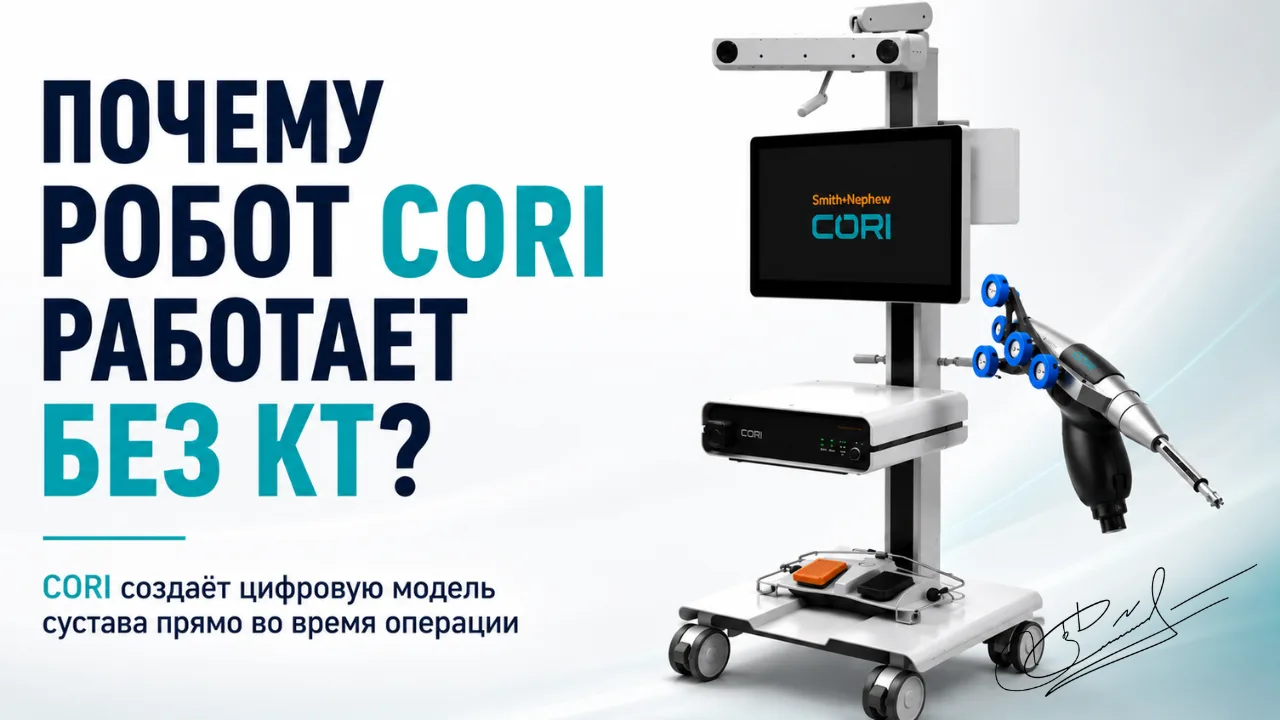
Many people associate robotic surgery with mandatory preoperative CT. CORI uses a different principle. It belongs to imageless robotics, meaning it does not require mandatory CT to create a digital model of the joint.
Instead of using a pre-built 3D image, the technology collects data during the operation. Based on information obtained in the operating room, a digital representation of the joint is created and used by the surgeon.
This approach has made CORI one of the most discussed robotic platforms of recent years. You can read more in "Why the CORI Robot Works Without Preoperative CT".
What is distinctive about CUVIS?
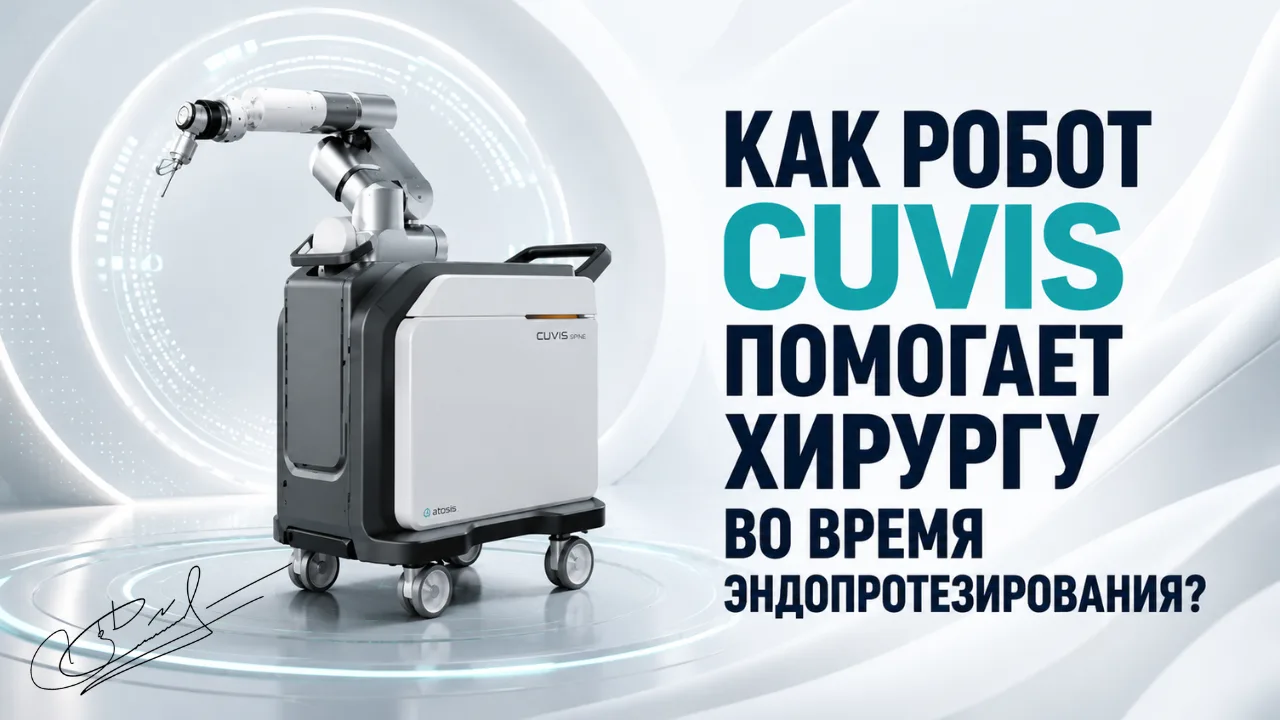
If CORI is often discussed in the context of working without mandatory CT, CUVIS is usually associated with digital navigation and analysis of surgical parameters.
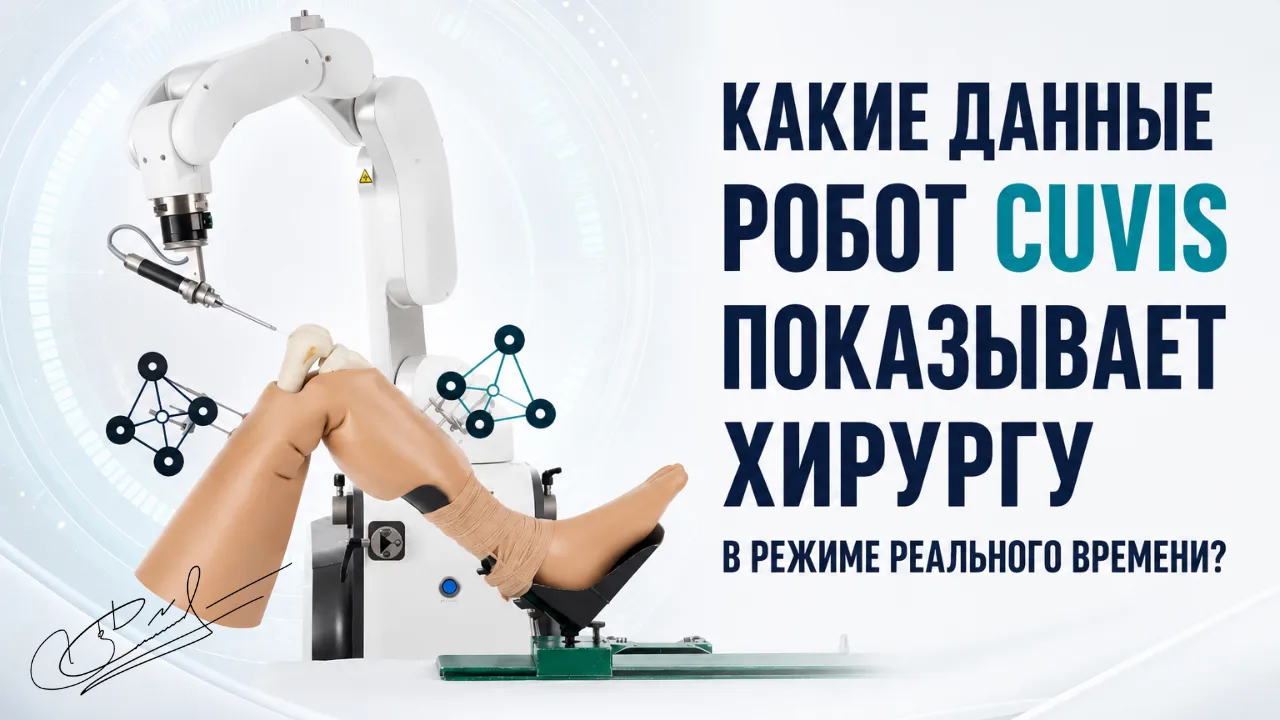
The platform is built around continuous control of different indicators during joint replacement. It helps display information in real time and provides the surgeon with additional tools for analyzing the current situation.
Inside the operating room, these differences matter. Modern joint replacement requires assessment of many interconnected parameters, and digital navigation systems help structure this information.
CUVIS is therefore often viewed as a platform focused on digital navigation, operative parameter control and decision support based on objective data. Related materials describe what data CUVIS shows in real time and how it supports the surgeon.
Why is MAKO one of the best-known robotic systems?
When specialists discuss robotic joint replacement, MAKO is almost always part of the conversation. This is not only because the brand is well known.
The main feature of MAKO is the amount of accumulated experience and scientific data collected over years of use. The system is used in many countries and remains one of the most studied robotic technologies in orthopedics.
For a patient, the phrase "scientific evidence" may sound abstract. For a doctor, it is one of the most important criteria for evaluating medical technology. The more research exists, the better specialists understand the possibilities, limitations and results of the system in different clinical situations.
This is why MAKO is often viewed as one of the most mature robotic platforms in global orthopedic practice.
Why does the number of performed operations matter?
Clinical experience is highly important in medicine. The longer a technology is used in real practice and the more operations are performed with it, the better its features, strengths and limitations are understood.
Some robotic systems are relatively new and are still building their evidence base. Others have been used for many years and have moved from innovation to a tool used in major orthopedic centers.
MAKO occupies a special place by accumulated experience, international use and the volume of publications dedicated to robotic joint replacement.
Why is there no single best robot for all patients?
After learning about several systems, many patients expect a ranking where one platform is first and the others are lower. Real medicine rarely works this way.
Each robotic platform develops around its own concept. CORI emphasizes work without mandatory CT. CUVIS uses digital navigation and real-time parameter control. MAKO has one of the largest bodies of scientific data and broad international experience.
Patients also differ from each other: diagnosis, deformity, age, activity level, previous operations and many other factors vary. There is no universal answer about the best platform for everyone.
In practice, it is more important to understand how a specific technology is used by a specific surgeon in a specific clinical situation.
What is more important: the robot or the surgeon?
Despite rapid technological development, the answer remains the same. CORI, CUVIS and MAKO cannot independently diagnose, determine indications or choose treatment tactics. These decisions are made by the surgeon.
A robotic system can provide data, help with navigation and support decision-making, but clinical thinking remains the doctor's responsibility. Patients should therefore consider not only the name of the robot, but also the experience of the specialist who will perform the operation.
Where is robotic surgery going?
Digital technologies will likely continue to play a larger role in joint surgery. Modern platforms help analyze anatomy, use navigation tools and work with large amounts of information during the operation.
The main goal will remain the same: to help the surgeon better understand the individual patient and make well-grounded decisions during joint replacement.
CORI, CUVIS and MAKO are modern robotic systems for joint replacement, but each uses its own approach to data and navigation.
CORI is known for imageless robotics and the ability to work without mandatory preoperative CT. CUVIS focuses on digital navigation and real-time parameter analysis. MAKO remains one of the most widely used and studied robotic platforms in global orthopedics, with extensive scientific publications and international experience.
The choice of technology is not about finding one universal winner. It depends on the capabilities of each platform, the surgeon's experience and the specific clinical situation.